What You Need to Know About Off Road Travel Trailers
An off road travel trailer is a specialized recreational vehicle built with reinforced chassis, independent suspension, and off-grid systems designed for rugged terrain access. Unlike regular travel trailers, they feature higher ground clearance, armored underbodies, and all-terrain tires. U.S. prices range from $25,000–$120,000+ depending on size and off-grid capability. They’re ideal for overlanders seeking remote adventures, boondockers preferring dispersed camping, and four-season RVers who camp year-round in challenging conditions.
What Is an Off Road Travel Trailer?
Off road travel trailers represent a specialized category of recreational vehicles engineered specifically for accessing remote locations that standard RVs simply cannot reach. These rugged units combine the comfort of traditional travel trailers with the durability and capability needed for serious off-grid adventures.
Key Technical Features
Reinforced Steel/Aluminum Chassis: Unlike conventional RV frames, off-road trailers utilize welded steel or marine-grade aluminum construction designed to withstand impacts from rocks, stumps, and uneven terrain.
Independent Off-Road Suspension: Most quality off-road trailers feature independent suspension systems or heavy-duty torsion axles that provide superior articulation and impact absorption compared to standard leaf spring setups. This suspension technology is crucial for maintaining stability on challenging terrain.
All-Terrain Tires & Full-Size Spare: These trailers come equipped with aggressive tread patterns and reinforced sidewalls, typically in larger sizes (15″ or 16″ wheels) with a matching full-size spare tire.
High Ground Clearance: Most off-road trailers maintain 14-20 inches of ground clearance, allowing passage over rocks, logs, and deep ruts that would stop conventional trailers.
Underbody Protection: Skid plates, rock guards, and protective armor shield critical components like water tanks, electrical systems, and plumbing from trail damage.
Off-Grid Power Systems: Solar panels, lithium battery banks, and high-capacity inverters enable extended stays without hookups.
U.S. Application Scenarios
Off road travel trailers excel in America’s diverse backcountry environments:
- BLM Public Lands: Dispersed camping on Bureau of Land Management property
- National Forest Trails: Accessing remote forest service campsites
- Desert Overlanding: Utah’s Moab region, Arizona’s Sonoran Desert
- Snow Camping: Winter adventures in Colorado, Montana, Wyoming
- Beach Access: Sandy coastal areas and dune camping
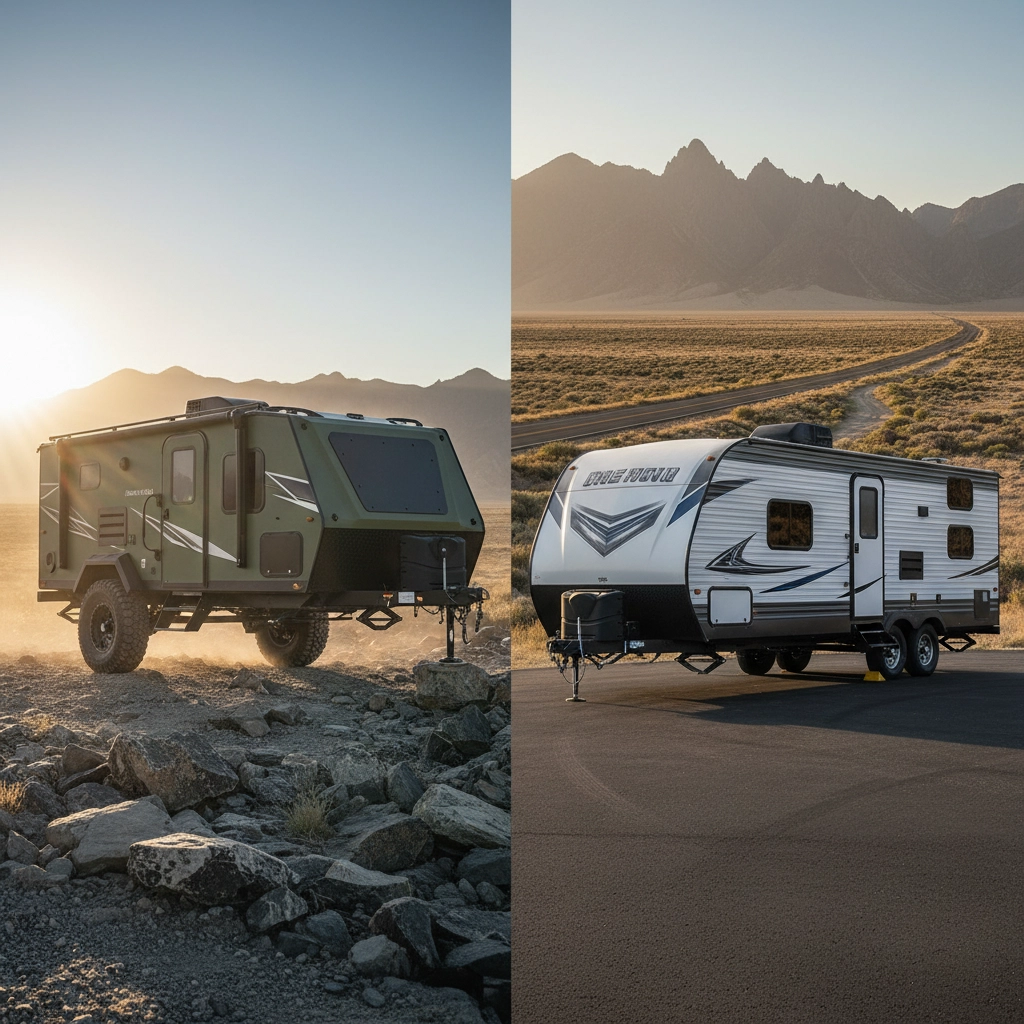
Off Road Travel Trailer vs Regular Travel Trailer
Understanding the fundamental differences helps buyers make informed decisions based on their camping style and destination preferences.
Off-road models from manufacturers like BlackSeries prioritize reinforced chassis and all-terrain capability, while regular travel trailers emphasize interior amenities and cost-effectiveness for campground use.
U.S. Market Overview & Price Trends
The American off-road travel trailer market has experienced significant growth as more outdoor enthusiasts seek self-sufficient adventure vehicles. Several factors drive this expansion:
Boondocking Participation Surge: Dispersed camping participation has increased over 40% since 2020, driven by crowded campgrounds and desire for solitude. National Forest Service data shows record permits issued for backcountry camping.
Off-Grid Technology Advances: Lithium battery costs have dropped 60% since 2018, making off-grid systems more accessible. Solar panel efficiency improvements enable smaller roof arrays with greater power generation.
2025 U.S. Price Structure
Entry Off-Road Models ($25,000-$45,000):
- Basic reinforced chassis
- Standard off-road tires
- Simple solar/battery systems
- Minimal off-grid amenities
Mid-Level Rugged Trailers ($45,000-$75,000):
- Independent suspension
- Comprehensive underbody protection
- 400-600W solar systems
- Four-season insulation packages
Premium/Expedition Grade ($80,000-$120,000+):
- Military-spec construction
- Advanced articulating suspension
- 800W+ solar arrays
- Full off-grid bathroom facilities
- Premium interior appointments
The price premium reflects substantial engineering costs for reinforced structures, specialized suspension components, and integrated off-grid systems that standard travel trailers lack.
Step-by-Step: How to Choose an Off Road Travel Trailer
Step 1: Define Your Camping Style
Weekend Adventures: Short 2-4 day trips to established dispersed camping areas require basic off-road capability with moderate off-grid systems.
Extended Overlanding: Multi-week journeys through varying terrain demand robust construction, reliable systems, and extensive parts/service networks.
Full-Time Off-Grid Living: Permanent or seasonal remote living requires maximum solar capacity, large water tanks, and comprehensive comfort amenities.
Step 2: Assess Your Tow Vehicle
Towing Capacity: Verify your vehicle’s maximum trailer weight rating, including payload for gear and supplies.
Hitch System: Off-road trailers often require weight-distribution hitches or specialized mounting systems for optimal performance.
Brake Controllers: Ensure your vehicle has integrated or aftermarket brake controllers for safe trailer braking.
Step 3: Establish a Realistic Budget
Consider total ownership costs beyond purchase price:
- Insurance (typically 10-15% higher for off-road rated trailers)
- Annual maintenance (suspension service, tire replacement)
- Upgrade costs (solar expansion, lithium battery replacement)
Step 4: Prioritize Essential Off-Road Features
Suspension Quality: Independent systems provide superior articulation but require more maintenance than solid axle setups.
Ground Clearance: Minimum 14 inches for mild off-road use; 16+ inches for serious trail access.
Frame Construction: Welded steel offers maximum durability; aluminum saves weight but may require specialized repair facilities.
Step 5: Evaluate Off-Grid Capability Requirements
Solar System Sizing: 400W minimum for basic needs; 600-800W for extended stays; 1000W+ for permanent off-grid living.
Battery Technology: Lithium systems cost more initially but provide longer life, faster charging, and weight savings over lead-acid.
Water Storage: Consider fresh, gray, and black water capacities based on typical stay duration and usage patterns.
Step 6: Consider Four-Season Performance
Insulation Packages: R-13+ insulation in walls, R-20+ in floors for winter camping comfort.
Heated Systems: Tank heaters, heated water lines, and underbelly enclosures prevent freeze damage.
Ventilation: Adequate airflow prevents condensation issues during cold weather camping.
Step 7: Examine Service Network Availability
Choose manufacturers with established dealer networks and parts availability in your region. BlackSeries maintains service partnerships across major U.S. markets, ensuring warranty support and maintenance accessibility.
Off Road Travel Trailer Buying Checklist
Off-Road Structure & Capability
- Reinforced chassis (welded steel or marine aluminum)
- Ground clearance ≥ 14-18 inches measured at lowest point
- Independent or heavy-duty torsion axle suspension
- All-terrain tires with full-size spare
- Stone guards and underbody protection plates
- Articulating hitch or heavy-duty ball mount
Off-Grid Systems & Power
- Solar system (≥ 400W for basic needs)
- Lithium battery bank (≥ 200-400Ah capacity)
- Pure sine wave inverter (2000-3000W)
- Fresh water tank (≥ 20-40 gallons)
- Gray and black water capacity appropriate for stay duration
- 12V refrigeration system
- LED lighting throughout
Living Comfort & Layout
- Sleeping capacity matches family size
- Wet bath vs. dry bath preference
- Kitchen layout and storage accessibility
- Dinette configuration and versatility
- Climate control system (furnace/AC)
- Interior height and movement space
Ownership & Service Factors
- Manufacturer warranty coverage and duration
- Local dealer network and service availability
- Parts availability and lead times
- Insurance coverage and premium quotes
- Annual maintenance cost estimates
- Resale value history for brand/model

Best Off Road Travel Trailers for Sale in the U.S.
Best for Overlanding Couples
Compact Rugged Trailers (16-20 feet)
These lightweight yet capable units prioritize maneuverability and fuel efficiency without sacrificing essential off-grid systems. Look for models featuring independent suspension, high ground clearance, and comprehensive solar packages.
BlackSeries specializes in this category with reinforced chassis construction and proven off-road suspension systems that handle challenging terrain while maintaining comfortable interior layouts for extended travel.
Best for Full-Time Boondocking
Extended Off-Grid Trailers (20-24 feet)
Full-time off-grid living demands maximum solar capacity (800W+), large battery banks, substantial water storage, and comprehensive comfort systems. These trailers feature four-season insulation, heated tanks, and premium appliance packages.
Priority features include residential refrigerators, washer/dryer prep, and expandable solar mounting for future upgrades.
Best for Winter Camping
Four-Season Expedition Trailers
Winter-rated trailers require specialized insulation packages, heated underbellies, dual-pane windows, and robust heating systems. Arctic packages typically include tank heaters, heated water lines, and enclosed underbody storage.
Construction quality becomes critical in sub-freezing conditions where component failures can create dangerous situations in remote locations.
Best for Family Adventures
Bunk-Layout Off-Road Trailers (22-26 feet)
Family-oriented models balance sleeping capacity with off-road capability. Look for dedicated bunk areas, expanded storage, child-safety features, and durable interior materials that withstand active use.
These trailers often compromise ultimate off-road capability for interior space and family-friendly amenities.
Real-World U.S. Use Cases
Western Overlander Profile
Typical Destinations: Utah’s Moab region, Arizona’s Sonoran Desert, Colorado’s backcountry forest roads
Terrain Challenges: Rocky washes, sandy desert tracks, steep mountain grades, stream crossings
Trailer Requirements: Maximum ground clearance, aggressive tire treads, comprehensive underbody protection, substantial water storage for desert camping
BlackSeries Advantages: Independent suspension articulation handles rocky terrain while reinforced chassis construction withstands repeated impacts from desert debris.
Midwest Winter RVer Profile
Typical Destinations: Montana’s Glacier National Park, Wyoming’s backcountry, Minnesota’s state forests
Climate Challenges: Sub-zero temperatures, deep snow, ice-covered roads, limited daylight for solar charging
Trailer Requirements: Four-season insulation, heated systems, reliable furnaces, emergency backup heating, large propane capacity
Essential Features: Heated water tanks, enclosed underbellies, storm windows, and backup power systems for extended winter stays.
Family Traveler Profile
Typical Destinations: Cross-country national park tours, extended summer adventures, educational travel
Practical Needs: Multiple sleeping areas, expanded storage, entertainment systems, reliable connectivity, child safety features
Trailer Requirements: Balance between off-road capability and interior comfort, dependable systems, comprehensive warranty coverage
Remote Worker Camper Profile
Typical Destinations: Dispersed camping near cell towers, seasonal work locations, long-term parking on private land
Technology Demands: Reliable internet connectivity, extensive power systems, comfortable work spaces, climate control
Extended Stay Requirements: Large battery banks, expandable solar, residential appliances, laundry facilities, comfortable seating areas
Off Road Travel Trailer Maintenance Guide
Pre-Trip Inspection Protocol
Tire Condition & Pressure: Check for uneven wear, sidewall damage, and proper inflation. Off-road trailers typically run slightly lower pressures for improved traction and ride quality.
Suspension Components: Inspect bushings, shock absorbers, and mounting hardware for damage or excessive wear. Independent suspension systems require more frequent inspection than solid axle setups.
Electrical Connections: Verify trailer plug connections, test all lights, and check battery terminals for corrosion.
Water System Integrity: Inspect external fittings, tank mounting, and underbody protection for damage from previous trail use.
Post-Adventure Maintenance
Undercarriage Cleaning: Remove accumulated debris, inspect for damage, and clean protective coatings to prevent corrosion.
Suspension Lubrication: Service grease fittings and inspect bushings for wear after particularly challenging terrain.
System Function Tests: Verify all off-grid systems operate correctly after vibration and impact exposure.
Seasonal Maintenance Requirements
Winter Preparation: Drain water systems, add antifreeze to holding tanks, remove perishables, and inspect seals for cold weather integrity.
Spring Commissioning: Flush water systems, test all appliances, inspect for winter damage, and prepare electrical systems for active use.
Battery Maintenance: Lithium systems require minimal maintenance but benefit from periodic balance charging and terminal cleaning.
Solar System Care: Clean panels regularly, inspect wiring connections, and monitor charge controller performance for optimal efficiency.
Common Off-Road Damage Prevention
Approach Angle Awareness: Understand your trailer’s breakover angles to avoid high-centering or contact damage.
Speed Control: Maintain moderate speeds on rough terrain to minimize impact damage to chassis and systems.
Route Selection: Choose appropriate trails for your trailer’s capability level rather than pushing equipment limits.
Frequently Asked Questions
What is the average price of an off road travel trailer for sale in the U.S.?
Off road travel trailers typically range from $25,000 for basic models to $120,000+ for premium expedition units. Mid-range trailers with quality off-road features and moderate off-grid systems average $45,000-$75,000. Prices reflect reinforced construction, specialized suspension, and integrated off-grid systems.
Are off road travel trailers worth the money compared to regular trailers?
The value depends on your camping style. For weekend campground users, regular trailers offer better cost-effectiveness. However, for accessing remote locations, dispersed camping, or extended off-grid stays, off-road trailers provide capabilities impossible with standard units, justifying the premium cost.
Can a mid-size SUV tow an off road travel trailer?
Many compact off-road trailers (under 4,000 lbs) work with properly equipped mid-size SUVs. However, verify your vehicle’s towing capacity, payload rating, and cooling system capability. Larger off-road trailers typically require full-size trucks with adequate towing packages.
What size off-road trailer is best for a family of four?
Families typically need 20-24 foot trailers with bunk layouts or convertible dinettes. Look for models with dedicated children’s sleeping areas, expanded storage, and family-friendly bathroom facilities while maintaining reasonable towing weights.
How long do off-road travel trailers last compared to regular RVs?
Quality off-road trailers often outlast regular RVs due to reinforced construction and durable components. Well-maintained units can provide 15-20 years of service, while standard travel trailers typically see 10-15 years. The key difference lies in frame construction and component quality.
Do off road travel trailers work effectively in winter conditions?
With proper four-season packages, off-road trailers excel in winter camping. Look for R-13+ insulation, heated tanks, enclosed underbellies, and robust heating systems. Arctic packages enable comfortable camping in sub-zero temperatures.
What off-grid features should I prioritize when shopping?
Essential off-grid features include adequate solar capacity (400W minimum), lithium batteries, pure sine wave inverters, substantial fresh water storage, and efficient 12V appliances. Size systems based on your typical camping duration and power consumption patterns.
Are off-road trailers allowed in all national parks and campgrounds?
Most off-road trailers meet size and safety requirements for national park campgrounds. However, some parks restrict length or have accessibility limitations. Always verify campground specifications and reservation requirements before traveling.
What’s the difference between an off-road travel trailer and an off-road camper?
The terms often overlap, but “off-road travel trailer” typically refers to towable units with comprehensive living amenities, while “off-road camper” may include truck campers, pop-ups, or basic utility trailers with minimal accommodations.
How much annual maintenance should I budget for an off-road trailer?
Budget $1,000-$2,500 annually for routine maintenance including tire replacement, suspension service, system maintenance, and wear item replacement. Off-road use increases maintenance frequency but proper care extends equipment life significantly.

