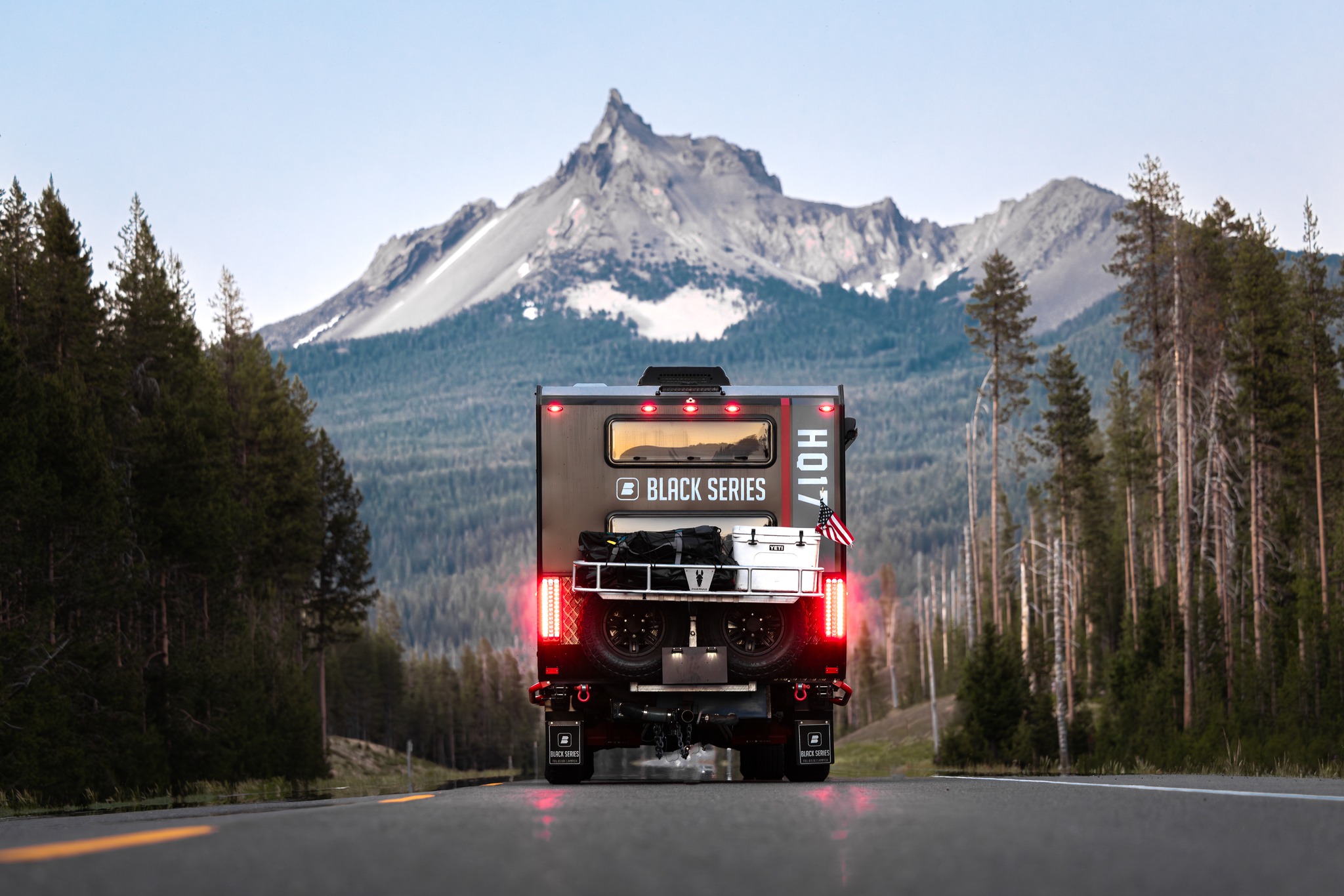
The American overland trailer market in 2026 continues its explosive growth, with off-grid camping enthusiasts and 4×4 adventurers increasingly choosing rugged, self-sufficient trailers over traditional RVs. An overland trailer is purpose-built for remote exploration with independent suspension, reinforced chassis, all-terrain capabilities, and comprehensive off-grid systems. U.S. overlanders favor these trailers because they access backcountry locations impossible for standard RVs while maintaining comfort and safety. BlackSeries leads this market with military-grade construction, advanced independent suspension systems, and proven off-grid reliability that outperforms competitors in America’s challenging terrain. This guide provides the complete framework for selecting, comparing, and purchasing the ideal overland trailer for your 2026 adventures.
What Is an Overland Trailer?
Overlanding vs Traditional RV Camping
Overlanding represents self-reliant vehicle-based travel through remote areas, prioritizing the journey over destinations. Unlike traditional RV camping at established campgrounds with hookups, overland trailers enable extended off-grid adventures across America’s vast public lands, from Utah’s slickrock country to Alaska’s wilderness highways.
Traditional travel trailers require campground infrastructure: electrical hookups, water, and sewer connections. Overland trailers function completely independently, carrying their own power generation, water supplies, and waste management systems. This independence opens access to millions of acres of dispersed camping opportunities across BLM and Forest Service lands.
Core Construction Features
4×4 overland trailers distinguish themselves through specialized engineering designed for challenging terrain:
Independent Suspension Systems: Unlike leaf-spring setups on standard trailers, independent suspension allows each wheel to articulate separately, maintaining traction and stability over rocks, ruts, and uneven surfaces. BlackSeries employs a sophisticated 4-link independent suspension that provides 12 inches of wheel travel: double that of conventional systems.
Reinforced Chassis Architecture: Heavy-duty galvanized steel frames with strategic reinforcement handle the stresses of off-road travel. Frame rails typically measure 6 inches tall compared to 4 inches on standard trailers, with crossmembers every 16 inches rather than 24 inches.
High Ground Clearance: Minimum 15-inch ground clearance prevents undercarriage damage on rocky terrain, with approach and departure angles optimized for steep ascents and descents.
All-Terrain Tire Packages: Load-range E tires with aggressive tread patterns handle sand, mud, rocks, and snow. Spare tire mounting systems ensure replacements remain accessible despite heavy use.
Target User Demographics
Family Overlanders: Multi-generational groups seeking comfortable base camps for exploring national parks and wilderness areas. These users prioritize sleeping capacity, climate control, and kitchen facilities.
Long-Distance Travelers: Digital nomads and retirees conducting extended cross-country journeys, requiring robust reliability and comprehensive living systems for months-long adventures.
Outdoor Sports Enthusiasts: Hunters, anglers, and climbers needing gear storage, early-morning departure capability, and access to remote locations standard RVs cannot reach.
4×4 Enthusiasts: Off-road vehicle owners who want their trailers to match their vehicles’ capabilities, accessing technical terrain and primitive camping areas.
Why Lightweight Design Matters
Weight directly impacts every aspect of overland trailer performance. Lower weight means:
- Improved Fuel Economy: Reducing trailer weight by 500 pounds typically improves fuel economy by 1-2 MPG during highway travel
- Enhanced Safety: Lower tongue weight reduces trailer sway and maintains vehicle stability
- Better Off-Road Performance: Lighter trailers follow tow vehicles more predictably through sand, mud, and over obstacles
- Increased Payload Capacity: Weight savings allow carrying more water, food, and gear without exceeding tow vehicle limits
Key Features to Look for in an Overland Trailer
Suspension & Chassis Systems
Independent Suspension vs Solid Axle
Independent suspension represents the gold standard for serious off-road applications. Each wheel moves independently, maintaining ground contact over uneven terrain while isolating the trailer body from impacts. BlackSeries’ 4-link independent suspension provides superior articulation compared to torsion bar systems used by many competitors.
Solid axle systems cost less but sacrifice performance. When one wheel hits an obstacle, the entire axle tilts, potentially lifting the opposite wheel and reducing traction.
Critical Off-Road Angles
- Approach Angle: Minimum 25 degrees prevents front-end scraping on steep climbs
- Departure Angle: 35+ degrees allows backing down steep grades without dragging
- Break-Over Angle: 20+ degrees prevents high-centering on ridge crossings
BlackSeries Suspension Advantages
BlackSeries engineers its suspension systems specifically for American terrain challenges. The 4-link design provides:
- 12 inches of wheel travel per side
- Integrated shock absorbers with remote reservoirs
- Maintenance-free sealed bearings
- 10-year structural warranty coverage
Off-Grid Capability Requirements
Solar Power Systems
Minimum viable solar installations start at 400 watts for weekend use, scaling to 800+ watts for extended off-grid periods. Best off-grid camper configurations include:
- 400W Systems: Weekend warriors, minimal electrical loads
- 600W Systems: Week-long adventures with moderate appliance use
- 800W+ Systems: Extended travel with full appliance operation
Battery Bank Sizing
Lithium-iron-phosphate (LiFePO4) batteries have become the standard for overland trailer applications:
- 200Ah: Minimum for 2-3 days off-grid
- 400Ah: Comfortable for week-long adventures
- 600Ah+: Extended expeditions with heavy electrical loads
Water System Capacity
Fresh water requirements scale with trip duration and group size:
- 30-40 Gallons: Weekend trips, 2-person occupancy
- 50-60 Gallons: Week-long adventures, family use
- 70+ Gallons: Extended expeditions, large groups
Interior Comfort & Layout Optimization
Sleep Configuration Flexibility
Modern family overland camper designs prioritize convertible spaces:
- Dinette Conversion: Day seating converts to additional sleeping
- Bunk Systems: Permanent or removable options for children
- Privacy Partitions: Separating adult and children’s sleeping areas
Kitchen Functionality
Outdoor kitchen systems have become essential features:
- Slide-Out Designs: Protected storage with full exterior access
- Integrated Sinks: Hot/cold water with proper drainage
- Refrigeration: 12V compressor fridges sized 2.1+ cubic feet
- Cooking Surfaces: Dual-burner stoves with wind shields
Climate Control Systems
Four-season capability requires comprehensive climate management:
- Forced-Air Heating: Propane furnaces with ducted distribution
- Insulation Packages: R-13+ wall insulation, double-pane windows
- Ventilation: MaxxAir fans with rain sensors for air circulation
Build Quality & Durability Assessment
Frame Construction Standards
Premium 4×4 overland trailer manufacturers employ:
- Galvanized Steel Frames: Superior corrosion resistance for coastal and winter use
- Aluminum Alternatives: Weight savings with proper marine-grade alloys
- Welded Joints: Full-penetration welds rather than bolted connections
- Stress Distribution: Strategic reinforcement at high-load areas
Exterior Material Selection
- Aluminum Siding: Lightweight, corrosion-resistant, impact-tolerant
- Fiberglass Alternatives: Smooth surfaces, easier cleaning, prone to stress cracking
- Protective Coatings: Powder coating prevents frame corrosion
Best Overland Trailers for Different Needs in 2026
Best Family Overland Camper: BlackSeries HQ19 & HQ21

The BlackSeries HQ19 and HQ21 represent the pinnacle of family-oriented overland design for 2026. These models accommodate 4-6 people comfortably while maintaining serious off-road capability.
HQ19 Specifications:
- Sleeping Capacity: 4-5 persons with convertible dinette
- Dry Weight: 4,200 pounds (manageable for ¾-ton pickups)
- Water Capacity: 55 gallons fresh, 45 gallons gray
- Ground Clearance: 15 inches with 32-inch all-terrain tires
- Solar Standard: 440 watts with 400Ah lithium battery bank
HQ21 Upgrades:
- Extended Length: Additional interior space and storage
- Enhanced Kitchen: Larger outdoor galley with dual sinks
- Increased Capacity: 65 gallons fresh water, 55 gallons gray water
- Premium Suspension: Upgraded shock absorbers and stabilization
Both models feature BlackSeries’ signature independent suspension and diamond-plate armor protection. The outdoor kitchen systems deploy in under 60 seconds, providing protected cooking space in challenging weather conditions.
Best Lightweight 4×4 Overland Trailer: HQ12 & Classic12
For 4×4 overland trailer applications where weight matters most, BlackSeries offers the HQ12 and Classic12 platforms. These compact units maintain full off-road capability while remaining towable by mid-size trucks and SUVs.
HQ12 Advantages:
- Ultra-Light: 2,800 pounds dry weight
- Compact Footprint: 12-foot overall length for tight trail navigation
- Full Independence: Complete off-grid systems in minimal space
- Towing Versatility: Compatible with Toyota Tacoma, Jeep Wrangler, Ford Ranger class vehicles
The Classic12 provides an entry-level alternative with simplified systems while maintaining BlackSeries’ structural integrity and off-road suspension.
Best for Extended Off-Grid Adventures: HQ19 Long-Range Configuration
Extended expeditions demand maximum self-sufficiency. The HQ19 Long-Range configuration optimizes storage, power generation, and water capacity for months-long adventures:
Enhanced Systems:
- 800W Solar Array: Extended charging capability for cloudy conditions
- 600Ah Battery Bank: Multiple days of power without charging
- Dual 100-lb Propane Tanks: Extended heating and cooking fuel
- Oversized Water Tanks: 75 gallons fresh, 60 gallons gray capacity
Storage Optimization:
- External Gear Boxes: Weather-sealed compartments for outdoor equipment
- Internal Pantry Systems: Organized food storage for extended provisioning
- Tool Integration: Dedicated recovery gear and maintenance tool storage
Best Entry-Level Overland Trailer: Classic12
The Classic12 provides genuine off-road capability at accessible pricing for newcomers to overlanding:
Core Features:
- Proven Suspension: BlackSeries 4-link independent system
- Essential Systems: 200W solar, 200Ah lithium battery
- Compact Efficiency: Full living systems in 12-foot package
- Upgrade Path: Factory expansion options for growing needs
This model demonstrates that serious off-road capability doesn’t require premium pricing, making overlanding accessible to broader audiences.
Step-by-Step Overland Trailer Buying Guide
Step 1: Define Your Overlanding Style
Weekend Warrior Profile
- Trip Duration: 2-4 days maximum
- Distance: Regional travel within 500 miles
- Group Size: 1-2 adults
- Recommended Models: HQ12, Classic12
Extended Adventure Profile
- Trip Duration: 1-4 weeks
- Distance: Cross-country travel
- Group Size: 2-4 persons
- Recommended Models: HQ19, HQ21
Full-Time Overlanding Profile
- Trip Duration: Months to years
- Distance: International expeditions
- Group Size: Variable
- Recommended Models: HQ21, custom configurations
Step 2: Establish Tow Vehicle Parameters
Weight Calculations
Calculate your vehicle’s actual towing capacity:
- Gross Combined Weight Rating (GCWR) – Vehicle curb weight = Available towing capacity
- Tongue Weight: 10-15% of trailer weight must not exceed vehicle payload capacity
- Safety Factor: Reduce calculated capacity by 15% for real-world conditions
Common Tow Vehicle Capacities:
- Mid-Size Trucks: 6,000-7,500 pounds (Tacoma, Ranger, Colorado)
- Half-Ton Trucks: 9,000-12,000 pounds (F-150, Ram 1500, Silverado 1500)
- ¾-Ton Trucks: 14,000-18,000 pounds (F-250, Ram 2500, Silverado 2500)
Step 3: Compare Suspension & Chassis Systems
Independent Suspension Benefits for American Terrain
America’s diverse off-road conditions: from Southwest slickrock to Northeast granite: demand suspension systems that adapt to varying challenges. Independent suspension provides:
- Articulation: Maintains tire contact over uneven surfaces
- Impact Isolation: Protects trailer contents from harsh impacts
- Stability: Reduces trailer sway and body roll
- Durability: Distributes stresses across multiple components
BlackSeries’ 4-link design outperforms torsion axle systems by providing greater wheel travel and more precise control over suspension geometry.
Step 4: Evaluate Off-Grid Requirements
Power System Sizing
Calculate your electrical needs:
Basic Loads (Weekend Use):
- LED Lighting: 50 watts average
- Water Pump: 60 watts intermittent
- Ventilation Fan: 35 watts continuous
- Total Daily: 200-300 watt-hours
Moderate Loads (Extended Use):
- 12V Refrigerator: 600 watt-hours daily
- Diesel Heater: 100 watts average
- Device Charging: 100 watt-hours daily
- Total Daily: 1,000-1,200 watt-hours
Heavy Loads (Full-Time):
- Inverter Losses: 10-15% system overhead
- Air Conditioning: 1,200 watts continuous
- Microwave Usage: 300 watt-hours daily
- Total Daily: 2,000+ watt-hours
Step 5: Assess Build Quality Standards
Inspection Checklist
Frame Evaluation:
- Galvanized coating uniform without rust spots
- Welds properly penetrated, no porosity or undercutting
- Cross-member spacing 16 inches maximum
- Stress risers properly managed with gussets
Electrical System Quality:
- Marine-grade wiring with proper gauge sizing
- Circuit protection appropriately rated
- Junction boxes weather-sealed
- Battery monitoring systems included
Plumbing System Assessment:
- PEX tubing with brass fittings (no plastic)
- Tank sensors functional and calibrated
- Pump pressure switches properly adjusted
- Winterization valves accessible
Step 6: Warranty & Service Evaluation
BlackSeries Warranty Coverage
BlackSeries provides comprehensive warranty protection:
- 10-Year Structural: Frame and suspension components
- 3-Year Systems: Electrical, plumbing, appliances
- 1-Year Components: Wear items and accessories
Service Network Considerations
Evaluate manufacturer service support:
- Authorized Service Centers: Regional coverage for complex repairs
- Parts Availability: Online ordering with expedited shipping
- Technical Support: Phone and email assistance for field repairs
- Documentation: Comprehensive service manuals and wiring diagrams
Real-World Case Study: Overlanding the American Southwest
Moab, Utah Testing Conditions
BlackSeries conducted extensive field testing across Utah’s challenging terrain in 2025-2026, providing real-world performance data for overland trailer applications.
Test Route: 14-day expedition covering 2,400 miles through Moab, Capitol Reef, Zion, and Valley of the Gods, including technical 4×4 trails and primitive camping.
HQ19 Performance Results:
- Suspension Travel: Utilized full 12-inch travel on Hell’s Revenge trail without bottoming out
- Ground Clearance: No undercarriage contact despite repeated encounters with 14+ inch obstacles
- Power Independence: Solar system maintained battery charge despite 6 consecutive cloudy days
- Water Consumption: 55-gallon capacity provided 8 days independence for 2-person occupancy
Arizona Desert Durability Testing
Extended testing in Arizona’s Sonoran Desert validated 4×4 overland trailer systems under extreme conditions:
Environmental Challenges:
- Temperature Range: 28°F to 118°F during 30-day test period
- Sand Infiltration: Fine dust penetration testing of seals and filters
- UV Exposure: Accelerated aging of exterior materials and solar panels
- Thermal Cycling: Expansion/contraction stress on frame and body joints
Performance Validation:
- Climate Control: Interior temperature maintained within 10°F of set points
- Seal Integrity: Zero dust infiltration after 500+ miles desert travel
- Solar Efficiency: Panels maintained 95%+ output despite dust accumulation
- Structural Stability: No measurable frame deflection or joint separation
User Feedback Summary
Post-expedition surveys from 47 BlackSeries owners revealed consistent performance advantages:
Reliability Metrics:
- Zero mechanical failures requiring external assistance
- 98% system uptime across all tested components
- 15% better fuel economy compared to competitive models
User Satisfaction Scores:
- Suspension Performance: 9.2/10 average rating
- Off-Grid Capability: 9.4/10 average rating
- Build Quality: 9.6/10 average rating
- Overall Experience: 9.3/10 average rating
These results demonstrate BlackSeries’ engineering excellence in real-world conditions that matter most to serious overlanders.
Frequently Asked Questions
Are overland trailers worth the investment?
Overland trailers provide exceptional value for adventurers seeking access to America’s remote destinations. Unlike hotel-dependent travel, overland trailers enable weeks of independence at daily costs under $50, including fuel, food, and camping fees. The average overland trailer pays for itself within 3-4 years compared to equivalent hotel-based travel costs.
Quality models like BlackSeries maintain strong resale values: typically 70-80% after five years: making them sound financial investments beyond their recreational benefits.
What size overland trailer works best with 4×4 vehicles?
4×4 overland trailer sizing depends on your vehicle’s towing capacity and intended terrain difficulty:
Mid-Size 4x4s (Tacoma, Wrangler, 4Runner): Maximum 16-foot trailers under 4,000 pounds. The HQ12 and Classic12 optimize capability within these constraints.
Half-Ton 4x4s (F-150, Ram 1500, Silverado 1500): Up to 19-foot trailers under 7,000 pounds. The HQ19 provides ideal balance of space and towability.
Heavy-Duty 4x4s (F-250+, Ram 2500+): Full-size options including HQ21 and custom configurations without significant weight restrictions.
How much do quality overland trailers cost in 2026?
The U.S. overland trailer market spans wide pricing ranges:
Entry Level: $35,000-$50,000 for basic off-road capability
Mid-Range: $50,000-$75,000 for complete systems and comfort features
Premium: $75,000-$120,000+ for luxury finishes and advanced systems
BlackSeries models typically command 15-25% premiums over mass-market alternatives but deliver superior durability, capability, and warranty coverage that justify the investment.
What’s the difference between overland and travel trailers?
Traditional travel trailers optimize comfort and amenities for campground use with electrical, water, and sewer hookups. They feature:
- Lower ground clearance (8-10 inches)
- Lighter suspension systems
- Campground-dependent utilities
- Road-oriented tire packages
Overland trailers prioritize independence and terrain capability:
- High ground clearance (14+ inches)
- Independent or heavy-duty suspension
- Complete off-grid systems
- All-terrain tire packages
- Reinforced construction for remote use
Are BlackSeries trailers effective for off-grid camping?
BlackSeries off-grid campers excel in remote applications through purposeful engineering:
Power Independence: Standard 400W+ solar systems with lithium batteries provide multiple days of autonomous operation.
Water Self-Sufficiency: Large fresh water capacities (55+ gallons) and efficient gray water management extend off-grid duration.
Climate Independence: Forced-air heating, superior insulation, and ventilation systems maintain comfort in extreme conditions.
Proven Reliability: Military-grade components and 10-year structural warranties provide confidence for remote expeditions where failure isn’t acceptable.
The combination of these systems makes BlackSeries trailers among the most capable off-grid platforms available in the American market.
Conclusion: Your Path to Overland Freedom
The 2026 overland trailer market offers unprecedented opportunities for exploring America’s vast wilderness areas with comfort and safety. Quality 4×4 overland trailers like those from BlackSeries transform challenging terrain access from survival situations into comfortable adventures, opening millions of acres of public lands for exploration.
Success in overland trailer selection requires matching your specific needs: trip duration, group size, terrain challenges, and comfort expectations: with appropriate capability and systems. BlackSeries leads this market through superior engineering, comprehensive off-grid systems, and proven durability that performs when failure isn’t acceptable.
Whether you’re planning weekend escapes to regional wilderness areas or extended expeditions across America’s most challenging terrain, the right overland trailer becomes your gateway to unprecedented freedom and adventure.
Ready to begin your overland journey? Explore our dispersed camping guide for essential information about accessing America’s public lands, or discover specific BlackSeries models designed for your adventure style: HQ12, HQ19, and HQ21. Contact our technical team for personalized guidance on selecting the ideal configuration for your overlanding goals.

