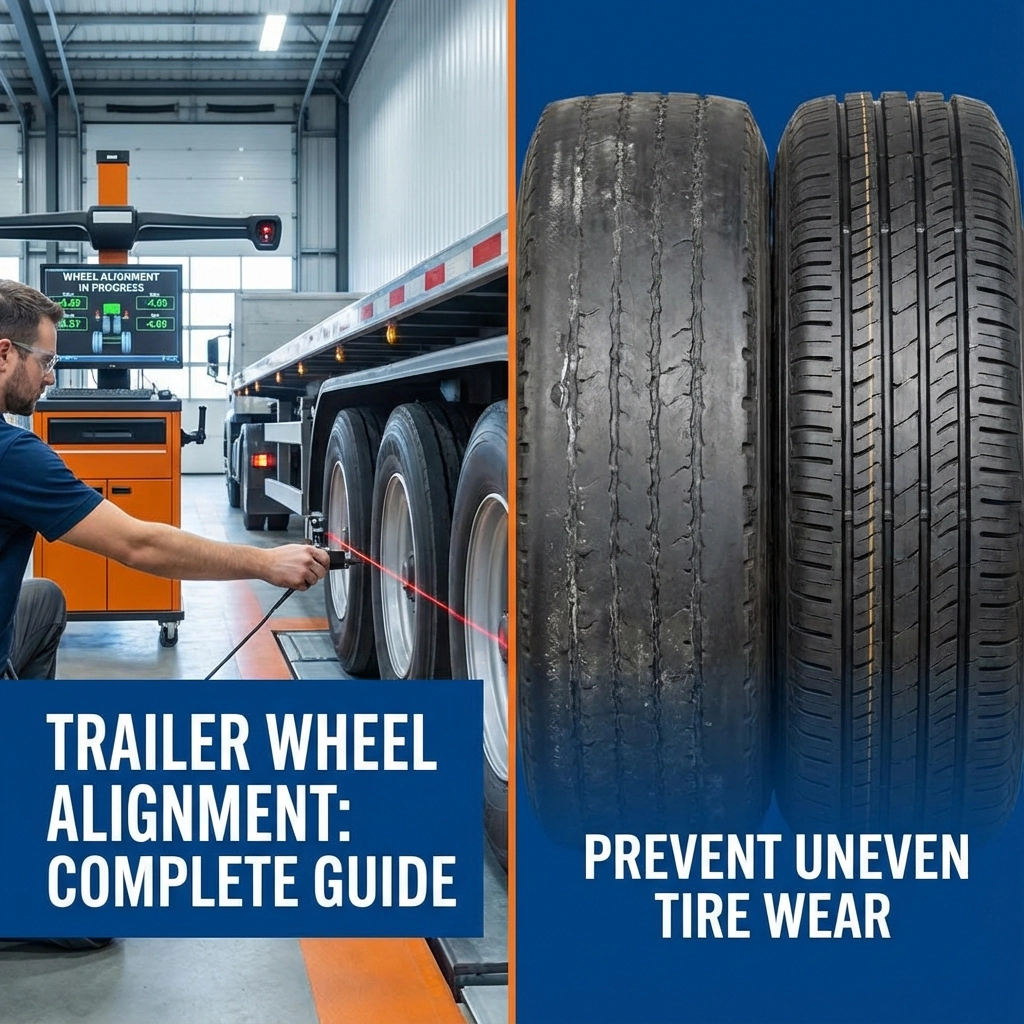
Trailer wheel alignment ensures all trailer wheels track straight and evenly. Poor alignment is one of the most common causes of uneven trailer tire wear, reduced stability, and premature tire failure.
When your trailer tracks properly behind your tow vehicle, you’ll experience better fuel economy, improved handling, and significantly longer tire life. Conversely, misaligned wheels can cost you hundreds of dollars in premature tire replacements and create dangerous driving conditions on highways and off-road terrain.
What Is Trailer Wheel Alignment?
Trailer wheel alignment differs significantly from automotive four-wheel alignment. While cars have adjustable suspension components, trailers rely on proper axle positioning relative to the trailer frame and kingpin.
The primary goal of trailer axle alignment check is ensuring all wheels are parallel to one another and perpendicular to the trailer’s centerline. Industry standards typically allow for a tolerance of ±0.1 degrees when measuring thrust angle from the kingpin to the axle track, though most tire manufacturers recommend a practical range of ±0.2 degrees.
Unlike passenger vehicles where individual wheel toe, camber, and caster can be adjusted independently, trailer alignment focuses on:
- Thrust angle: The direction the axle points relative to the trailer centerline
- Axle squareness: Ensuring axles are perpendicular to the frame
- Inter-axle alignment: Making sure multiple axles track in parallel on tandem setups
For trailers with independent suspension systems, additional considerations include maintaining proper camber angles and ensuring equal suspension geometry on both sides.
Signs of Trailer Tire Uneven Wear
Recognizing trailer tire uneven wear patterns early can save you significant money and prevent dangerous blowouts. Here are the most common wear indicators:
Shoulder Wear: Excessive wear on the inner or outer tire shoulders indicates camber issues or overloading. This appears as smooth, rounded edges on one side of the tread.
Feathering: When tire tread blocks are worn smooth on one edge and sharp on the other, creating a sawtooth pattern. Run your hand across the tread – it should feel smooth in both directions.
Center Wear: Rapid wear down the center of the tread suggests chronic overinflation, causing the tire to ride primarily on its center section.
Cupping or Scalloping: Irregular high and low spots around the tire circumference, often accompanied by a rumbling noise. This typically indicates alignment issues combined with worn suspension components.
According to industry data, properly aligned trailers can extend tire life by 25-40% compared to misaligned units. The average American trailer owner replaces tires every 40,000-60,000 miles, but alignment issues can cut this to 20,000-30,000 miles.

Common Causes of Poor Trailer Wheel Alignment
Understanding what causes alignment problems helps prevent them and guides your maintenance schedule:
Bent Axles: The most serious alignment issue, often caused by severe impacts, overloading, or manufacturing defects. Bent axles typically require professional replacement rather than adjustment.
Uneven Loading: Consistently loading cargo to one side or exceeding weight ratings can gradually shift axle positioning. This is particularly common with work trailers that regularly carry unbalanced loads.
Impact Damage: Hitting curbs, potholes, or obstacles during off-road adventures can knock axles out of alignment. Even minor impacts that don’t seem significant can cause gradual misalignment over time.
Suspension Component Wear: Worn bushings, hangers, or equalizers in the suspension system allow excessive movement, leading to tracking problems. This is especially relevant for trailers that see regular off-road use.
Frame Damage: Accidents or stress from extreme use can cause frame distortion, making proper alignment impossible without professional frame straightening.
BlackSeries trailers, designed for off-road adventure, face unique alignment challenges. Desert crossings, mountain trails, and rough terrain put additional stress on axles and suspension components compared to highway-only trailers.
Trailer Tire Wear Inspection Checklist
Regular trailer tire wear inspection should be part of your routine maintenance. Follow this systematic approach:
Visual Inspection Process:
- Position the trailer on level ground with adequate lighting
- Examine each tire’s entire circumference by rotating wheels manually
- Look for uneven tread depth, cracks, bulges, or embedded debris
- Check sidewalls for damage or irregular wear patterns
Tread Depth Measurement:
- Use a tread depth gauge or penny test on multiple points across each tire
- Measure at three locations: outer shoulder, center, and inner shoulder
- Record measurements to track wear progression over time
- Replace tires when tread depth reaches 2/32″ or shows 50% wear variance across the surface
Alignment-Specific Checks:
- Compare tire circumferences – mismatched sizes cause alignment problems
- Verify all tires are inflated to manufacturer specifications
- Look for diagonal wear patterns indicating toe misalignment
- Check for scuffing on tire shoulders suggesting camber issues
Essential Tools:
- Tread depth gauge
- Tire pressure gauge
- Steel tape measure
- Straight edge or string line
- Flashlight or work light
Perform this inspection every 10,000 miles or before long trips, with more frequent checks for trailers used in demanding off-road conditions.
How to Align Trailer Wheels (DIY vs Professional)
The question of how to align trailer wheels depends on your trailer type, available tools, and mechanical experience.
DIY Alignment Capabilities:
Basic alignment checks can be performed by most owners with simple tools. You can measure thrust angles, check axle squareness, and identify obvious problems using string lines or laser alignment tools. Many modern trailers include adjustable axle mounting systems that allow for corrections without specialized equipment.
When to Seek Professional Service:
Complex alignment issues require professional attention:
- Bent or damaged axles requiring replacement
- Frame damage affecting alignment geometry
- Trailers requiring axle repositioning or welding
- Independent suspension systems needing specialized alignment equipment
Professional Alignment Process:
Commercial shops use computerized alignment systems that provide precise measurements and adjustments. The typical process includes:
- Comprehensive inspection of suspension components
- Precise measurement of thrust angles and axle positions
- Professional adjustment or component replacement
- Final verification and road test
Cost Considerations:
Basic professional alignment typically runs $150-$300, while complex repairs involving axle replacement can exceed $1,000. However, considering that a complete set of trailer tires can cost $800-$1,500, proper alignment is a worthwhile investment.
The alignment frequency depends on usage patterns, but annual checks are recommended for trailers seeing regular use, with additional inspections after any significant impact or when tire wear patterns indicate problems.
Best Practices to Prevent Uneven Trailer Tire Wear
Preventing uneven wear requires consistent attention to multiple factors beyond just alignment:
Load Distribution: Always distribute cargo weight evenly across the trailer width and length. Use a tongue weight scale to verify proper weight transfer – typically 10-15% of total trailer weight should be on the tongue.
Tire Pressure Maintenance: Check tire pressure monthly and before every trip. Under-inflation causes shoulder wear, while over-inflation leads to center wear. Pressure should be checked when tires are cold for accurate readings.
Regular Tire Rotation: When possible, rotate tires according to manufacturer recommendations. This helps even out wear patterns and extends overall tire life.
Suspension Maintenance: Inspect suspension components annually, looking for worn bushings, damaged hangers, or loose hardware. Replace worn parts before they cause alignment problems.
Driving Habits: Avoid aggressive cornering, sudden stops, and excessive speeds that stress tires and suspension components. When possible, choose routes that minimize sharp turns and severe road conditions.
Why Proper Alignment Matters for BlackSeries Trailers
BlackSeries trailers are engineered for off-road adventure, making proper alignment even more critical than for highway-only units. The combination of independent suspension, larger tires, and demanding use conditions creates unique alignment requirements.
The independent suspension design provides superior ride quality and ground clearance but requires more precise alignment to prevent tire scrubbing. Unlike solid axle trailers where minor misalignment might only cause gradual wear, independent suspension misalignment can quickly destroy expensive off-road tires.
BlackSeries trailers often carry heavier loads including water, gear, and equipment for extended off-grid adventures. This additional weight amplifies any alignment issues, making regular checks essential for preventing premature tire wear.
The rugged construction and premium suspension components are designed to maintain alignment even under demanding conditions, but regular inspection ensures these systems continue performing as designed. Proper maintenance of alignment extends not just tire life, but the lifespan of expensive suspension components.
FAQ
How often should trailer wheel alignment be checked?
Check alignment annually for regular use trailers, or every 10,000-12,000 miles. Trailers used primarily off-road should be inspected more frequently, especially after trips involving rough terrain or significant impacts.
Can uneven tire wear be fixed without replacing tires?
Minor uneven wear can sometimes be corrected through rotation and proper alignment, but severe wear patterns typically require tire replacement. Continuing to use severely worn tires is dangerous and can cause blowouts.
Is trailer alignment different from car alignment?
Yes, significantly different. Cars have adjustable suspension components for toe, camber, and caster adjustments. Trailer alignment focuses on axle positioning relative to the frame and ensuring proper tracking.
What happens if I ignore trailer tire uneven wear?
Ignoring uneven wear leads to premature tire failure, reduced fuel economy, poor handling, and increased risk of blowouts. The cost of replacing tires prematurely far exceeds the cost of proper alignment maintenance.
How much does professional trailer alignment cost?
Basic alignment typically costs $150-$400 depending on location and trailer complexity. This investment easily pays for itself through extended tire life and improved safety.

