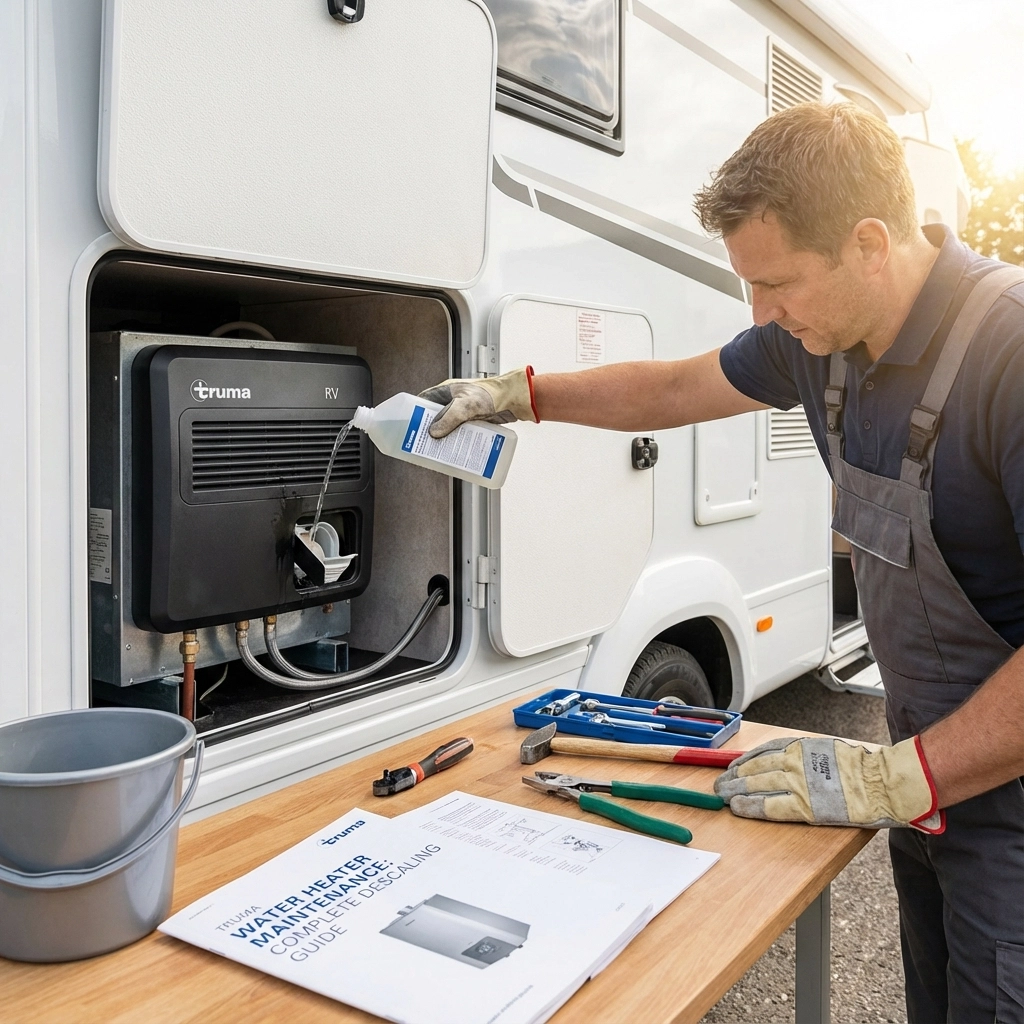
Truma water heater maintenance mainly involves regular descaling, system inspection, and water quality management to prevent mineral buildup and performance loss. With hard water affecting over 85% of US regions in 2026, proper descaling has become the single most critical factor in extending your RV water heater’s lifespan and maintaining optimal heating efficiency.
Why Truma Water Heater Maintenance Matters
Mineral buildup represents the primary threat to RV water heater performance across the United States. Google Trends data from 2026 shows that searches for “RV water heater scale removal” and “hard water RV problems” have increased 340% compared to 2024, reflecting growing awareness among full-time RVers about water quality impacts.
Hard water regions spanning from Arizona’s mineral-rich groundwater to Florida’s limestone aquifers create challenging conditions for RV water systems. When water contains high concentrations of calcium and magnesium, typically above 150 parts per million (PPM), these minerals precipitate out during heating, forming stubborn scale deposits on heat exchangers and internal components.
The cost consequences are significant. A properly maintained Truma water heater operates at 95% efficiency, while a scaled unit can drop to just 60% efficiency, increasing propane consumption by up to 40%. Neglected systems often require complete replacement within 3-4 years, compared to well-maintained units lasting 8-10 years with regular descaling.
Real-world scenarios demonstrate these impacts clearly. Full-time RVers traveling through Nevada’s Carson City area, notorious for 400+ PPM hard water, report visible scale buildup within just 2-3 months without proper filtration and descaling protocols.

What Is Descaling?
Descaling removes accumulated mineral deposits from your water heater’s internal components, particularly the heat exchanger surfaces where scale formation concentrates during heating cycles. Unlike simple flushing, which removes sediment and debris, descaling dissolves crystallized calcium and magnesium deposits bonded to metal surfaces.
Truma Combi units present unique descaling considerations compared to standard RV water heaters. The Combi’s integrated space heating function means scale affects both hot water delivery and cabin heating performance. Additionally, the compact heat exchanger design requires more frequent attention in hard water environments.
Understanding key terminology helps optimize your maintenance approach:
Limescale refers to the white, chalky deposits visible around faucets and fixtures, the same minerals accumulating inside your water heater. Hard water measures above 120 PPM total dissolved solids (TDS), with “very hard” classifications starting at 180 PPM. Heat exchanger fouling describes the efficiency loss occurring when scale insulates heating elements from water flow.
The chemical process involves carbonate precipitation accelerated by temperature. As water heats above 140°F, dissolved minerals rapidly convert to solid deposits, explaining why water heaters accumulate scale faster than cold water components.
How Often Should You Descale a Truma Water Heater?
Truma recommends descaling frequency based on water hardness levels and usage patterns rather than fixed time intervals. Current guidelines suggest monitoring total dissolved solids (TDS) in your water source and adjusting maintenance schedules accordingly.
Several factors directly influence descaling frequency requirements:
Water hardness levels represent the primary variable. Soft water areas (below 60 PPM) may require annual descaling, while extremely hard water regions (above 300 PPM) demand quarterly maintenance. Portable TDS meters, available for under $20, provide accurate hardness readings for any water source.
Full-time versus recreational usage significantly impacts scale accumulation. Full-timers using their water heater daily accelerate mineral buildup, particularly during high-demand scenarios like consecutive showers or dishwashing sessions.
Winterization cycles create additional considerations. The freeze-protection process of draining and refilling systems introduces fresh minerals with each cycle, effectively “resetting” the scale accumulation process.
Based on 2026 usage data from RV maintenance facilities across hard water states, recommended intervals are:
- Soft water (0-60 PPM): 12-18 months
- Moderate hardness (60-120 PPM): 8-12 months
- Hard water (120-180 PPM): 4-6 months
- Very hard water (180+ PPM): 2-3 months
How to Descale Truma Water Heater (Step-by-Step Guide)
Tools & Materials Checklist
Gather these essential items before beginning your descaling procedure:
Descaling solutions include white vinegar (most accessible option) or citric acid powder (more effective for heavy buildup). Avoid CLR, Lime-Away, or other harsh chemicals not specifically approved for RV water systems.
Safety equipment requires protective gloves, safety glasses, and adequate ventilation if working in enclosed spaces. Chemical burns from concentrated descaling solutions pose real risks during the process.
Water system tools include fresh water hose, drain container (minimum 10-gallon capacity), funnel for solution mixing, and basic hand tools for accessing drain plugs.
Testing equipment such as TDS meters help monitor water quality before and after descaling, while infrared thermometers verify proper heating performance post-maintenance.
Step-by-Step Descaling Process
Power down and cool your Truma system completely before beginning. Hot water heater maintenance on energized systems risks thermal shock damage to internal components and poses burn hazards.
System preparation involves turning off the water pump, disconnecting city water supply, and opening hot water faucets to depressurize the system. Remove inline water filters to prevent clogging during chemical circulation.
Solution preparation requires mixing descaling chemicals according to manufacturer specifications. For white vinegar, use a 1:1 ratio with fresh water (5 gallons vinegar, 5 gallons water). Citric acid requires 1 cup powder per 10 gallons of water.
Chemical introduction happens through your RV’s water inlet connection. Connect your solution container and slowly introduce the mixture while opening hot water taps to ensure complete system coverage. Stop when descaling solution flows from all outlets.
Contact time allows chemical action to dissolve accumulated scale. Plan 6-8 hours for heavy buildup or 3-4 hours for routine maintenance. Longer contact time improves cleaning effectiveness without risking component damage.
Thorough flushing removes dissolved minerals and chemical residues. Flush with at least 20 gallons of fresh water through all hot water outlets until no chemical taste or smell remains. Inadequate flushing leaves corrosive residues that damage seals and gaskets.
For RVers planning extended off-grid adventures, proper water heater maintenance becomes even more critical. Our guide on winterizing your RV covers additional system protection strategies for cold weather storage.
Truma Combi Water Heater Maintenance Tips
Truma Combi units require specialized attention due to their dual heating and hot water functions. The integrated design means scale buildup affects both systems simultaneously, making regular maintenance even more critical for off-road RV applications.
Electric and gas system considerations include checking both heating elements during descaling procedures. Scale buildup affects electric elements more severely than gas burners, often causing element failure before gas components show problems.
Vent and intake inspection ensures proper combustion air flow during operation. Scale particles can partially obstruct air passages, reducing efficiency and creating potential safety hazards during operation.
Winter storage precautions specific to Combi units include complete system drainage and antifreeze protection for both water and heating circuits. The complex internal passages require thorough drainage to prevent freeze damage.
US climate considerations affect Combi performance across different regions. High-altitude locations above 6,000 feet require altitude adjustment settings, while desert environments stress both water and space heating systems through extreme temperature cycling.
Common Mistakes to Avoid During Descaling
Using inappropriate chemicals tops the list of expensive maintenance errors. Muriatic acid, commercial lime removers, and automotive cooling system cleaners can destroy seals, gaskets, and heat exchanger materials permanently.
Insufficient flush cycles leave chemical residues that cause ongoing corrosion damage. Many RV owners underestimate the 20+ gallons required for complete flushing, particularly in large systems with extensive hot water lines.
Ignoring temperature requirements during descaling creates additional problems. Introducing cold descaling solution into hot systems causes thermal shock, while inadequate cooling before maintenance risks chemical burns and component damage.
Over-descaling frequency can actually harm your water heater through excessive chemical exposure. Monthly descaling schedules, even in hard water areas, may damage seals and gaskets faster than scale accumulation would affect performance.
Best Practices to Prevent Scale Buildup
Inline water filtration provides the first line of defense against mineral accumulation. Quality RV water filters remove sediment and reduce dissolved mineral content, extending time between descaling cycles significantly.
Water softener systems offer comprehensive protection for RVers frequently encountering hard water. Portable units regenerate with salt tablets and can reduce TDS levels from 400+ PPM to under 50 PPM consistently.
Regular system drainage after camping trips removes mineral-rich water before extended storage periods. This simple step prevents concentrated mineral deposits from forming during inactive periods.
Campground water source selection impacts long-term maintenance requirements. Many experienced RVers research water quality reports for their destinations and adjust routes to avoid extremely hard water areas when practical.
Understanding regional water quality helps planning maintenance schedules. The Southwest’s mineral-rich groundwater requires more aggressive prevention strategies compared to Pacific Northwest’s naturally soft surface water supplies.
For RVers exploring remote locations where water quality varies significantly, our dispersed camping guide includes water sourcing and treatment recommendations for off-grid adventures.
Maintenance Checklist for Truma Water Heaters
Monthly inspections should include visual checks for leaks around connections, testing water temperature consistency, and monitoring heating time from startup to full temperature.
Seasonal maintenance encompasses complete system inspection, scale accumulation assessment, and preventive descaling if operating in hard water environments consistently.
Annual deep service includes complete descaling regardless of water quality, seal and gasket inspection, electrical connection checking, and gas system safety verification for Combi units.
Documentation helps track maintenance patterns and identify developing issues early. Recording water quality measurements, maintenance dates, and performance observations provides valuable troubleshooting data for future problems.
FAQs About Truma Water Heater Maintenance
How do I know if my Truma water heater needs descaling?
Key indicators include longer heating times, reduced hot water quantity, unusual noises during operation, and visible mineral deposits around faucets. TDS measurements above your baseline readings also signal increased mineral accumulation.
Can I descale a Truma water heater myself?
Yes, basic descaling procedures are within typical RV owner capabilities. However, Combi units with gas components may require professional service for safety inspections and combustion system maintenance.
What happens if I don’t descale my RV water heater?
Neglected systems lose efficiency rapidly, increase fuel consumption significantly, and often fail completely within 3-4 years. Scale buildup can also restrict water flow and cause overheating damage to heating elements.
Is descaling covered under warranty?
Most warranties exclude damage from lack of maintenance, including scale-related failures. However, proper descaling documentation may support warranty claims for premature component failures.
How long does Truma water heater maintenance take?
Complete descaling requires 8-12 hours including contact time, though active work time is only 2-3 hours. Plan for a full day when scheduling maintenance procedures.
Why BlackSeries Recommends Proper Water Heater Maintenance
BlackSeries RV designs integrate robust water systems specifically engineered for off-road and overland adventures where maintenance access may be limited. Our off-road trailers regularly encounter extreme water quality conditions from desert mineral springs to mountain snowmelt, making preventive maintenance critical for reliable operation.
Reliability matters exponentially when exploring remote locations hours from professional service facilities. A failed water heater during a backcountry adventure affects not just comfort but safety, particularly in cold weather conditions where hot water provides essential warmth and hygiene capabilities.
BlackSeries electrical systems include enhanced monitoring capabilities that help owners track water heater performance trends. These integrated diagnostics support proactive maintenance scheduling based on actual usage patterns rather than generic time intervals.
Our commitment to adventure-ready reliability extends beyond manufacturing to comprehensive owner education. Proper maintenance knowledge empowers BlackSeries owners to explore confidently, knowing their systems will perform reliably regardless of environmental challenges encountered.
Regular Truma water heater maintenance, centered on proper descaling procedures, ensures consistent hot water availability for years of reliable adventure. Whether exploring hard water regions across the American Southwest or tackling remote overland routes, well-maintained water heating systems provide the reliability foundation that makes extended off-grid adventures both comfortable and safe.

