Checking trailer tire pressure before towing isn’t just routine maintenance, it’s a critical safety step that prevents blowouts, reduces trailer sway, and ensures optimal performance. Unlike passenger vehicles, trailers carry concentrated loads that make proper tire pressure essential for safe highway speeds and off-road adventures. For BlackSeries owners tackling heavy-duty, long-distance, and off-road scenarios, maintaining correct PSI becomes even more crucial for reliable performance in challenging conditions.
What Is Trailer Tire Pressure?
PSI (Pounds per Square Inch) measures the air pressure inside your tire, determining how much weight the tire can safely carry and how it performs under different conditions. Understanding PSI is fundamental to safe towing and optimal tire performance.
Trailer tires differ significantly from passenger vehicle tires in their construction and pressure requirements. ST (Special Trailer) tires are specifically designed for trailer use, featuring stiffer sidewalls and higher load ratings compared to passenger tires. These tires typically require higher PSI levels, often 50-80 PSI compared to the 30-35 PSI common in passenger vehicles.
LT (Light Truck) tires are also used on heavy-duty trailers and offer enhanced durability for off-road conditions. The key difference lies in load capacity: trailer tires must support static loads without the benefit of suspension systems found in vehicles, making proper inflation critical for structural integrity.
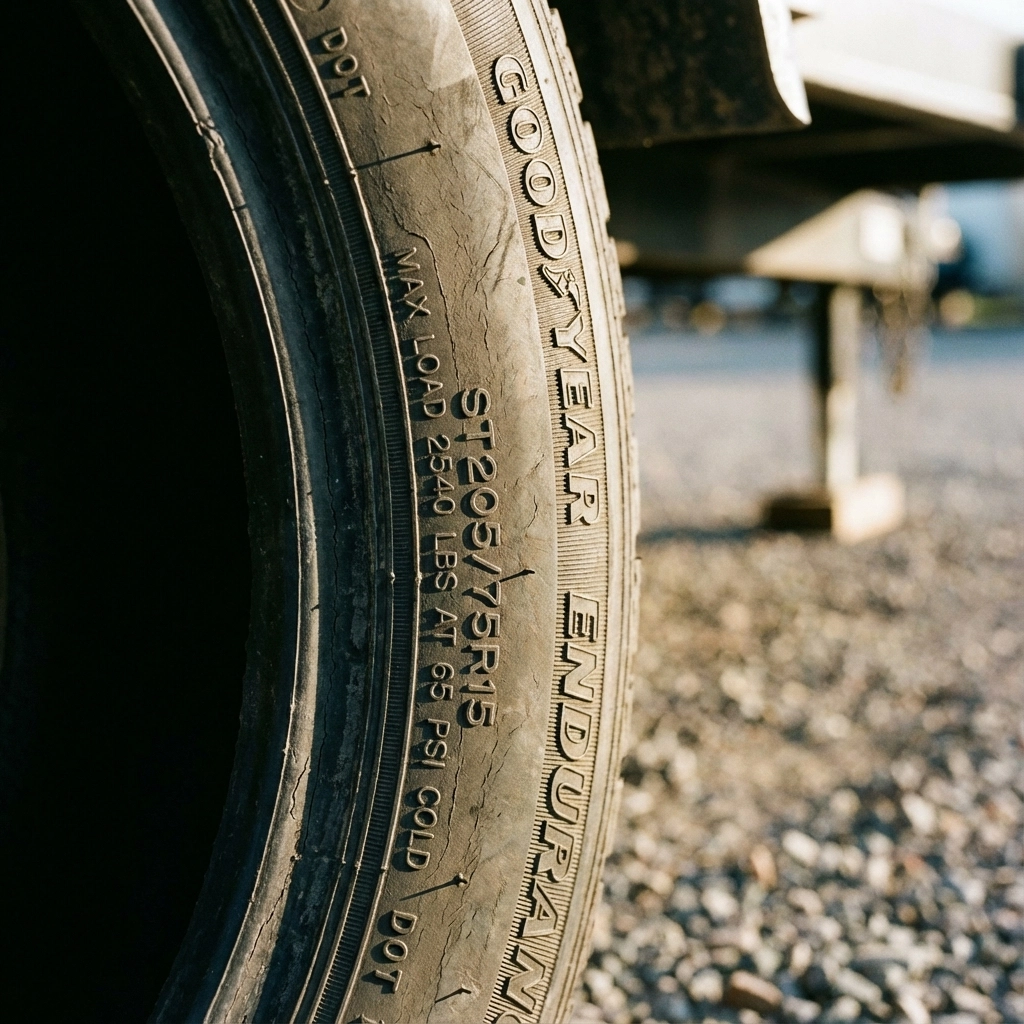
Reading tire sidewall information correctly is essential. The sidewall displays maximum load capacity alongside the corresponding PSI required to achieve that capacity. This “Max Load” rating should be your baseline, not your ceiling, especially for heavy-duty applications.
Why Checking Trailer Tire Pressure Matters
According to the National Highway Traffic Safety Administration, tire failure accounts for approximately 11% of vehicle crashes, with underinflation being the leading cause. For trailers, this risk multiplies due to higher loads and limited driver visibility of trailer tire conditions.
Proper tire pressure directly impacts several critical performance factors:
Load Carrying Capacity: Every 10 PSI drop below recommended pressure reduces tire capacity by 10-15%, potentially leading to catastrophic failure under full load conditions.
High-Speed Stability: Underinflated tires generate excessive heat through increased sidewall flexing, leading to tread separation or blowouts at highway speeds.
Braking Distance: Low tire pressure increases rolling resistance and reduces contact patch effectiveness, extending stopping distances when you need them most.
Tire Longevity: Proper inflation ensures even wear patterns and maximum tire life, while underinflation causes premature edge wear and overinflation leads to center wear.
For heavy-duty and off-road trailers, these risks compound significantly. Off-road conditions place additional stress on tires through impacts, punctures, and varying terrain loads. Combined with the remote locations typical of adventure travel, tire failure becomes not just inconvenient but potentially dangerous.
Proper Trailer Tire Pressure: What PSI Should You Use?
Finding the correct PSI requires checking multiple sources to ensure accuracy. Start with the tire sidewall, which displays maximum pressure and corresponding load rating. This provides your upper limit but may not reflect optimal operating pressure for your specific load.
Check your trailer placard if equipped, usually located near the entry door or weight specification label. This manufacturer recommendation considers your trailer’s actual weight distribution and axle ratings.
Understanding cold tire pressure versus hot tire pressure is crucial. Always measure and adjust pressure when tires are cold, after sitting for at least three hours or before driving more than one mile. Driving generates heat that increases pressure by 4-6 PSI, giving false readings that can lead to underinflation.
Load conditions significantly impact optimal pressure. Empty trailers may operate safely at lower pressures, but fully loaded trailers, especially those carrying water, gear, and supplies for extended trips, require maximum sidewall pressure to maintain structural integrity.
Most trailer applications benefit from inflating to maximum sidewall PSI rather than reduced pressures used in passenger vehicles. This approach provides maximum load capacity and heat resistance essential for safe highway towing.
Tools You Need to Check Trailer Tire Pressure
Essential equipment for accurate pressure monitoring includes:
Digital tire pressure gauge offers the highest accuracy and easiest reading, typically accurate within ±1 PSI. These tools provide quick measurements and clear displays, making them ideal for regular checks.
Analog tire pressure gauge provides reliable backup option and doesn’t require batteries. Choose quality models with large, easy-to-read dials for accuracy in various lighting conditions.
Portable air compressor ensures you can adjust pressure anywhere, particularly important for remote camping locations. Look for models with adequate capacity for trailer tire volumes and multiple tire inflation.
TPMS (Tire Pressure Monitoring System) represents an advanced option for real-time monitoring while driving. These systems alert you to pressure drops and overheating conditions, particularly valuable for long-distance travel.
Valve extensions help access inner dual tires or awkwardly positioned valves common on trailer applications.
How to Check Trailer Tire Pressure (Step-by-Step)
Step 1 – Park on Level Ground
Position your trailer on level, stable ground away from traffic. Engage parking brakes and use wheel chocks for additional safety. Level positioning ensures accurate readings and safe working conditions.
Step 2 – Let Tires Cool (Cold Pressure)
Wait at least three hours after driving or check before your first trip of the day. Cold tire pressure provides accurate baseline measurements essential for proper inflation decisions.
Step 3 – Remove Valve Cap
Remove valve caps from all tires, including spares. Store caps safely to prevent loss, they protect valve stems from dirt and moisture that can cause slow leaks.
Step 4 – Measure PSI with Gauge
Press gauge firmly onto valve stem, ensuring complete seal to prevent air loss. Record readings for each tire position to identify patterns or individual tire issues.
Step 5 – Adjust to Proper PSI
Add air as needed using your compressor, checking pressure frequently to avoid overinflation. If pressure is too high, release air gradually while monitoring with your gauge.
Step 6 – Recheck All Tires (Including Spare)
Verify all tires meet target pressure, including spare tire which is often overlooked but critical for emergency situations. Replace valve caps securely after completing checks.

Trailer Tire Pressure Before Towing: Final Checklist
Before departing, complete this systematic verification:
- All tires at proper PSI according to load and manufacturer specifications
- Left and right tires matched to prevent uneven wear and handling issues
- Spare tire checked and properly inflated for emergency use
- Valve caps secured to protect valve stems from contamination
This systematic approach ensures optimal safety and performance throughout your journey. Consider documenting pressure readings for reference during extended trips.
Common Trailer Tire Pressure Mistakes to Avoid
Using passenger vehicle pressure standards represents the most dangerous mistake. Trailer tires require higher pressures due to different loading and suspension characteristics.
Ignoring cold tire standards leads to chronic underinflation as hot pressure readings give false high readings. Always measure and adjust when tires are cold.
Failing to recheck after extended parking allows natural pressure loss to accumulate. Tires lose 1-3 PSI monthly through normal permeation, making regular checks essential.
Reducing pressure for off-road use without readjusting creates highway dangers. While lower pressures improve traction on sand or rocks, highway speeds require full pressure for heat resistance and stability.
For those planning water crossings or extreme terrain, refer to our trailer water crossing safety guide for comprehensive preparation strategies.
Best Practices for Heavy & Off-Road Trailers (BlackSeries Insight)
Heavy-duty trailers like BlackSeries models require enhanced attention to tire pressure due to increased loads and demanding operating conditions. These trailers often carry full water tanks, extended-stay supplies, and heavy-duty equipment that approaches or exceeds standard trailer capacities.
Highway versus off-road requirements differ significantly. Highway travel demands maximum sidewall pressure for heat resistance and stability at sustained speeds. Off-road conditions may benefit from moderate pressure reductions for improved traction and ride quality, but require careful monitoring and prompt readjustment before returning to highways.
BlackSeries trailers, designed for extended off-grid adventures, benefit from TPMS systems that monitor pressure and temperature continuously. The remote locations and challenging conditions typical of these adventures make tire failure particularly problematic, making preventive monitoring essential.
Regular pressure checks become even more critical when towing in high winds or extreme weather conditions. For additional safety considerations in challenging weather, review our camping in high winds safety guide.
FAQ
How often should I check trailer tire pressure?
Check tire pressure before every trip and weekly during active towing seasons. Monthly checks suffice for stored trailers, but verify pressure before any use after extended storage periods.
What happens if trailer tire pressure is too low?
Underinflated tires generate excessive heat, reduce load capacity, and increase blowout risk. You may experience poor fuel economy, increased tire wear, and reduced handling stability.
Should trailer tires be inflated to max PSI?
Yes, most trailer applications benefit from maximum sidewall pressure to ensure full load capacity and optimal heat resistance. Unlike passenger vehicles, trailers don’t benefit from reduced pressure for ride comfort.
Do trailer tires lose pressure faster than car tires?
Trailer tires typically lose pressure at similar rates to passenger tires: 1 to 3 PSI monthly. However, extended storage periods and temperature variations can accelerate pressure loss.
Can I rely on TPMS alone?
TPMS provides excellent real-time monitoring but shouldn’t replace regular manual checks. Use TPMS as an early warning system while maintaining routine pressure verification with accurate gauges.
Proper trailer tire pressure management ensures safe, reliable towing performance whether you’re heading to local campgrounds or embarking on extended off-grid adventures. Regular monitoring, proper tools, and understanding your specific requirements create the foundation for confident, safe travels with your trailer.

