Winter RV adventures offer breathtaking scenery and peaceful solitude, but they also present unique challenges, especially when it comes to maintaining warmth during unexpected power outages or extreme cold conditions. Whether you’re winter camping in remote locations or caught off-guard by severe weather, having reliable emergency heating solutions can mean the difference between a memorable adventure and a dangerous situation.
The importance of emergency heating extends beyond mere comfort. Prolonged exposure to freezing temperatures can lead to hypothermia, frozen water systems, and costly RV damage. This comprehensive guide will equip you with the knowledge and strategies needed to stay warm and safe when your primary heating system fails.
Why RVs Need Emergency Heat Sources
RVs face unique vulnerabilities during winter conditions that make backup heating essential. Understanding these risks helps you prepare effectively for challenging situations.
Common Heat Loss Scenarios
Power Grid Failures: Winter storms frequently cause widespread power outages at RV parks and campgrounds. Without shore power, your RV’s electric heating systems become useless, leaving you dependent on alternatives.
Propane System Malfunctions: Cold weather can cause propane regulators to freeze, gas lines to clog, or furnace components to fail. When your primary propane heating system goes down, you need immediate alternatives.
Fuel Depletion: Extended cold snaps consume propane faster than expected. Running out of fuel in remote locations without immediate resupply options creates emergency situations.
Extreme Temperature Drops: Sudden temperature plunges can overwhelm standard RV heating systems, requiring supplemental heat sources to maintain livable conditions.
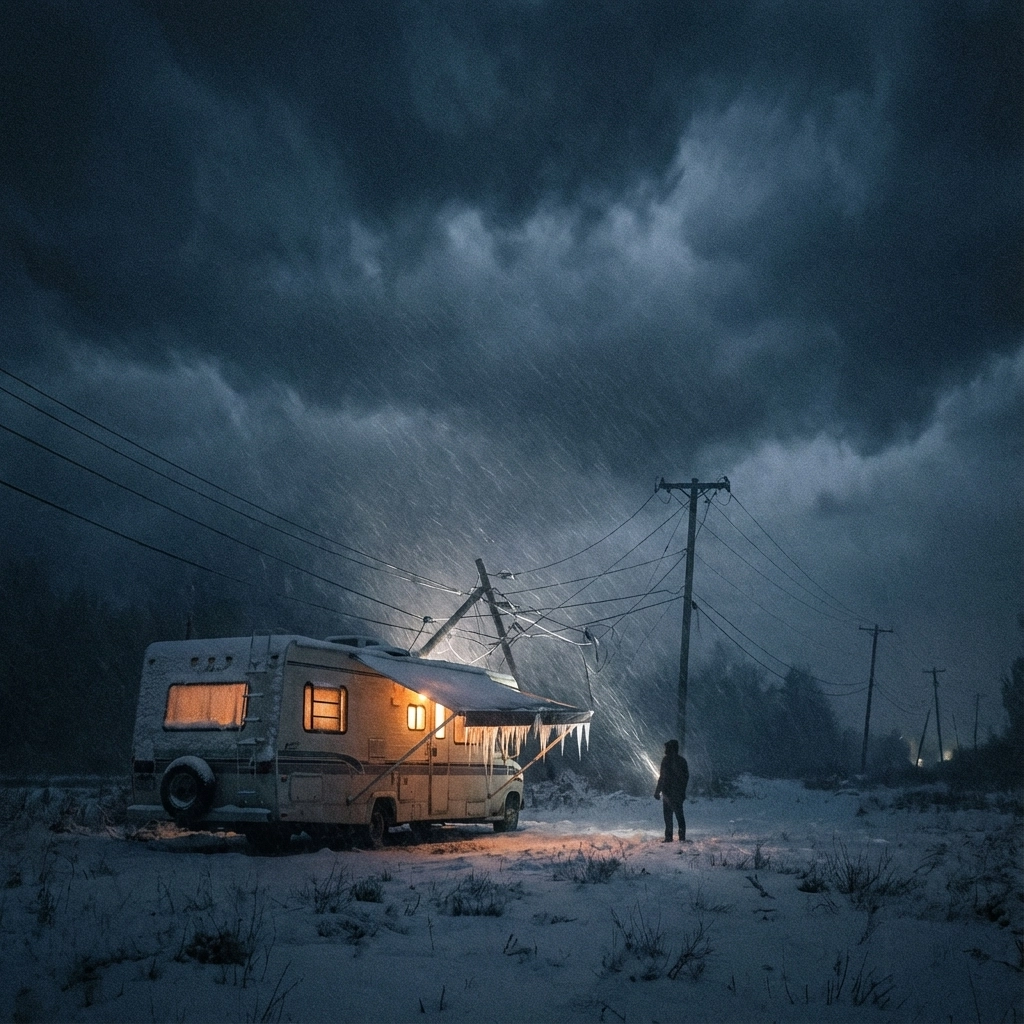
Real-World Risk Examples
Consider these common scenarios: You’re boondocking in a national forest when a blizzard knocks out cell service and temperatures drop to -10°F overnight. Your furnace fails due to a frozen propane line. Or you’re at a campground when an ice storm cuts power for three days, and your electric heaters stop working.
BlackSeries RV owners often venture into challenging environments where these situations are more likely to occur, making emergency heating preparation crucial for safe off-road adventures.
Emergency Heating Options Comparison
Understanding your heating alternatives helps you choose the right combination for your specific needs and RV setup.
Portable Electric Space Heaters
Advantages:
- Instant heat with precise temperature control
- No combustion gases or ventilation requirements
- Compatible with generators and RV inverter systems
- Wide variety of sizes and heat outputs available
Disadvantages:
- High power consumption (1000-1500 watts typical)
- Requires consistent electrical supply
- Limited runtime on battery power alone
- Can overload RV electrical systems
Best Use Cases: Short-term heating when generator or shore power is available, supplemental heating in specific areas.
Portable Propane Heaters
Advantages:
- Independent of electrical power systems
- High heat output relative to fuel consumption
- Readily available fuel supply
- Effective in extreme cold conditions
Disadvantages:
- Requires adequate ventilation to prevent carbon monoxide buildup
- Produces moisture that can cause condensation issues
- Safety risks if used improperly
- Cannot operate in enclosed spaces without proper ventilation
Best Use Cases: Emergency heating when electrical power is unavailable, heating larger RV spaces quickly.

RV Furnace Systems
Advantages:
- Integrated into RV’s safety and ventilation systems
- Designed specifically for RV use
- Efficient fuel consumption
- Thermostat control for consistent temperatures
Disadvantages:
- Requires both propane and 12V electrical power
- Complex system with multiple failure points
- Professional service required for repairs
- May struggle in extreme cold conditions
Best Use Cases: Primary heating system when both propane and battery power are available.
Portable Generators
Advantages:
- Powers multiple electrical heating devices
- Extends heating capabilities significantly
- Can recharge RV batteries simultaneously
- Provides power for other essential systems
Disadvantages:
- Noise considerations in campgrounds
- Requires fuel storage and regular maintenance
- Weather-dependent operation
- Initial investment cost
Runtime Estimates: A 2000-watt generator typically runs 8-10 hours on one gallon of gasoline while powering a 1500-watt space heater.
Passive Insulation Solutions
Components:
- Reflective window coverings and thermal curtains
- Door and window sealing improvements
- Floor insulation upgrades
- Roof vent covers and draft stoppers
While not heat sources themselves, these solutions dramatically reduce heat loss, making your active heating systems more effective and extending their runtime.
Critical Safety Guidelines
Emergency heating safety requires vigilance and proper equipment to prevent carbon monoxide poisoning, fires, and electrical hazards.
Carbon Monoxide Protection
Essential Equipment:
- Install CO detectors with audible alarms
- Check detector batteries monthly
- Replace detectors every 5-7 years
Ventilation Requirements:
- Crack windows slightly when using propane heaters
- Ensure exhaust vents remain unobstructed
- Never use outdoor heaters inside enclosed spaces
Warning Signs: Headaches, dizziness, nausea, confusion, or drowsiness may indicate CO exposure. Exit immediately and seek fresh air.
Fuel and Fire Safety
Propane Handling:
- Store propane cylinders upright and secured
- Check connections for leaks using soapy water
- Never store propane cylinders inside the RV
- Maintain proper clearances around heating devices
Generator Safety:
- Position generators downwind and away from RV intakes
- Never operate generators inside enclosed spaces
- Maintain adequate fuel supplies without over-storing
Electrical Load Management
Power Calculations:
- Standard RV electrical systems: 30-amp (3,600 watts) or 50-amp (12,000 watts)
- Typical space heater consumption: 1,000-1,500 watts
- Leave capacity margin for other essential systems
Battery Considerations:
- Monitor battery voltage regularly
- Avoid deep discharge cycles that damage batteries
- Consider supplemental battery capacity for extended heating needs
Choosing Your Emergency Heating Solution
Selecting the right emergency heating approach depends on your travel style, RV capabilities, and typical destinations.
Scenario-Based Recommendations
BlackSeries RV Advantages
BlackSeries RVs are engineered for extreme conditions, featuring enhanced insulation, robust electrical systems, and thoughtful heating integration. These design elements provide better foundation for emergency heating strategies compared to standard recreational vehicles.
For those considering an off-road travel trailer, understanding heating capabilities should be a key factor in your decision-making process.
Frequently Asked Questions
What is the safest emergency heating method for RVs?
The safest approach combines a properly ventilated propane heater with working CO detectors, or electric space heaters when adequate power is available. Never compromise on ventilation or safety equipment to achieve warmth.
Can a portable generator provide enough power for RV heating?
A 2000-watt generator can typically power a 1500-watt space heater plus essential RV systems. Calculate your total electrical load carefully and ensure adequate generator capacity with safety margin.
How can I conserve power during extended heating periods?
Prioritize insulation improvements first, then use efficient heating sources. Heat only occupied areas, lower thermostat settings when sleeping, and combine active heating with warm clothing and bedding.
Is it safe to run propane heaters unattended overnight?
No. Portable propane heaters should never operate without supervision. For overnight heating, use properly installed RV furnace systems with safety shutoffs, or electric heaters with automatic shut-off features.
What’s the best way to prevent frozen pipes during heating emergencies?
Keep cabinet doors open to allow warm air circulation around plumbing. Focus heating efforts near water systems, and consider using RV-specific water system protection methods during extreme conditions.
Conclusion
Effective emergency heating preparation combines the right equipment, safety knowledge, and practical planning. By understanding your options and implementing proper safety measures, you can confidently handle heating challenges during winter RV adventures.
Remember that the best emergency heating strategy is a layered approach: improve insulation, maintain multiple heat sources, ensure proper safety equipment, and practice using your systems before you need them in an emergency.
For RV owners seeking vehicles designed for challenging conditions, explore the BlackSeries RV lineup built to handle extreme weather while maintaining comfort and safety standards.

