An off-road camper is a heavy-duty travel trailer built for rugged terrains like deserts and forests. It’s perfect for overlanders who want comfort without limits. Choosing one involves matching your tow vehicle’s capacity to the camper’s weight and ensuring it has a reinforced chassis and independent suspension.
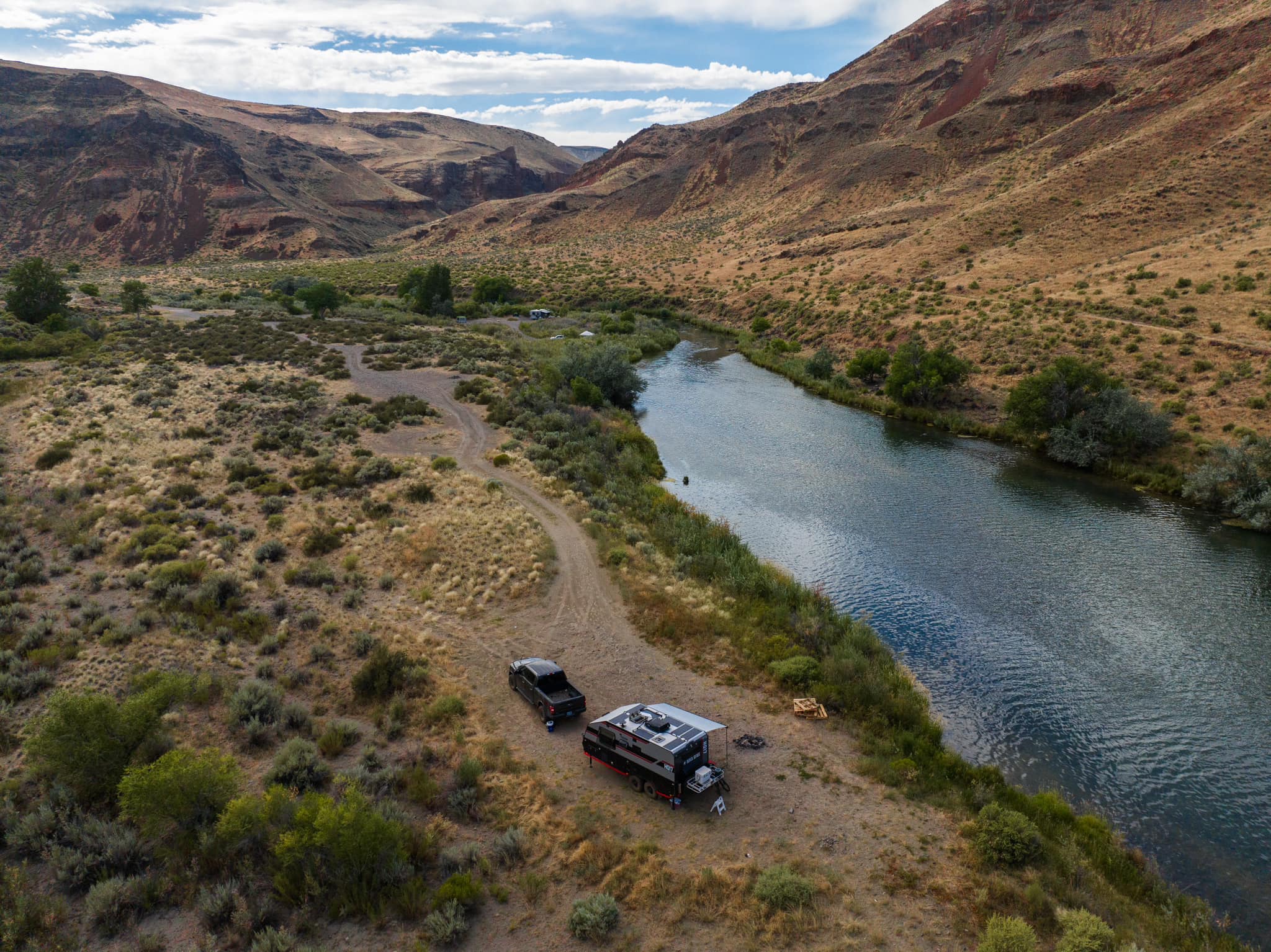
If you’ve been scrolling through social media lately, you’ve probably seen those jaw-dropping photos of campers parked in places that seem impossible to reach. That’s the magic of off-road campers. Unlike your neighbor’s standard travel trailer that’s designed for highway cruising and campground hookups, these rigs are built to take you where the pavement ends, and then some.
What Makes an Off-Road Camper Different?
Built for Punishment, Not Pavement
An off-road camper is a specialized travel trailer engineered for remote camping in challenging environments. While the average travel trailer weighs between 3,000 to 6,000 pounds and rides on a basic suspension system designed for smooth roads, off-road campers come with reinforced everything.
Here’s what sets them apart:
- Independent Suspension: Instead of the torsion axle found on most highway trailers, off-road models feature independent suspension with heavy-duty shocks. This means each wheel responds individually to terrain changes, keeping your rig stable on washboard roads and rocky trails.
- All-Terrain Tires: Forget those highway-rated tires. Off-road campers roll on aggressive tread patterns designed for mud, sand, and rock, the same stuff you’d find on a serious 4×4 truck.
- 4WD Compatibility: These trailers are designed to follow wherever your truck can go. The departure angle, ground clearance, and overall geometry are optimized so you’re not scraping the frame on every rock.
- Off-Grid Capacity: True off-road campers come standard with robust solar systems (typically 400W or more), lithium battery banks, and large freshwater tanks. You’re looking at 80-100 gallons of fresh water versus the 30-40 gallons in standard models.
When you compare a 24 ft camper weight between a standard highway model (around 5,500 lbs) and an off-road version (closer to 4,800 lbs with reinforced chassis), you’ll notice manufacturers prioritize strength-to-weight ratios differently. Off-road campers use materials like aluminum and composite panels to shed unnecessary weight while beefing up the chassis and suspension.
How to Select and Configure Your Off-Road Camper
Choosing the right off-road camper isn’t just about picking the coolest-looking trailer. Here’s a practical checklist to guide your decision:
Matching Weight to Your Tow Vehicle
This is where people mess up the most. Your truck’s towing capacity is just one number, you also need to consider:
- Tongue Weight: Typically 10-15% of the trailer’s total weight. A 16 ft camper weight of 3,200 lbs means about 400 lbs on your hitch.
- Payload Capacity: This includes passengers, gear, fuel, and tongue weight combined.
- Dry Weight vs. GVWR: The 30 foot rv weight you see advertised is usually the dry weight. Add water (8.3 lbs per gallon), propane, food, gear, and you’re looking at an extra 1,500-2,000 lbs easily.
Most serious off-roaders prefer staying in the 16-19 foot range. The compact footprint makes maneuvering on narrow trails easier, and the reduced 30 ft camper weight means you’re not pushing your truck to its absolute limit on steep grades.

The Best Off-Road Campers for 2026: BlackSeries Lineup
Let’s talk specifics. Here are three of the most capable off-road campers you can buy right now:
BlackSeries HQ12: Compact Dominator
Specs at a Glance:
- Body Length: 12 feet (15 feet total with tongue)
- Dry Weight: ~2,850 lbs
- Sleeps: 2-4 people
- Ideal For: Weekend warriors and minimalist couples
The HQ12 proves you don’t need a massive rig to go big places. Its compact 12-foot body and manageable weight make it towable by most mid-size trucks and SUVs. Don’t let the size fool you, it’s packed with a full galley kitchen, convertible dinette, and a rooftop tent that pops up to sleep two more.
The independent coil-spring suspension handles washboard roads like a champ, and the sealed underbelly keeps dust and debris out when you’re crawling through the backcountry. With 200W of solar and a 120Ah lithium battery system, you can easily go 3-4 days off-grid before needing a hookup.
BlackSeries HQ19: The Versatile Explorer
Specs at a Glance:
- Body Length: 19 feet
- Dry Weight: ~4,800 lbs
- Sleeps: 4-6 people
- Ideal For: Families and extended adventures
The HQ19 is the sweet spot for most adventurers. It bridges the gap between compact agility and spacious comfort. Inside, you get a full queen bed, convertible dinette, wet bath, and a proper kitchen with a three-burner stove.
What really sets this model apart is the four-season insulation package. We’re talking heated underbelly, double-pane windows, and a diesel heater that’ll keep you toasty when you’re camping at 10,000 feet in October. The 400W solar array and upgraded 200Ah lithium system mean you can run the heater, fridge, and lights simultaneously without generator support.
For towing, you’ll want a full-size truck (F-250, Ram 2500, Silverado 2500) with at least 12,000 lbs of capacity. The average weight of camper in this class fully loaded hits around 6,200-6,500 lbs.
BlackSeries HQ21: Flagship Luxury
Specs at a Glance:
- Body Length: 21 feet
- Dry Weight: ~5,400 lbs
- Sleeps: 6+ people
- Ideal For: Long-term overlanders and luxury seekers
If you’re serious about going remote for weeks at a time, the HQ21 is your rolling basecamp. This flagship model doesn’t compromise on comfort or capability. You get a separate bedroom with a queen bed, a full bathroom with a shower and cassette toilet, a massive galley with a full-size fridge, and enough storage to carry a month’s worth of supplies.
The tech upgrades include a 600W solar system, 400Ah lithium battery bank, a 3,000W inverter, and smart battery management that monitors everything from your phone. The independent suspension is upgraded with Fox shocks, the same ones trophy trucks use, giving you ride quality that’ll spoil you forever.
Yes, the 30-foot camper weight (including tongue) approaches 7,000+ lbs when loaded, so you’ll need a heavy-duty truck. But for serious overlanders tackling trans-continental routes or multi-week BLM camping, there’s no substitute for this level of capability.
The Buying Guide: What Actually Matters
Beyond the Brochure Weight
Here’s something most dealers won’t tell you: the advertised weight is almost meaningless. That 30 foot rv weight listed at 6,200 lbs? Add:
- Fresh water (100 gallons = 830 lbs)
- Propane (two 20-lb tanks full = 40 lbs)
- Food and cooking supplies (200 lbs)
- Clothing and personal items (150 lbs)
- Outdoor gear (chairs, tables, awning = 100 lbs)
- Recovery equipment (winch, recovery boards, tools = 150 lbs)
You’re now at 7,670 lbs. Suddenly that truck you thought was “plenty capable” is maxed out.
Pro tip: Shop based on your truck’s capacity, not the trailer’s dry weight. If your payload is 2,000 lbs and tongue weight will be 800 lbs, you have just 1,200 lbs left for passengers and gear. This is why many experienced overlanders move to 3/4-ton or 1-ton trucks.
Suspension: Why Independent Wins
Standard torsion axles work fine for graded dirt roads and maintained Forest Service routes. But if you’re serious about technical trails, think Moab’s backcountry or Death Valley’s remote tracks, independent suspension is non-negotiable.
Here’s why:
- Articulation: Each wheel moves independently, keeping tires in contact with the ground over uneven terrain
- Durability: Coil springs and shock absorbers handle repeated impacts better than torsion bars
- Ride Quality: Less jarring when you hit rocks or ruts at speed
- Maintenance: Easier to service and upgrade components
For context, check out our guide on off-road travel trailers that breaks down suspension systems in detail.
Off-Grid Power: Size It Right
This is where people either overbuild or underbuild. Here’s a simple formula:
- Calculate Daily Usage: Add up all your devices (fridge = 40Ah, heater = 30Ah, lights = 10Ah, water pump = 5Ah) = 85Ah per day
- Add 30% Buffer: 85Ah × 1.3 = 110Ah per day
- Multiply by Days Off-Grid: 110Ah × 3 days = 330Ah minimum battery capacity
- Size Solar: You need enough solar to replace what you use daily. In winter or cloudy conditions, expect only 3-4 hours of “good” sun. So 110Ah ÷ 4 hours = 27.5A charging current. At 12V, that’s 330W of solar (round up to 400W to account for losses)
Most weekend warriors do fine with 200-400W solar and 200Ah lithium. If you’re going 7+ days regularly, step up to 400-600W and 400Ah.
Real-World Use Cases
Desert Adventures: Heat and Sand
Challenges: Extreme temperatures (110°F+ days, 40°F nights), soft sand, dust infiltration, intense UV exposure
Configuration Needs:
- High-efficiency AC unit (13,500 BTU minimum)
- Reflective awning and insulated windows
- Large water capacity (80+ gallons) for longer shower use
- Sealed underbelly and battery compartments to prevent dust damage
- AT tires aired down to 18-20 PSI for sand traction
The HQ19 with its four-season package handles desert extremes well. The insulation works both ways, keeping heat out during the day and warmth in at night. One user reported camping near Death Valley for five days in August with zero hookups, running the AC for 6-8 hours daily on solar alone.
Mountain Trails: Grades and Altitude
Challenges: Steep grades (8-12%), narrow switchbacks, high altitude (8,000-12,000 ft), sudden weather changes, rocky terrain
Configuration Needs:
- Independent suspension with long-travel shocks
- High ground clearance (12+ inches)
- Electric brakes with a quality brake controller
- Four-season insulation and a diesel heater
- Compact wheelbase (under 20 feet) for tight turns
For Colorado’s Alpine Loop or similar high-altitude trails, the HQ12 or HQ19 are ideal. The shorter wheelbase lets you navigate hairpin turns without needing a spotter, and the robust suspension absorbs the constant pounding from embedded rocks.
Check out why off-road RVs excel in extreme terrain for more technical insights.
Cross-Country Overlanding: Distance and Endurance
Challenges: Thousands of miles on mixed terrain, varying climates, extended time off-grid (7-14+ days), limited resupply options
Configuration Needs:
- Large fuel capacity for generator or diesel heater
- 400W+ solar with 400Ah+ lithium battery
- 100-gallon fresh water tank
- Spare parts kit (belts, fuses, bearings)
- Satellite communication device
- Multiple mounting points for external gear (bikes, kayaks, recovery equipment)
The HQ21 was literally designed for this scenario. With its massive battery bank, ample storage, and robust chassis, it’s the rig for tackling the Trans-America Trail or spending a month exploring Baja. One couple documented a 6-week trip from Montana to Arizona, staying entirely off-grid on BLM and National Forest land. Their only “resupply” stops were for fuel and groceries.
Common Questions About Off-Road Campers
What’s the difference between an off-road camper and a standard travel trailer?
Standard trailers are built for paved highways and established campgrounds with hookups. They have basic suspension, lower ground clearance (typically 8-9 inches), and minimal off-grid capability. Off-road campers feature reinforced chassis, independent suspension, 11-14 inches of ground clearance, sealed underbellies, and comprehensive solar/battery systems. They’re engineered to handle corrugated dirt roads, creek crossings, and rocky trails while providing electricity and water for extended periods without hookups.
How do I pick the right size off-road camper?
Start with your tow vehicle’s capacity, not your wish list. Calculate the tongue weight (10-15% of total loaded weight) and ensure it fits within your truck’s payload rating after accounting for passengers and gear. For most mid-size trucks and SUVs, an 18 ft camper weight of 4,000-4,500 lbs loaded is the practical upper limit. Full-size half-ton trucks handle up to 6,500 lbs comfortably. Anything beyond that requires 3/4-ton or 1-ton capability. Also consider where you’ll camp, narrow forest roads favor shorter trailers (under 19 feet), while open desert or mountain routes can accommodate longer models.
Can I ensure my off-road camper will have enough power off-grid?
Yes, but you need to size your system properly. Calculate your daily power consumption in amp-hours (Ah), multiply by the number of days you want to stay off-grid, and add a 30% buffer. Your solar array should be able to replenish that daily draw in 4-5 hours of good sunlight. For example, if you use 85Ah per day, you need at least 200Ah of battery capacity for 2-3 days off-grid and 300-400W of solar to keep up. Lithium batteries and MPPT charge controllers are essential for efficiency.
What configuration works best for extreme weather?
Four-season construction is mandatory. Look for heated and enclosed underbellies, double-pane windows, closed-cell foam insulation in walls and ceiling, and a diesel or propane furnace (diesel is more efficient). For hot climates, ensure you have adequate AC capacity (13,500+ BTU), good ventilation (powered roof vents), and solar power to run everything. Awnings with reflective coatings help reduce heat gain. If you’re camping in variable conditions (desert to mountains), the HQ19 or HQ21 with full four-season packages are your best bet.
Do I need a 4×4 truck to tow an off-road camper?
Not necessarily, but it helps. The trailer itself doesn’t require 4WD to follow you: it goes wherever you pull it. However, 4WD or AWD in your tow vehicle gives you the traction to climb steep grades, cross soft sand, or navigate muddy trails without getting stuck. Most serious off-roaders opt for 4×4 trucks specifically because the terrain that’s worth reaching requires it. If you’re sticking to graded dirt roads and maintained Forest Service routes, a capable 2WD truck with good tires and proper weight distribution works fine.
The Bottom Line: Built Different for a Reason
Off-road campers aren’t just regular trailers with beefier tires slapped on. They’re purpose-built machines for adventurers who refuse to let dirt roads and remote locations limit their explorations. From the reinforced chassis to the independent suspension, from the massive solar arrays to the sealed underbellies, every component is engineered for reliability in harsh conditions.
Whether you’re eyeing the compact HQ12 for weekend getaways, the versatile HQ19 for family adventures, or the flagship HQ21 for serious overlanding, the key is matching your rig to your ambitions: and your truck’s capabilities.
The average weight of camper matters, but weight distribution, suspension quality, and off-grid systems matter more. Don’t just buy based on length or “coolness factor.” Buy based on where you actually want to camp and how your truck realistically performs under load.
For more insights into maximizing your off-road setup, explore our complete guide to off-road trailer RVs and learn what makes these rigs the gold standard for backcountry exploration.
The dirt roads are calling. Your next adventure is waiting past the pavement’s edge. Make sure you’re equipped to answer.

