An off-road trailer camper is a ruggedly engineered vehicle featuring independent suspension and chassis protection designed for remote, all-weather camping. Unlike standard RVs, these are built to handle extreme terrains while providing off-grid luxury for adventure-seeking families and solo explorers who refuse to let rough roads limit their horizons.
Table of Contents
- What Defines an Off-Road Trailer Camper?
- How to Select & Configure Your Off-Road Camper
- Best BlackSeries Off-Road Trailer Campers for 2026
- Buying Guide: Key Factors to Consider
- Real-World Use Cases for Off-Road Campers
- Frequently Asked Questions
What Defines an Off-Road Trailer Camper? {#definition}
Let’s cut through the marketing noise. An off-road camper trailer isn’t just a regular RV with knobby tires slapped on. It’s a purpose-built machine engineered from the ground up to withstand punishment that would leave conventional trailers in pieces on the trail.
Core Engineering Differences
Independent Suspension: This is where the magic happens. Unlike the rigid axles found on road-focused campers, independent suspension allows each wheel to respond individually to terrain changes. When you’re crawling over boulders or dipping through desert washes, this system absorbs impacts without transferring destructive forces to your trailer’s frame or living quarters.
All-Terrain Tires: We’re talking about aggressive tread patterns rated for mud, sand, and rock. These tires typically run at lower pressures (18-25 PSI) for better traction and shock absorption compared to the 50+ PSI highway tires on standard RVs.
Load-Bearing Capacity: Off-road trailers use reinforced chassis with welded steel construction rather than bolted frames. This isn’t about the average weight of camper you’re hauling: it’s about the structural integrity to handle lateral forces, articulation, and repeated flex cycles without cracking.
Weather Protection: Sealed underbody panels, military-grade insulation, and enclosed water systems mean you’re not limited to summer trips. These trailers handle sub-zero mountain camps and triple-digit desert heat with equal confidence.
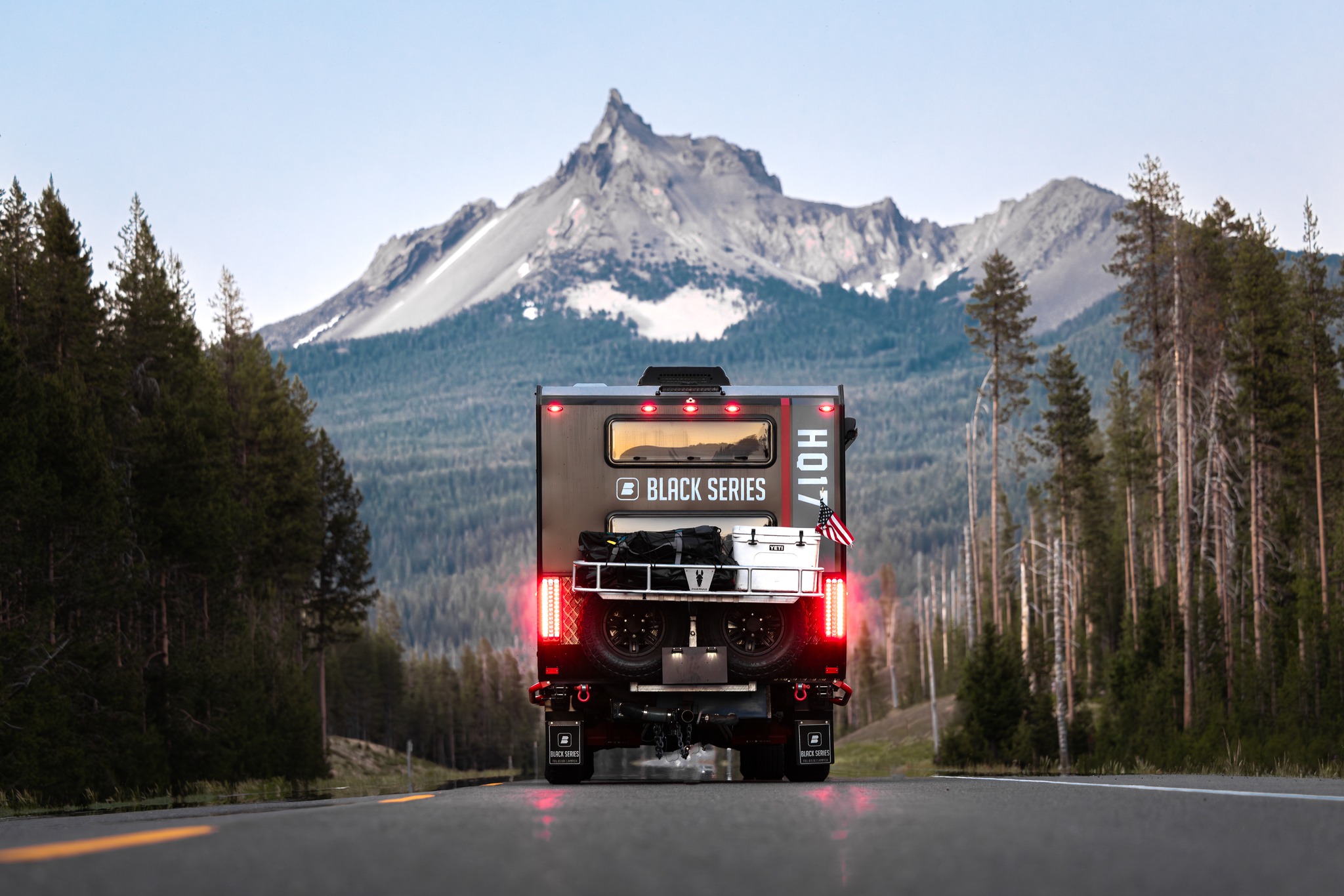
Off-Road vs. Standard Travel Trailers
The average travel trailer weights you’ll find at mainstream dealers: ranging from 3,000 pounds for a basic 16-footer to 7,000+ pounds for a 30-foot unit: tell only half the story. Standard trailers prioritize interior space and amenities over ground clearance and durability. They’re optimized for paved campgrounds with full hookups, not BLM land 40 miles from the nearest cell tower.
An off-road camper sacrifices some interior volume for:
- 14-18 inches of ground clearance (vs. 8-10 inches standard)
- Departure angles of 25-35 degrees
- Reinforced frame rails and crossmembers
- Exterior storage for recovery gear and extra fuel
If you’ve ever read our guide on why off-road trailers are the best adventure RVs, you already know these design choices aren’t compromises: they’re prerequisites for true backcountry access.
How to Select & Configure Your Off-Road Camper {#how-to}
Choosing the right off-road trailer isn’t about picking the prettiest brochure. It’s a systematic process of matching vehicle capabilities to your adventure goals. Here’s your decision framework:
Step 1: Define Your Use Case
Weekend Warrior: 2-3 day trips within 200 miles of home. Focus on quick-deploy features and manageable weight (3,500-4,500 lbs dry).
Long-Distance Overlander: Week-long expeditions crossing multiple states. Prioritize fuel range, water capacity (40+ gallons), and robust power systems (400W+ solar).
Full-Time Remote Living: Extended off-grid stays. You’ll need four-season insulation, redundant systems, and maximum storage: typically found in units like the HQ19 or HQ21.
Step 2: Weight Matching & Towing Requirements
This is where most buyers make expensive mistakes. Your tow vehicle’s payload capacity (not towing capacity) determines what you can safely haul.
Lightweight Options (16-18 ft):
- 16 ft camper weight: 2,800-3,500 lbs (dry)
- 18 ft camper weight: 3,200-4,000 lbs (dry)
- Suitable for: Mid-size trucks (Tacoma, Ranger), full-size SUVs
- Best for: Solo travelers and couples
Mid-Size Options (24 ft):
- 24 ft camper weight: 4,500-5,800 lbs (dry)
- Requires: Full-size half-ton truck minimum (F-150, Silverado 1500)
- Best for: Families of 3-4
Full-Size Options (30 ft):
- 30 foot rv weight: 6,500-8,000 lbs (dry)
- Requires: ¾-ton truck or better (F-250, Ram 2500)
- Best for: Extended families or full-time travelers
Remember, dry weight is a lie. Add 1,000-1,500 pounds for water, gear, food, and personal items. That 5,000-pound trailer becomes 6,500 pounds loaded. Make sure your truck’s payload can handle the tongue weight (typically 12-15% of total trailer weight).

Step 3: Suspension Type Evaluation
Independent Suspension (Recommended):
- Individual wheel articulation
- Better shock absorption
- Higher cost but worth it for serious off-roading
- Examples: Coil-over shocks, trailing arm systems
Torsion Axle (Budget-Friendly):
- Rubber cushion absorbs impacts
- Less maintenance than leaf springs
- Limited articulation compared to independent systems
- Good for moderate trails
Leaf Spring (Avoid for Off-Road):
- Found on budget trailers
- Poor articulation
- Transmits shocks directly to frame
- Only suitable for gravel roads
Step 4: Off-Grid Systems Configuration
Your power and water setup determines how long you can stay out:
Minimum Off-Grid Package:
- 200W solar
- 100Ah lithium battery
- 30-gallon fresh water
- 3-5 day capacity
Extended Off-Grid Package:
- 400W+ solar
- 200Ah+ lithium battery
- 50-gallon fresh water
- 7-10 day capacity
Extreme Off-Grid Package:
- 600W+ solar with MPPT controller
- 300Ah+ lithium battery bank
- 60+ gallon fresh water
- Generator backup
- 14+ day capacity
Step 5: Safety & Recovery Equipment Checklist
Before you head out, ensure you have:
✓ Proper brake controller (proportional, not time-delayed)
✓ Weight-distribution hitch for trailers over 5,000 lbs
✓ Two spare tires (matching your all-terrain setup)
✓ Tire pressure monitoring system (TPMS)
✓ Recovery boards (MaxTrax or similar)
✓ Tow straps and D-shackles
✓ Portable air compressor
✓ Basic tool kit and zip ties (the universal fixer)
For more technical details on tire setup, check out our comprehensive tire pressure guide.
Best BlackSeries Off-Road Trailer Campers for 2026 {#best-models}
We’ve built our reputation on three core models that dominate different segments of the off-road market. Here’s the honest breakdown:
BlackSeries HQ12: The Family Weekend Explorer
Best For: Families of 2-4 looking for weekend adventures without compromising comfort
Key Specs:
- Length: 12 feet (closed)
- Dry Weight: ~3,200 lbs
- Sleeps: 4 adults comfortably
- Water Capacity: 40 gallons
- Solar: 190W standard
Why It Works: The HQ12 hits the sweet spot between capability and practicality. It’s light enough for a well-equipped F-150 or Silverado 1500 to tow confidently, yet tough enough for most forest service roads and BLM routes. The hard-shell fold-out design means you’re setting up camp in under 5 minutes: critical when you’re racing daylight or weather.
The compact footprint makes navigation through tight trails less stressful, and the enclosed aerodynamic design delivers surprisingly good fuel economy for an off-road trailer. You won’t be breaking bank accounts at the fuel pump.
Limitations: Storage is tight for gear-heavy trips. If you’re packing mountain bikes, kayaks, and a week’s worth of food, you’ll need to get creative with your packing strategy.
BlackSeries HQ19: The Long-Range Overlander
Best For: Serious adventurers tackling extreme conditions and multi-week expeditions
Key Specs:
- Length: 19 feet
- Dry Weight: ~5,400 lbs
- Sleeps: 4-5 adults
- Water Capacity: 66 gallons
- Solar: 400W+ expandable system
Why It Dominates: This is the trailer for people who laugh at “road ends” signs. The HQ19 features our most advanced independent suspension system with 16 inches of ground clearance and coil-over shocks that absorb punishment like they’re bored.
The power system is where it shines for extended trips: 400 watts of solar feeding a 200Ah lithium bank means you’re running the AC, fridge, and lighting without generator noise. The 66-gallon water capacity extends your off-grid capability to 10-14 days depending on conservation habits.
Real Talk: This isn’t a lightweight option. You need a properly equipped ¾-ton truck minimum. The extra weight and length make it less nimble on extremely technical trails, but for overlanding routes, desert crossings, and mountain camps, it’s unmatched.
BlackSeries HQ21: The Smart Tech Flagship
Best For: Tech-savvy explorers who want maximum luxury and capability with smartphone integration
Key Specs:
- Length: 21 feet
- Dry Weight: ~6,100 lbs
- Sleeps: 6+ adults
- Water Capacity: 76 gallons
- Solar: 600W+ with smart monitoring
Why It’s Premium: The HQ21 represents the pinnacle of our engineering: smart home integration meets extreme off-road capability. Monitor and control every system from your phone: battery levels, water tanks, interior temperature, lighting scenes, and even diagnose issues before they become problems.
The interior layout maximizes livable space without sacrificing structural integrity. Full kitchen with residential-style appliances, proper bathroom with hot water shower, and convertible living areas mean you’re not roughing it: you’re glamping at 8,000 feet elevation.
Investment Reality: This is our flagship model with pricing to match. You’re looking at 30 foot camper weight territory once loaded, so heavy-duty tow vehicles are non-negotiable. But for families committed to extensive off-grid travel or those transitioning to full-time RV living, the investment pays dividends in comfort and capability.
Explore all current models and configurations
Buying Guide: Key Factors to Consider {#buying-guide}
Let’s talk about the unsexy but critical factors that separate satisfied owners from people selling their rigs after one season.
Weight and Towing Requirements Deep Dive
The 30-foot camper weight comparison point is useful here: A standard 30-foot conventional trailer typically weighs 7,000-9,000 pounds loaded. But here’s what matters more than total weight:
Tongue Weight: Should be 12-15% of total weight. Too light = unstable towing. Too heavy = exceeded payload capacity. Get it weighed, don’t guess.
Gross Vehicle Weight Rating (GVWR): Your trailer’s maximum loaded weight including all cargo, water, and propane. This must be less than your truck’s towing capacity with proper safety margin (20% buffer minimum).
Payload vs. Towing Capacity: Most trucks can tow far more than their payload allows. Your truck’s payload must support the tongue weight plus passengers, fuel, and cargo in the truck bed. A loaded 18 ft camper weight with 600 pounds of tongue weight plus four passengers easily maxes out a half-ton truck’s payload.
Suspension Quality Assessment
Not all independent suspension systems are equal. When evaluating trailers:
Look For:
- Adjustable shock absorbers (for different load conditions)
- Sealed bearings (less maintenance in dusty/wet conditions)
- Bolt-on components (easier field repairs than welded)
- Minimum 14″ ground clearance
- 30+ degrees departure angle
Red Flags:
- Modified trailer axles marketed as “independent” systems
- Non-replaceable components
- No shock absorber service manuals available
- Limited parts availability
Material Quality & Construction
Premium Waterproofing: Marine-grade sealants and welded aluminum construction beat screwed-together panels every time. Water intrusion is the #1 killer of RVs. Pay for quality here.
Four-Season Insulation: Closed-cell foam insulation in walls, floor, and ceiling maintains temperature in extreme heat and cold. Cheap fiberglass batts are worthless in desert or mountain conditions.
Underbody Protection: Full belly pan enclosures protect water lines, wiring, and tanks from trail damage. Check for sealed compartments and protective skid plates.
Power System Configuration
Your electrical system determines comfort level and off-grid duration:
Solar Sizing: 100W per person per day minimum for basic needs (lights, water pump, charging). Add 200W for refrigerator, 300W+ for AC usage.
Lithium vs. AGM Batteries: Lithium costs 2-3x more upfront but delivers:
- 2-3x longer lifespan
- 50% lighter weight
- 100% depth of discharge (vs. 50% for AGM)
- Faster charging
- Better cold weather performance
12V System Quality: All critical systems (water pump, furnace, lights) should run on 12V DC, not requiring inverter power. This maximizes efficiency and reliability.
For comprehensive buying advice, don’t miss our 2025 Off-Road Travel Trailer Buying Guide.
Real-World Use Cases for Off-Road Campers {#use-cases}
Theory is fun. Application is what matters. Here’s how real owners deploy these rigs:
Long-Range Remote Expedition (7-14 Days)
Scenario: Death Valley to Colorado Plateau crossing, mid-October, 1,200 miles mixing pavement and dirt.
Required Setup:
- HQ19 or HQ21 with 400W+ solar
- 60+ gallon water capacity
- ¾-ton truck minimum
- Backup fuel jerry cans (5+ gallons)
- Satellite communication device
Key Challenges: Temperature swings (35°F nights to 95°F days), extended fuel range between stations, water conservation over two weeks, navigation through unmaintained roads.
Benefits: Access to locations impossible for standard RVs. Complete solitude. Zero campground fees. Stargazing that makes you question returning to civilization.
Desert and Mountain Technical Routes
Scenario: Arizona Backcountry Hot Springs Trail, spring weekend trip, 60 miles off-pavement including river crossings and rock gardens.
Required Setup:
- HQ12 minimum (lighter = better for technical sections)
- Independent suspension non-negotiable
- Aggressive all-terrain tires (aired down to 18-20 PSI)
- Recovery boards and tow straps
- Spotters (don’t do this solo)
Key Challenges: Steep grades (15%+), off-camber sections, loose rock, potential for body damage, water crossings up to 18 inches deep.
Benefits: Hot springs camp spot that sees maybe 20 visitors annually. Epic photography locations. Bragging rights for tackling routes that scare most RV owners.
Family Camping with Comfort Priority
Scenario: National Forest basecamp, 5 days, moderate dirt roads, focus on hiking and fishing with kids aged 6-12.
Required Setup:
- HQ21 for maximum interior space and amenities
- Solar sufficient for electronics (tablets, phones, cameras)
- Enclosed shower/toilet facilities
- Outdoor kitchen for meal prep and entertainment
- Awning and outdoor furniture
Key Challenges: Keeping kids entertained without WiFi, managing water usage with showers, maintaining comfort in variable weather, secure toy/bike storage.
Benefits: Introducing children to wilderness without the suffering. Hot showers after dusty trails. Protected sleeping quarters. Creating family memories that last decades.
The benefits of RV lifestyle multiply exponentially when you can access locations unavailable to conventional campers.
Frequently Asked Questions {#faq}
What makes an off-road camper trailer different from regular campers?
Off-road camper trailers feature three critical engineering differences: independent suspension systems for individual wheel articulation, reinforced chassis construction to handle flex and impacts, and protected underbody systems that prevent trail damage. They prioritize ground clearance (14-18″) and departure angles (25-35°) over interior volume. The average weight of camper in the off-road category focuses on strategic weight distribution rather than minimizing total weight.
What are the most important features when choosing an off-road trailer?
Prioritize suspension quality first: independent systems outperform torsion axles for serious terrain. Second, verify ground clearance matches your intended trails (14″ minimum for moderate routes, 16″+ for technical). Third, assess off-grid capability through solar capacity (200W minimum, 400W+ preferred) and water storage (40+ gallons for extended trips). Fourth, confirm your tow vehicle can handle loaded tongue weight within its payload rating, not just towing capacity.
Are off-road camper trailers suitable for all types of camping?
Off-road trailers excel at remote, unimproved campsites but work perfectly fine at established campgrounds. However, their compact interiors and rugged design might feel spartan compared to luxury RVs for paved-park camping. They’re ideal for BLM land, National Forest dispersed camping, desert overlanding, and mountain trails. Less ideal for RV resorts where you’re paying for amenities the trailer already provides. Think of them as Swiss Army knives: capable of everything, optimized for adventure.
How can I improve fuel efficiency when towing an off-road camper?
Aerodynamics matter more than weight for highway efficiency. Keep speeds at 60-65 MPH maximum: every 5 MPH above this increases fuel consumption by 15-20%. Maintain proper tire pressure (check when cold, adjust for load). Remove roof racks and cargo when not needed. Use cruise control on flat terrain but disable in mountains where engine braking improves efficiency. Expect 8-12 MPG towing versus 15-20 MPG solo depending on truck and trailer combination. The 16 ft camper weight options deliver best fuel economy due to reduced frontal area.
Do I need a 4×4 truck to tow an off-road trailer?
Not for the towing itself: rear-wheel drive works fine on pavement and maintained dirt roads. However, 4×4 becomes essential when accessing remote campsites. Consider where you’ll camp: if the last 5-10 miles involves loose sand, deep mud, steep grades, or river crossings, 4×4 isn’t optional. Many owners run 2WD trucks with proper tires for 80% of trips, then rent a 4×4 or join friends for extreme destinations. Match your truck’s capability to your boldest adventure plans, not your average trip.
How long can an off-road camper stay off-grid?
With proper configuration: 7-14 days comfortably. Key factors include solar capacity (400W+ extends duration significantly), water conservation habits (Navy showers use 1-2 gallons vs. 5+ for regular showers), battery bank size (200Ah+ lithium recommended), and propane for cooking/heating (20 lb tanks last 2-3 weeks). Human waste management becomes the limiting factor for some: composting toilets extend duration while traditional black tanks fill in 3-7 days. Trash storage also limits extended trips unless you pack out religiously.
Take the Next Step Toward Adventure Freedom
Choosing an off-road trailer camper isn’t buying a vehicle: it’s investing in access. Access to solitude. Access to landscapes that don’t appear in Instagram feeds. Access to the version of yourself that exists beyond cell service and crowds.
Whether you’re considering the nimble HQ12 for weekend escapes, the capable HQ19 for serious overlanding, or the flagship HQ21 for extended expeditions, BlackSeries builds trailers that expand your possible, not just your campground options.
Ready to explore your options? Visit our full lineup or dive deeper into how off-road trailers work to make an informed decision.
The wilderness is waiting. Your off-road camper is the key that unlocks it.

