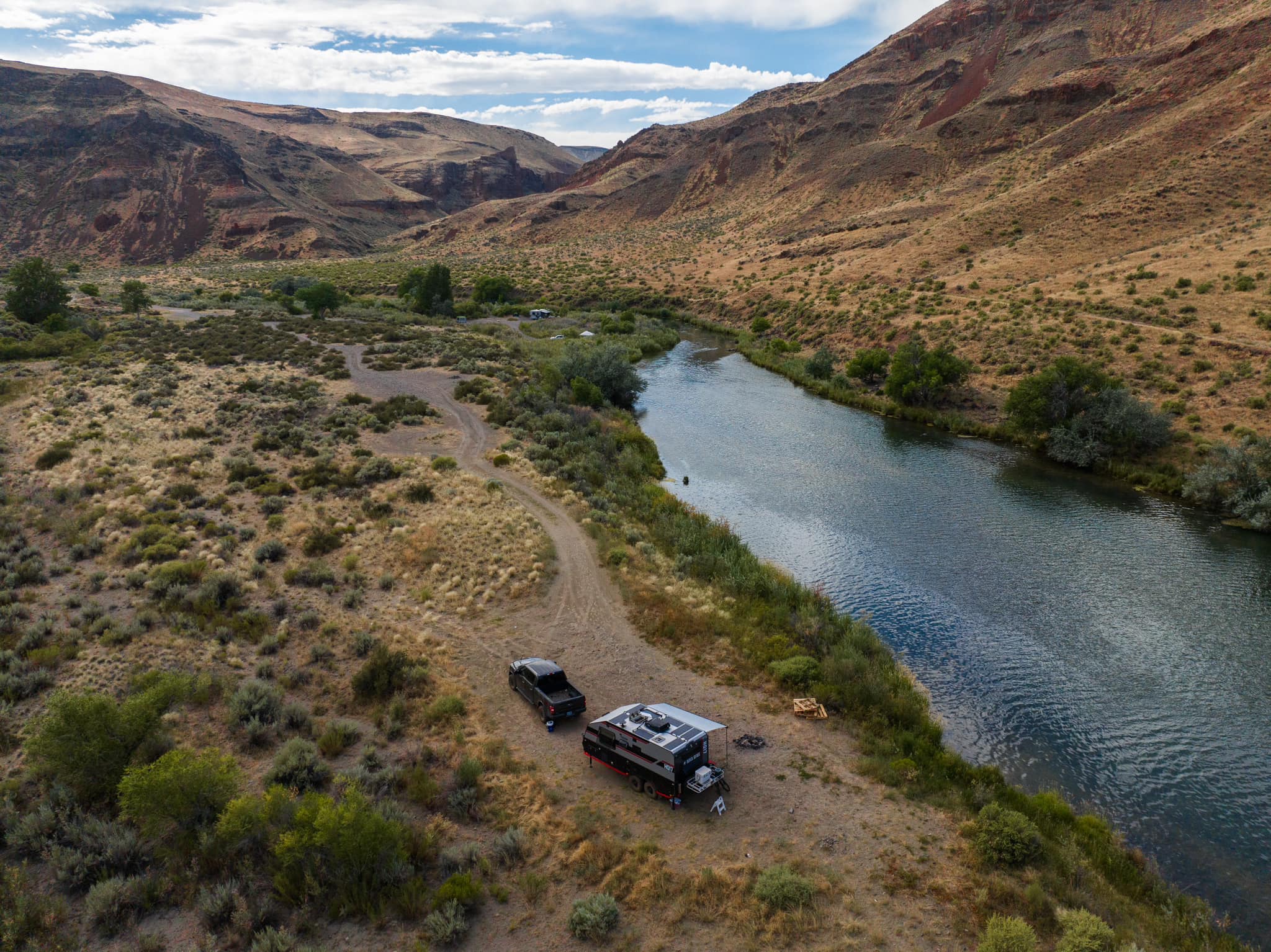
An off road trailer RV is a towable recreational vehicle designed to handle rough terrain, remote access roads, and off-grid travel beyond paved campgrounds. These purpose-built rigs feature reinforced chassis, independent suspension systems, high ground clearance, and all-terrain tires that let you access BLM land, forest service roads, and backcountry campsites where traditional travel trailers simply can’t go. With integrated solar power, lithium battery banks, and rugged construction, off-road trailer RVs give you the freedom to explore remote locations without sacrificing comfort or capability.
What Is an Off Road Trailer RV?
An off-road trailer RV is a specialized towable camper engineered from the ground up to withstand the punishment of unpaved roads, rocky trails, desert sand, and mountain passes. Unlike standard travel trailers built for highway cruising and RV park hookups, these rigs use galvanized or powder-coated steel frames, military-grade suspension components, and reinforced bodies that can handle serious articulation and impact.
Here’s how they differ from other trailer types:
Travel Trailer: Your typical weekend warrior. Built for paved roads and campground hookups. Standard leaf-spring suspension, low ground clearance, and lighter construction. Great for highway travel, but they’ll bottom out or suffer frame damage on rough terrain.
Overland Trailer: Often used interchangeably with “off-road trailer,” but technically refers to expedition-style rigs designed for multi-week or multi-month self-sufficient travel across continents. These are the ultra-rugged versions with maximum payload, extensive water storage, and field-repairable components.
Toy Hauler: Designed to carry ATVs, dirt bikes, or UTVs in a rear cargo bay. While some toy haulers have off-road capability, most prioritize cargo space over true backcountry suspension and chassis design.
In the U.S. market, “RV” (recreational vehicle) is the preferred term over “camper” because it encompasses the broader category of towable and motorized units. When you say “RV,” Americans immediately understand you’re talking about a mobile living space, whether that’s a Class A motorhome, a fifth wheel, or an off-road trailer like the ones BlackSeries builds.
Off Road Trailer RV vs Traditional Travel Trailer
Here’s the no-BS breakdown of what separates a true off-road trailer from a standard highway cruiser:
If you’re planning to camp where there are no level pads, no shore power, and no hookups, you need the left column. If you’re hitting KOA campgrounds every weekend, the right column will do just fine.
Why Choose an Off Road Trailer RV for Camping?
The rise of off-road travel trailers isn’t just a trend, it’s a response to overcrowding, rising campground fees, and a growing desire for solitude in nature. Here’s why more adventurers are going off-road in 2026:
National Parks Are Slammed: Peak-season reservations at places like Yosemite, Zion, and Yellowstone book out months in advance. Even when you score a site, you’re sandwiched between RVs with generators running all night. Off-road trailers let you skip the madness and access dispersed camping areas nearby.
BLM Land Is Free (and Endless): The Bureau of Land Management oversees millions of acres across the western U.S., and much of it allows free camping for up to 14 days. With an off-road trailer, you can pull off forest service roads and set up camp with zero fees and zero neighbors.
Off-Grid = Off-Schedule: No hookups means no check-in times, no site assignments, and no “quiet hours” enforced by campground hosts. You follow your own rhythm, whether that’s stargazing until 2 a.m. or waking up at dawn to catch golden-hour light on a desert ridgeline.
Long-Term Durability: Off-road rigs are built to last. The reinforced chassis, stainless steel hardware, and marine-grade wiring mean your investment won’t rattle apart after a few rough trips. If you’re serious about adventure, you want a trailer that can keep up for years, not just seasons.

Best Off Road Trailer RV: What to Look For
Shopping for an off-road trailer? Here’s what separates the real deals from the wannabes:
Suspension Type
Independent suspension is the gold standard. Torsion axles or coil-over shocks allow each wheel to move independently, so when one side hits a rock or drop, the other side stays planted. This reduces jarring, protects the frame, and keeps your gear from flying around inside. Leaf springs are cheaper and easier to service, but they don’t offer the same articulation or ride quality on rough terrain.
Power System: Solar + Lithium
A true off-grid trailer needs 400–1,000 watts of solar and a lithium battery bank. Lithium batteries charge faster, discharge deeper (up to 80–90% vs. 50% for lead-acid), and last 3–5x longer. Paired with solar, you can run lights, a fridge, fans, and even a microwave without ever plugging in. Check out our guide on off-grid power systems for more details.
Water Storage and Filtration
Look for 20–40 gallons of freshwater capacity and an integrated filtration system. Some rigs include dual tanks so you can refill from streams or lakes and filter on-demand. Grey water tanks should match your fresh capacity so you’re not dumping every two days.
Matching Weight to Your Tow Vehicle
Here’s where things get real: the average weight of camper trailers varies wildly depending on size and build quality. You can’t just eyeball it.
- A lightweight 16 ft camper weight might clock in around 2,500–3,200 lbs dry.
- An 18 ft camper weight typically ranges from 3,000–3,800 lbs.
- A mid-size 24 ft camper weight can hit 4,500–5,500 lbs.
- A fully loaded 30 foot rv weight (or 30 ft camper weight / 30 ft rv weight / 30-foot camper weight) can easily exceed 7,000–9,000 lbs once you add water, gear, and supplies.
When evaluating average travel trailer weights, remember that off-road models are often heavier than standard trailers due to reinforced frames and upgraded components. Always match your rig to your tow vehicle’s GVWR, payload capacity, and tongue weight rating. If you’re pushing limits, you’ll struggle on steep grades and long descents, especially off-road.
Smaller rigs like a 16- or 18-footer offer better maneuverability on tight trails, while a 30-footer brings more living space but demands a heavy-duty tow vehicle. There’s no “best” size, just the best size for your truck and your trails.
BlackSeries Design Philosophy
At BlackSeries, we engineer every trailer with the same mindset: build it to survive, not just to sell. Our rigs use hot-dipped galvanized chassis, composite sandwich-panel bodies, and aluminum cabinetry that won’t warp in humidity or temperature swings. We skip the fragile wood framing and vinyl flooring you’ll find in budget trailers. Every component, from the suspension to the electrical, is chosen for long-term durability and field repairability. If something breaks 200 miles from the nearest town, you want parts you can fix with basic tools, not proprietary systems that require dealer service.
Off Road Trailer RV for Sale: Buying Considerations
Ready to buy? Here’s what to think about before you swipe the card:
New vs. Used: New rigs come with warranties, the latest tech (like upgraded lithium systems), and peace of mind. Used rigs can save you 20–40%, but you need to inspect the chassis, suspension bushings, and battery condition carefully. Off-road trailers take a beating, and poorly maintained units can have hidden frame damage or water intrusion.
Dealer vs. Direct: Buying from a dealer gives you local service, trade-in options (like our off-road RV trade-in program), and financing. Buying direct from the manufacturer can save money, but you’ll handle shipping and may have limited service network access.
After-Sales Support: Check if the brand offers parts availability, online manuals, and a responsive support team. You don’t want to be stuck waiting three weeks for a replacement shock or a wiring harness. BlackSeries maintains a U.S.-based parts inventory and customer support to keep you on the trail.
Looking for deals? Our 2026 RV upgrade offers can help you maximize value when trading in or upgrading to a newer model.
Common Mistakes First-Time Buyers Make
Buying “Cosmetic” Off-Road Features: Mud-terrain tires and a matte-black paint job don’t make a trailer off-road capable. You need to look at the frame, suspension, and ground clearance. If the chassis is standard gauge steel with leaf springs, it’s a poser, not a real backcountry rig.
Ignoring Dry Weight vs. Loaded Weight: The sticker might say 4,200 lbs, but once you add water (8 lbs/gallon), food, gear, tools, and your bike rack, you’re easily at 5,500 lbs. Always calculate loaded weight and ensure your tow vehicle can handle it safely.
Skipping Long-Term Comfort: Off-road capability is critical, but if the interior layout is cramped, the mattress sucks, or there’s no climate control, you won’t enjoy multi-day trips. Test the livability as hard as you test the suspension. Can you stand up inside? Is there room to cook? Does the AC keep up in 95°F desert heat?
FAQ
What makes a trailer RV truly off-road?
A true off-road trailer has a reinforced galvanized or steel chassis, independent suspension (torsion axles or coil-overs), high ground clearance (12+ inches), all-terrain tires with reinforced sidewalls, and an off-grid electrical system with solar and lithium batteries. Cosmetic features like rugged bumpers or exterior racks don’t count if the underlying structure is still built for pavement.
Do I need a special tow vehicle?
Not necessarily “special,” but you need a truck or SUV with sufficient towing capacity, payload rating, and a quality brake controller. Most mid-size and full-size trucks (like the Ford F-150, Ram 1500, or Toyota Tundra) can handle smaller off-road trailers in the 3,500–5,000 lb range. Larger rigs may require a heavy-duty 3/4-ton or 1-ton truck. Always consult your vehicle’s owner’s manual for exact towing specs.
Can off road trailer RVs be used for full-time travel?
Absolutely. Many full-timers use off-road trailers as their primary home, especially those who prefer boondocking over RV parks. The key is choosing a model with enough freshwater capacity, adequate climate control, and durable construction. You’ll also want a robust electrical system with enough solar to run a laptop, fridge, and other daily essentials. BlackSeries models like the HQ series are popular among long-term travelers for exactly these reasons.
Are off road trailer RVs legal in all states?
Yes, off-road trailer RVs are street-legal in all 50 states as long as they meet DOT requirements for lighting, brakes, and registration. However, some states have restrictions on where you can camp: particularly on public lands or state forests. Always check local regulations for dispersed camping, fire restrictions, and permit requirements before heading out.
Ready to take your adventure beyond the pavement? Explore our full lineup of off-road camper trailers built for extreme terrain or dive into our guide on RV lithium power upgrades to max out your off-grid capability. The trail is waiting.

