Off road campers are purpose-built camping vehicles designed to handle rough terrain, remote access roads, and off-grid environments beyond traditional campgrounds.
If you’re tired of fighting for a spot at overcrowded RV parks and ready to explore where asphalt ends, you’re in the right place. Let’s break down everything you need to know about off road campers: from what makes them different to how to choose one that’ll actually survive the places you want to go.
What Are Off Road Campers?
Off road campers are towable recreational vehicles engineered specifically for backcountry adventure. Unlike your typical travel camper that’s built for smooth highway cruising and level RV pads, these rigs are designed from the ground up to handle washboard roads, creek crossings, and rocky trails that would leave a standard camper in pieces.
Here’s where things get confusing: the term “camper” is used pretty loosely in the US market. It can refer to truck campers (the ones that sit in your truck bed), travel campers (towed trailers), or even overland trailers (expedition-focused units). The key difference? Off road campers prioritize terrain capability and off-grid systems, while travel campers focus on interior space and highway comfort. Truck campers are a different beast entirely: they’re mounted units, not trailers. Overland trailers are typically hardcore expedition rigs, often with military-grade specs.
Americans love the word “camper” because it’s broad and approachable: it covers everything from a tiny teardrop to a full-sized off-road travel trailer without the pretension of “recreational vehicle” or the confusion of regional terms.
Why Off Road Campers Are Different From Standard Campers
Let’s get tactical. Here’s what actually separates an off-road rig from a glorified highway box:
The suspension alone is worth the price of admission. Independent suspension systems absorb impacts that would snap a leaf spring setup. That means you can hit a rock the size of a basketball at 15 mph and your dishes won’t end up on the floor.
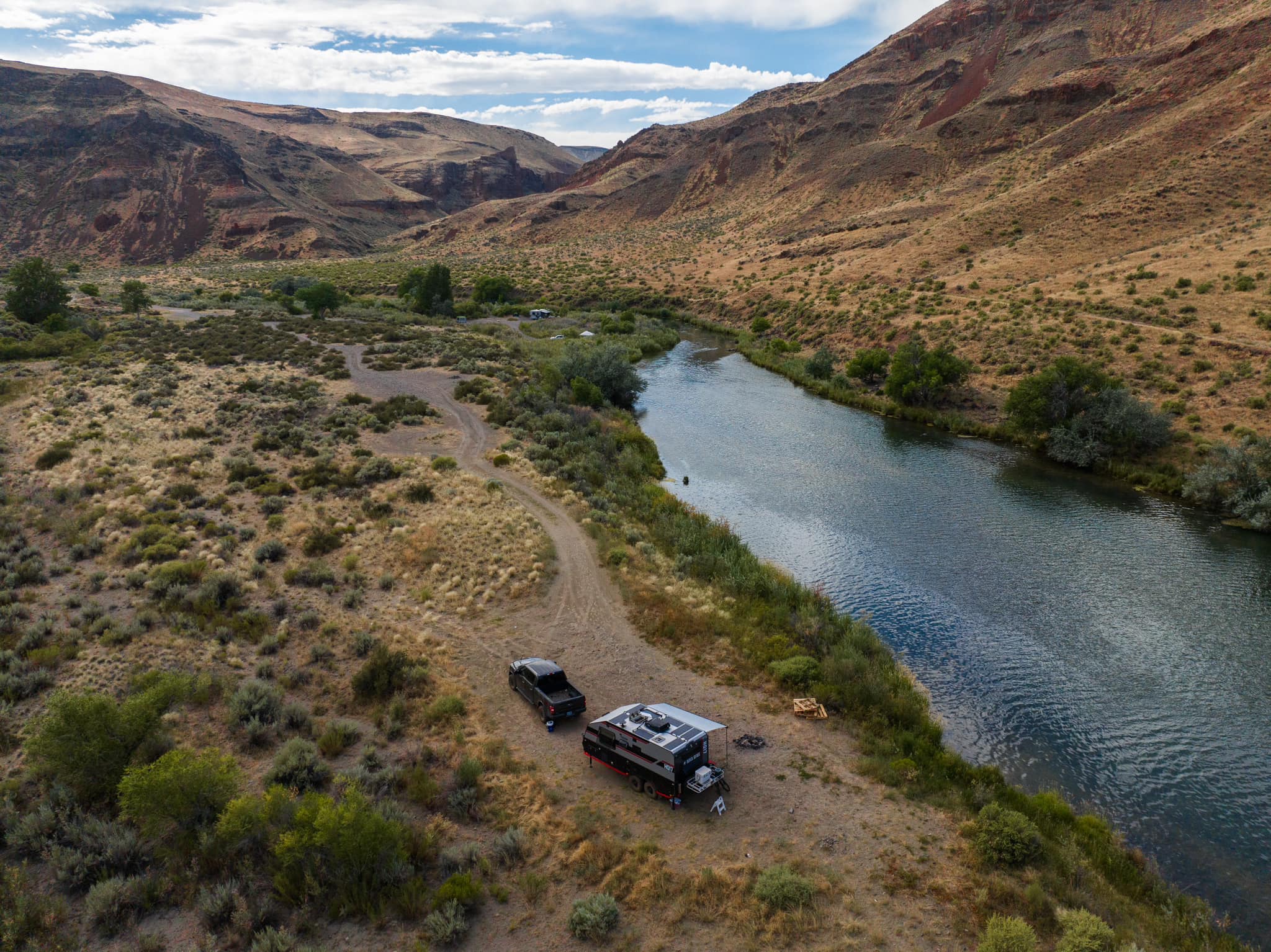
Off Road Campers for Camping: Where They’re Used
This is where off road campers really shine. You’re not limited to booking a spot six months in advance at a crowded campground. You can access:
National Parks (Backcountry Access)
While most RV campers are stuck in designated campgrounds, off road rigs can handle primitive roads and dispersed camping areas. Think the access roads into the deeper sections of Joshua Tree, or the rough routes through parts of Big Bend.
BLM Land
Bureau of Land Management land is a game-changer. Millions of acres across the West where you can camp for free, as long as you follow Leave No Trace principles. An off road camper gives you the range and self-sufficiency to stay out there for weeks.
Forest Service Roads
These graded dirt and gravel roads lead to some of the most stunning campsites in the country. They’re often passable with a standard vehicle, but add stream crossings, ruts, or wet conditions, and you’ll need the clearance and traction of a true off-road setup.
Off-Grid Long Stays
With solar panels, lithium batteries, and large water tanks, modern off road campers can sustain you for 7–14 days without hookups. That’s the difference between a weekend trip and a month-long expedition.
Best Off Road Campers: What to Look For
Here’s where most buyers get it wrong. They see knobby tires and matte black paint and assume it’s trail-ready. Let’s talk about what actually matters.
Structure vs. Weight
The average weight of camper models varies wildly depending on length and features. A compact 16 ft camper weight might clock in around 2,500–3,200 lbs dry, making it towable behind mid-size SUVs. An 18 ft camper weight typically ranges from 3,500–4,200 lbs, while a 24 ft camper weight can easily hit 4,800–5,600 lbs.
Now here’s the critical part: average travel trailer weights don’t tell you much about off-road capability. A heavy-duty galvanized chassis and reinforced frame add weight, but they’re non-negotiable for durability. A 30 foot rv weight (or 30 ft camper weight / 30-foot camper weight) can exceed 7,000 lbs dry, which makes it a beast to tow on tight, technical trails. If you’re serious about accessing remote locations, lighter and shorter often wins: an 18 ft camper weight gives you maneuverability without sacrificing essential features.
The sweet spot? Look for rigs between 3,500–5,500 lbs that balance structural integrity with trail agility.
Suspension Type
Independent suspension or torsion axle systems are standard on serious off road campers. Cheaper models use upgraded leaf springs, which work okay on graded roads but struggle in truly rough terrain. If you’re spending serious money, get the good suspension.
Power Systems
Lithium batteries paired with 300–900W of solar panels are the new baseline. This isn’t just about running lights: it’s about powering fridges, water pumps, AC units, and charging devices for extended periods. BlackSeries rigs, for instance, integrate off-grid power systems that support true long-term boondocking.

Water Systems
Look for at least 30–50 gallons of fresh water capacity, plus gray and black tank storage. Heated holding tanks are critical if you plan to camp in shoulder seasons or cold climates: frozen pipes will end your trip fast.
Build Quality and Longevity
This is where BlackSeries stands out. Our design philosophy isn’t about packing in every luxury feature: it’s about building a rig that won’t fail when you’re 50 miles from cell service. Reinforced chassis, composite walls, and corrosion-resistant materials matter more than fancy interior trim when you’re crossing a creek bed in Utah.
Off Road Campers for Sale: Buying Considerations
Shopping for an off road camper in 2026? Here’s what you need to know.
New vs. Used
New rigs come with warranties and the latest tech: think updated lithium power systems and better insulation. Used models can save you 20–40%, but inspect suspension, frame welds, and water systems closely. Off road wear is real.
US Dealer Networks
Buy from a dealer with a solid service network. You don’t want to be stuck troubleshooting a warranty issue via email with a manufacturer in another country. BlackSeries maintains authorized dealers across the US specifically for this reason.
After-Sales Support and Parts
Can you get replacement parts within a week? Are service manuals available? Off road camping means things break: rocks, branches, and rough roads don’t care about your warranty. Make sure your camper brand has accessible parts and responsive support.
Long-Distance Travel Fit
Some off road campers are built for weekend warriors. Others are designed for full-time or long-term travel. If you’re planning to live in your rig for months at a time, prioritize interior comfort, storage, and system redundancy.
If you’re looking to upgrade from a traditional RV, now’s a good time: dealers are offering competitive trade-in deals in 2026.
Off Road Campers USA: Market Trends
The off road camper market has exploded in the last five years. Here’s why:
Remote Camping Growth
RV park saturation is real. Popular destinations are booking out a year in advance, and prices are climbing. More people are realizing that free BLM land and Forest Service roads offer better camping experiences: and off road campers make it possible.
RV Park Saturation vs. Remote Camping
Even mid-tier RV parks are charging $60–100/night in peak season. For many adventurers, investing in an off-road-capable rig pays for itself in a single summer of dispersed camping.
Shift Toward Off-Grid Capability
American buyers aren’t just asking “Can it tow behind my truck?”: they’re asking “Can it keep me comfortable for two weeks without hookups?” That’s driving demand for serious off-grid power systems, larger water tanks, and durable construction.
Common Mistakes First-Time Buyers Make
Let’s save you some pain:
Mistaking Cosmetic “Off-Road” for Structural Capability
A camper with all-terrain tires and a matte paint job isn’t necessarily off-road ready. Check the chassis, suspension, and frame construction. If the manufacturer can’t tell you the ground clearance or suspension type, walk away.
Ignoring Curb Weight and Tow Ratings
Your truck might be rated to tow 8,000 lbs, but that’s often at sea level on flat pavement. Add altitude, steep grades, and payload (water, gear, passengers), and you’re pushing limits. Match your 30 ft rv weight or 24 ft camper weight to your vehicle’s realistic capability: not just the brochure spec.
Overlooking Long-Term Comfort
Off road capability doesn’t mean you have to sacrifice livability. Poor mattresses, cramped layouts, and inadequate climate control will make you miserable after a week. Test the living space like you’d test-drive a car.
FAQ
What qualifies a camper as “off road”?
A true off road camper features a reinforced chassis, independent or heavy-duty suspension, high ground clearance (14+ inches), all-terrain tires, and robust off-grid systems (solar, lithium batteries, large water tanks). It’s built to handle rough terrain and remote access roads without damage.
Are off road campers street legal in the US?
Yes. Off road campers are fully street legal as long as they meet DOT requirements for lighting, braking, and registration. They’re designed to be towed on highways: they just have the added capability to handle trails and backcountry roads.
Do off road campers require special tow vehicles?
Not necessarily “special,” but they do require adequate tow ratings. Most off road campers weigh between 3,500–6,500 lbs dry. You’ll need a vehicle rated for that weight plus your gear, water, and passengers. Mid-size trucks and SUVs can handle lighter models; heavier rigs need full-size trucks.
Can off road campers be used for long-distance travel?
Absolutely. Many off road campers are specifically designed for extended travel. Look for models with robust suspension (for highway comfort), adequate storage, quality insulation, and reliable off-grid systems. BlackSeries rigs, for example, are built for both rugged trails and cross-country road trips.
Ready to stop dreaming and start exploring? Check out our off-road camper trailers built for extreme terrain or learn why an off-road trailer RV might be your best adventure investment yet.

