An off road RV trailer camper is a towable recreational vehicle designed for rough terrain, off-grid camping, and remote travel beyond paved campgrounds. These rugged hybrids combine the mobility of a travel trailer with the durability of purpose-built expedition gear, letting you chase adventure without sacrificing home-like comfort.
What Is an Off Road RV Trailer Camper?
If you’ve ever searched for “RV,” “trailer,” and “camper” all in one breath, you’re not alone. In the U.S., these terms get tossed around interchangeably because most people just want something they can tow to the wilderness: and the exact label doesn’t matter as much as the capability.
Here’s the breakdown: an RV (recreational vehicle) is the umbrella term covering everything from motorhomes to towables. A trailer specifically refers to a unit you pull behind your truck. And camper is the catch-all that Americans love to use for anything you sleep in outdoors: whether it’s mounted on a truck bed or hitched to a ball mount.
So when someone says “off road RV trailer camper,” they’re really talking about one thing: a towable rig with serious backcountry bones. It’s not your grandpa’s Airstream parked at a KOA. It’s a reinforced, high-clearance beast built to handle off-road travel trailers terrain like Forest Service roads, BLM land, and remote trailheads where the pavement ends and the real adventure begins.
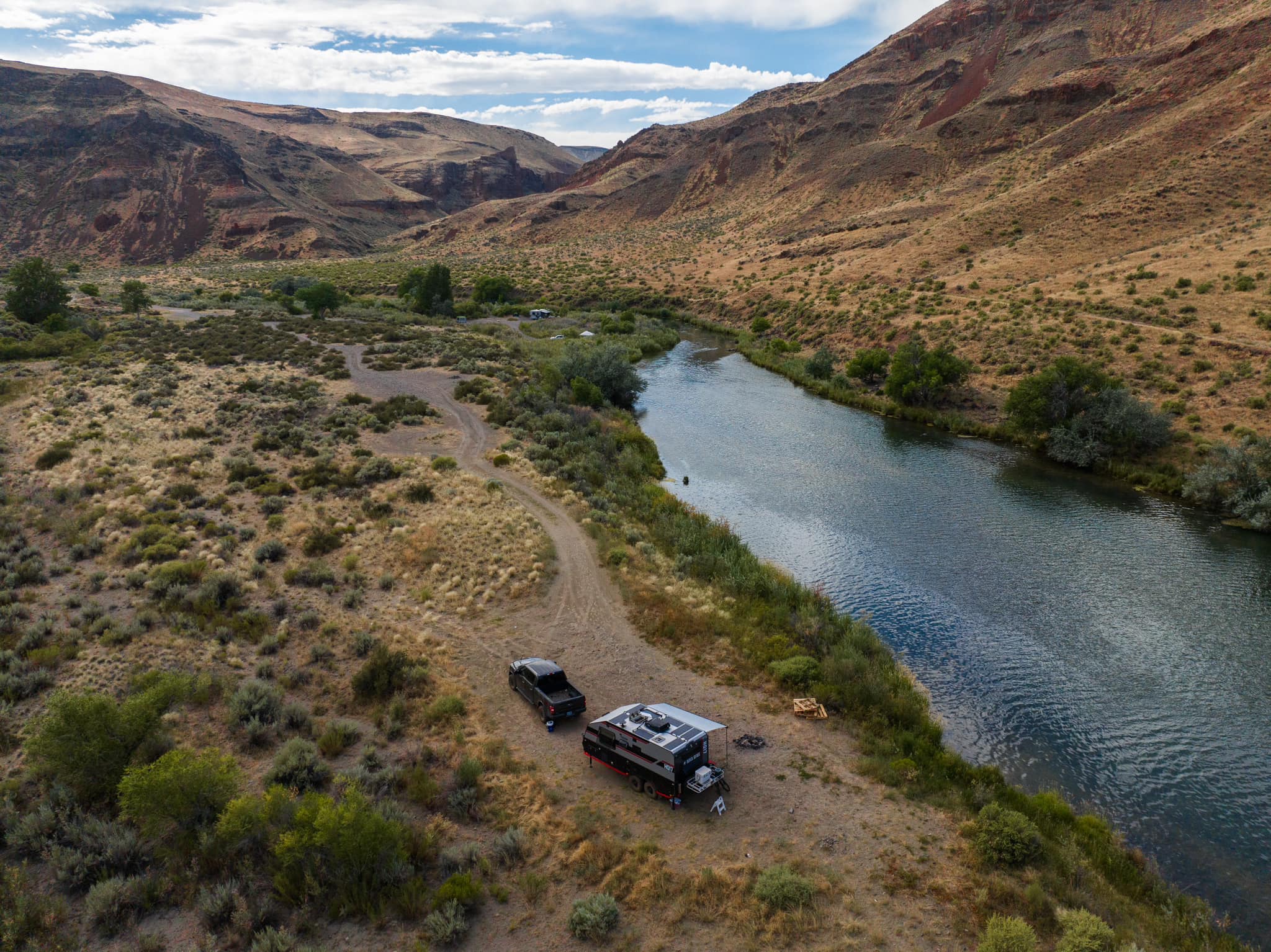
Off Road RV Trailer Camper vs Standard Travel Trailer
Not all trailers are created equal. Here’s what separates a rugged off-road rig from a standard travel trailer you’d park next to a sewer hookup:
Standard travel trailers are designed for smooth roads and level pads. They’re perfectly fine if you’re planning on full hookups and neighbors close enough to borrow sugar. But take one down a washboard dirt road or over a boulder field? You’ll hear expensive noises real quick.
Off-road RV trailer campers, on the other hand, are engineered for punishment. Reinforced chassis means you’re not going to crack a frame rail. Independent suspension means your wheels can articulate over rocks without dragging the belly. And that extra ground clearance? It’s the difference between clearing a ridge and high-centering your entire vacation.
Why Choose an Off Road RV Trailer Camper?
The explosion in off-road camper trailers isn’t just a trend: it’s a shift in how Americans camp. Here’s why more adventurers are ditching the RV park model:
Remote Access Without Compromise: National parks are gorgeous, but they’re also packed. Off-road campers unlock access to BLM land, Forest Service roads, and backcountry sites where you won’t see another soul for days. No reservations, no crowds: just raw wilderness.
Off-Grid Stays That Actually Work: Modern off-road rigs come equipped with off-grid power systems: think lithium battery banks, rooftop solar arrays, and onboard water filtration. You’re not roughing it; you’re living comfortably in places that would break a traditional camper.
Long-Distance Durability: If your idea of a road trip involves crossing state lines and terrain types, you need something that won’t rattle apart. Off-road campers are built for the long haul, with welded aluminum frames, sealed electrical systems, and components that survive washboard roads and river crossings.
Terrain Tolerance: Whether it’s sand, mud, snow, or rock, an off-road RV trailer camper is designed to follow your truck anywhere it can go. That’s freedom you can’t get from a standard trailer with 8 inches of clearance and leaf springs from the 1980s.

Best Off Road RV Trailer Camper: What to Look For
Shopping for an off-road rig? Here are the core variables that separate posers from the real deal:
Tow Rating vs Trailer GVWR
This is non-negotiable. Your truck’s tow rating has to exceed the trailer’s Gross Vehicle Weight Rating (GVWR): and ideally, you want a cushion. A 16 ft camper weight might clock in around 3,500 lbs dry, but once you load gear, water, and food, you’re easily pushing 4,500+ lbs. An 18 ft camper weight typically runs 4,000–5,000 lbs, while a 24 ft camper weight can hit 6,000–7,000 lbs loaded.
For context, the average weight of camper trailers in the off-road category is around 4,500–6,500 lbs, but average travel trailer weights for standard park models tend to be lighter because they skip the reinforced chassis and heavy-duty axles. If you’re eyeing a 30 foot rv weight (or 30 ft camper weight / 30 ft rv weight / 30-foot camper weight), you’re looking at 8,000–10,000+ lbs: great for space, but a nightmare on tight switchbacks or sand.
The takeaway? Bigger isn’t always better when the trail narrows. A lighter, more agile rig often outperforms a spaceship-sized trailer when you’re threading through backcountry routes.
Suspension Geometry
Independent suspension or torsion axles are the gold standard. They let each wheel move independently, soaking up impacts and keeping your rig level on uneven ground. Leaf springs? Those are fine for highways, but they’ll beat your trailer (and your gear) to death off-road.
Power System Autonomy
Look for a minimum of 200Ah lithium battery capacity, paired with at least 400W of rooftop solar. That setup will run your fridge, lights, water pump, and charge your devices indefinitely without needing a generator. If you’re serious about boondocking, consider rigs with RV lithium power upgrades that push 400–600Ah or more.
Water Capacity & Protection
Freshwater tanks should hold at least 30–40 gallons, with greywater and blackwater to match. But capacity alone isn’t enough: look for heated, insulated tanks so you can camp in winter without your plumbing freezing solid. Enclosed underbelly protection is a must.
Structural Rigidity
This is where BlackSeries design logic shines. We use welded aluminum and galvanized steel frames with full box-tube construction: not the flimsy wood-framed walls you’ll find in standard trailers. A rigid frame means your doors don’t jam when you flex over rocks, your walls don’t crack, and your investment lasts decades instead of years.
Off Road RV Trailer Camper for Sale: Buying Considerations
So you’re ready to pull the trigger. Here’s what to think about before you sign:
New vs. Used: New off-road campers come with warranties, the latest tech, and peace of mind. Used rigs can save you money, but inspect the frame, suspension, and electrical systems carefully: off-road use is hard on components. If a seller claims “light off-road use,” get a third-party inspection.
Dealer vs. Direct Sales: Buying from a dealer gives you local service, trade-in options (like off-road RV trade-in programs), and financing. Buying direct from manufacturers can save you the dealer markup, but you’ll need to arrange transport and handle service yourself. For 2026, check out best RV upgrade deals if you’re looking to swap an old rig for new.
US After-Sales & Parts Availability: Make sure the manufacturer has a U.S. dealer network and parts distribution. The last thing you want is a broken axle in Montana with a six-week wait for parts shipped from overseas.
Long-Distance Fit: If you’re planning cross-country trips, prioritize livability. Can you stand up inside? Is there a real bed, not a convertible dinette? Does the kitchen layout make sense? Off-road capability is useless if you’re miserable after week one.
Common First-Time Buyer Mistakes
Even experienced campers make rookie errors when they jump into off-road trailers. Here’s what to avoid:
Buying the “Off-Road Look” Instead of Off-Road Structure: Black paint, knobby tires, and a roof rack don’t make a trailer off-road capable. Check the frame material, suspension type, and ground clearance specs. If the manufacturer can’t give you axle load ratings and suspension travel specs, walk away.
Ignoring Weight Distribution: Tongue weight should be 10–15% of your trailer’s total loaded weight. Too little, and you’ll get trailer sway. Too much, and you’ll overload your truck’s rear axle. Use a weight distribution hitch and load your gear strategically: heavy items over the axles, not in the rear storage.
Underestimating Off-Grid Consumption: You’ll use more power and water than you think, especially if you’re running A/C, a compressor fridge, and hot water. Budget 20–30 gallons of water per person per day, and size your battery bank to run your essentials for at least 48 hours without sun.
FAQ
What does “off road RV trailer camper” mean?
It’s a towable RV designed with reinforced construction, high-clearance suspension, and off-grid systems to handle rough terrain and remote camping beyond paved roads. Unlike standard travel trailers, these are purpose-built for backcountry access.
Is an off road RV trailer camper street legal?
Yes. Off-road RV trailers are fully street legal in all 50 states as long as they meet DOT lighting, braking, and width requirements. You’ll register and insure them just like any other travel trailer.
Do I need a special tow vehicle?
You need a truck or SUV with adequate tow capacity, payload, and ideally 4WD. Most mid-size and full-size trucks handle off-road trailers fine, but always match your truck’s tow rating to the trailer’s GVWR: and leave a safety margin.
Can it be used for long-distance travel?
Absolutely. Off-road RV trailers are designed for extended travel, with durable frames, efficient layouts, and off-grid systems that let you stay out longer. Many full-timers choose off-road trailer RVs specifically because they’re built to last through years of continuous use.
Ready to explore beyond the pavement? An off-road RV trailer camper gives you the freedom to chase remote sunsets, hidden campsites, and trails that most people never see: without sacrificing comfort or reliability. Just make sure you match the right rig to your truck, your adventure style, and your appetite for solitude. The backcountry is waiting.

