A travel trailer with a king size bed offers residential-level comfort on the road. The right choice depends on floor plan layout, overall length, weight, and how much living space you’re willing to trade for sleeping comfort.
What Is a Travel Trailer with a King Size Bed?
A travel trailer with a king bed features a sleeping area measuring 76″ × 80″ (compared to RV queen beds at 60″ × 80″). However, many RV manufacturers use “RV King” dimensions that may vary slightly from residential standards, typically measuring 72″ × 80″.
The distinction matters because true king beds require specific floor plan accommodations. Unlike standard travel trailers where beds often serve multiple functions or fold away, king bed layouts prioritize dedicated sleeping space with permanent installation.
At BlackSeries, we view sleep quality as a core component of any serious travel experience, not an optional luxury. Poor sleep affects everything from driving safety to trip enjoyment, making bed comfort a critical design consideration rather than an afterthought.
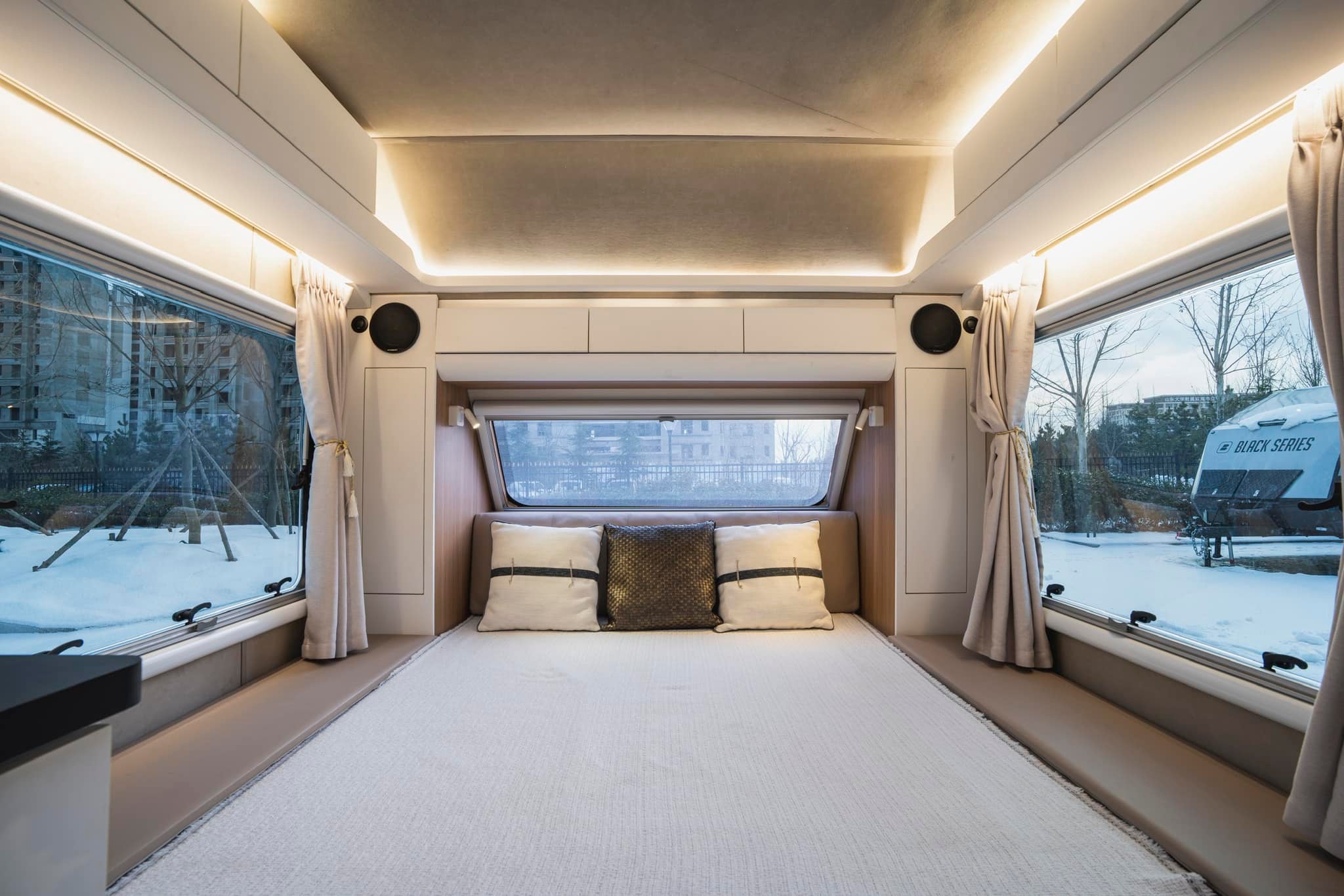
Why King Bed Travel Trailers Are Popular in the U.S.
American RV buyers increasingly demand residential-style amenities, with comfortable sleeping arrangements ranking as a top priority. This trend reflects longer trip durations, full-time RV living, and the growing overlap between vacation homes and mobile accommodations.
Long-term travel couples particularly benefit from king bed layouts. The additional 16 inches of width (versus queen beds) reduces sleep disruption when partners move during the night. For full-timers or extended travelers covering thousands of miles over weeks or months, sleep quality directly impacts travel sustainability.
King vs Queen vs Murphy Bed Comparison:
- King beds offer maximum comfort but require dedicated space
- Queen beds balance comfort with space efficiency in smaller trailers
- Murphy beds maximize daytime living space but sacrifice convenience
The trade-off centers on whether you prioritize sleeping comfort or living area flexibility.
Common Floor Plans with a King Bed
Front Bedroom King Bed Layout
Front bedroom designs place the king bed at the trailer’s nose, typically featuring:
- Maximum privacy from living areas
- Dedicated storage underneath and surrounding the bed
- Often includes en-suite bathroom access
- Drawback: Reduces kitchen and living room dimensions
This layout works best for couples who spend significant time inside their trailer and value bedroom separation from entertaining areas.

Rear Bedroom King Bed Layout
Rear bedroom configurations position the king bed at the trailer’s back, offering:
- Panoramic rear windows with scenic views
- Better weight distribution for towing stability
- Easier bedroom ventilation through rear vents
- Challenge: May impact bathroom placement and living area flow
Slide-Out King Bed Designs
Slide-out mechanisms expand bedroom space when parked:
- Maximizes usable interior space when deployed
- Allows larger bed in shorter overall trailer length
- Increases complexity with moving parts requiring maintenance
- May limit camping locations without adequate slide clearance
How-to: Choose the Right Travel Trailer King Bed
Step 1 – Confirm Bed Dimensions & Clearance
Measure the actual sleeping surface and surrounding walkways. Many “king bed” trailers provide limited clearance on one or both sides, forcing awkward entry/exit patterns.
Key measurements to verify:
- Clearance from bed edge to walls (minimum 24″ recommended)
- Headroom when sitting on bed edge
- Storage access without climbing over sleeping partner
- Nighttime pathway to bathroom
Step 2 – Balance Comfort vs Trailer Length
King beds require 7-8 feet of dedicated length plus surrounding clearances. This space comes directly from kitchen, living, or storage areas.
Consider whether your camping style emphasizes indoor comfort (favoring king beds) or outdoor activities (where smaller beds might suffice). Longer trailers also limit campsite options and complicate maneuvering.
Step 3 – Match Weight to Tow Vehicle
King bed trailers typically exceed 25 feet and weigh 6,000-9,000 pounds dry. Factor in cargo, water, and passengers for realistic towing calculations.
Towing capacity checklist:
- Gross Vehicle Weight Rating (GVWR) of trailer vs vehicle capacity
- Tongue weight (typically 10-15% of trailer weight)
- Payload remaining for passengers and cargo in tow vehicle
Travel Trailer King Bed Buying Checklist
Bed & Sleeping Area:
- Actual king bed dimensions (varies by manufacturer)
- Walk-around clearance on both sides
- Under-bed storage access and capacity
- Bedroom privacy options (doors, curtains)
Structural Considerations:
- Slide-out operation and sealing quality
- Bedroom ventilation (roof vents, windows)
- Overall trailer length vs campsite limitations
- Weight distribution and tongue weight
Living Space Impact:
- Kitchen workspace remaining after bed placement
- Dinette/seating capacity
- Interior traffic flow patterns
- Storage space trade-offs
Best X: When a King Bed Travel Trailer Makes Sense
Best for couples traveling long-term: Extended trips lasting weeks or months justify the comfort investment, especially when spending significant time indoors due to weather.
Best for full-time or seasonal RVers: When the trailer serves as primary residence, residential-quality sleep becomes essential for health and wellbeing.
Best for travelers prioritizing sleep quality: Light sleepers, those with back problems, or anyone whose sleep quality affects next-day activities benefit from king bed space.
Not ideal for: Large families needing maximum seating/sleeping capacity, budget-conscious buyers prioritizing lower costs, or those frequently using tight campgrounds with length restrictions.
Real-World Scenarios
Scenario 1: Cross-Country Long-Term Travel
A couple planning 3-6 month road trips across multiple states prioritizes sleep quality over maximum living space. They choose a 32-foot trailer with rear king bedroom, accepting reduced kitchen workspace for better sleep comfort during extended travel periods.
Scenario 2: Weekend + Extended Trip Flexibility
Mixed-use buyers wanting both weekend camping and longer vacations select a front bedroom king layout in a 28-foot trailer. The compromise maintains reasonable length while providing king bed comfort when needed most.
Scenario 3: Weight-Conscious King Bed Selection
Owners with mid-size SUVs or half-ton trucks research ultra-lightweight king bed options, finding models under 7,000 pounds GVWR through aluminum construction and careful option selection.
FAQ – Travel Trailer King Bed
Is a king bed bigger in a travel trailer?
RV king beds typically measure 72″ × 80″ compared to residential king beds at 76″ × 80″. However, the space feels larger due to dedicated bedroom areas without residential furniture constraints.
Do king bed travel trailers require longer trailers?
Generally yes. King beds need 7-8 feet of length plus clearances, typically resulting in trailers 28+ feet overall. Slide-out designs can fit king beds in shorter units but add complexity.
Can a half-ton truck tow a king bed travel trailer?
Depends on specific models and options. Some lightweight king bed trailers stay under 8,000 pounds GVWR, within many half-ton truck capabilities, but requires careful matching of specifications.
Is a king bed worth the space trade-off in an RV?
For couples prioritizing sleep comfort and spending extended time in their trailer, yes. For families needing maximum capacity or occasional weekend users, queen beds often provide better space efficiency.
Are lightweight king bed travel trailers realistic?
Yes, but with compromises. Manufacturers achieve lower weights through aluminum framing, fewer slide-outs, and careful option selection, though these models typically cost more and may sacrifice some durability features.
For more information about BlackSeries travel trailers and off-road capabilities, visit our blog for additional guides on dispersed camping and camping in challenging conditions.

