Winter camping in your RV presents unique challenges that can make or break your outdoor adventure. When temperatures drop below freezing, having reliable power becomes crucial for comfort, safety, and peace of mind. Traditional lead-acid batteries struggle significantly in cold conditions, often losing 50% or more of their capacity when temperatures plummet.
This is where lithium batteries shine. LiFePO4 (Lithium Iron Phosphate) batteries maintain 95-98% of their capacity at freezing temperatures and retain 80% of their rated power even at 14°F (-10°C). For winter RV enthusiasts, this translates to consistent power for heating, lighting, refrigeration, and essential electronics throughout your cold-weather adventures.
Why Lithium Batteries Are Ideal for Winter Camping
Superior Temperature Tolerance
Unlike traditional lead-acid batteries that suffer dramatic capacity loss in cold weather, lithium batteries excel in winter conditions. While lead-acid batteries can lose up to 50% of their power in freezing temperatures, LiFePO4 batteries maintain 80% capacity at 14°F (-10°C) and 60-70% capacity at -20°C. This superior cold-weather performance stems from their advanced engineering, including carbon-coated cathodes and nanostructured materials that enhance conductivity in low temperatures.
Extended Lifespan and Durability
Lithium batteries offer exceptional longevity with 4,000+ charge cycles, compared to lead-acid batteries that typically last 300-500 cycles. This extended lifespan means your investment pays off over years of winter camping adventures. The robust construction of quality LiFePO4 batteries also handles the thermal stress of temperature fluctuations better than conventional alternatives.
Higher Energy Density and Efficiency
Lithium batteries pack more power into a smaller, lighter package. This higher energy density is particularly valuable for winter camping when you need maximum power for heating systems, lights, and other essential equipment. The improved efficiency also means faster charging times, even in colder conditions, allowing you to top off your batteries during brief sunny periods or when running your generator.
Faster Charging Capabilities
One of the biggest advantages for winter campers is lithium batteries’ ability to accept charge quickly, even in cold conditions. While charging rates may slow in extreme cold, they remain significantly faster than lead-acid alternatives. This rapid charging capability is essential when you have limited daylight hours for solar charging or short generator run times.
How Cold Weather Affects Lithium Batteries
Capacity Reduction in Extreme Cold
While lithium batteries perform exceptionally well in cold weather, they’re not immune to temperature effects. In extreme conditions below -20°F (-29°C), you may notice a reduction in available capacity. However, this capacity loss is typically temporary – as temperatures warm up, full capacity returns without permanent damage to the battery.
Slower Charging Rates
Cold temperatures can slow the charging process, particularly below 32°F (0°C). Most quality lithium batteries include Battery Management Systems (BMS) that prevent charging when temperatures drop too low, protecting the cells from damage. This built-in protection is crucial for maintaining battery health during winter storage and use.
Built-in Protection Systems
Modern lithium batteries feature sophisticated Battery Management Systems that monitor temperature, voltage, and current. These systems prevent overcharging, over-discharging, and charging in dangerous temperature conditions. Many BMS units will disconnect charging when temperatures drop below freezing, then automatically reconnect when conditions improve.

Essential Tips for Winter Camping with Lithium Batteries
Keep Your Batteries Warm
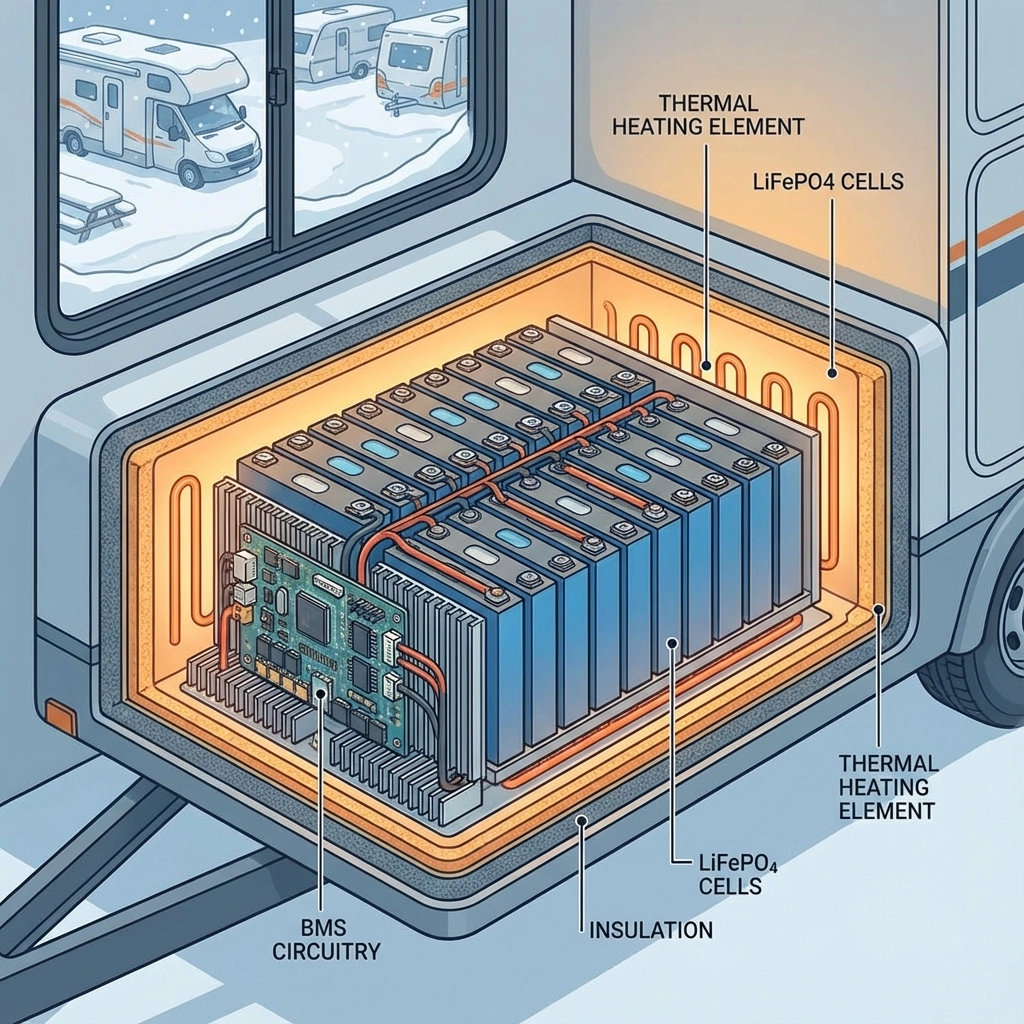
The most effective strategy for optimal winter battery performance is temperature management. Install your lithium batteries in insulated battery boxes or use thermal wraps to maintain operating temperature. If possible, locate batteries in heated compartments or areas adjacent to your RV’s living space.
For extreme conditions, consider investing in heated lithium batteries with built-in warming elements. These specialized batteries automatically maintain safe operating temperatures with minimal power draw, ensuring reliable performance in the harshest conditions.
Monitor Battery Voltage and Performance
Cold weather makes regular battery monitoring more critical. Use a battery monitor to track voltage, current draw, and state of charge. Many modern lithium batteries include smartphone apps that provide real-time data about battery health and performance.
Pay attention to voltage drops under load, which can indicate cold-weather capacity reduction. Plan your power usage accordingly, keeping essential systems prioritized when capacity is reduced.
Smart Charging Strategies
Charge your batteries during the warmest part of the day when possible. If you’re using solar panels, take advantage of midday sun when both charging efficiency and battery acceptance are highest. When using a generator or shore power, charge batteries indoors or in heated spaces whenever practical.
Always use lithium-specific chargers designed for cold weather operation. These chargers adjust charging parameters based on temperature, ensuring safe and efficient charging throughout winter conditions.
Implement Battery Management Systems
A quality BMS is essential for winter camping with lithium batteries. These systems prevent damage from overcharging, over-discharging, and dangerous temperature conditions. Look for BMS units that provide detailed monitoring and automatic protection features.
Some advanced BMS units can even communicate with your RV’s systems to provide early warnings about battery issues or automatically adjust power distribution based on available capacity.
Best Lithium Batteries for Winter RV Camping
Renogy Lithium-Iron Phosphate (LiFePO4)
Renogy’s LiFePO4 batteries are renowned for excellent cold-weather performance and long lifespan. These batteries feature robust BMS systems and can operate effectively in temperatures as low as -4°F (-20°C). Their compact design and reliable performance make them ideal for RV installations.
Battle Born LiFePO4 Batteries
Battle Born batteries are specifically designed for RV and off-grid applications. They excel in cold conditions and include advanced BMS protection. These batteries can be series-connected for higher voltage systems and offer excellent customer support and warranty coverage.
Lion Energy Safari UT Series
Lion Energy’s Safari UT batteries provide outstanding winter camping performance with high energy density and efficient charging. They feature built-in BMS protection and can operate in extreme temperature ranges, making them suitable for serious winter adventurers.
Relion RB100 Series
Relion batteries offer robust performance with excellent thermal protection features. Their RB100 series is particularly well-suited for winter applications, with reliable operation in sub-freezing conditions and fast recovery when temperatures rise.
How to Winterize Lithium Batteries for Camping
Proper Storage Procedures
When storing your RV for winter, maintain lithium batteries at approximately 50% state of charge. This level provides optimal chemical stability during long-term storage while preventing over-discharge. Store batteries in well-insulated spaces, ideally where temperatures remain above freezing.
Check battery voltage monthly during storage and recharge if the voltage drops below manufacturer recommendations. Most quality lithium batteries have very low self-discharge rates, but monitoring prevents unexpected power loss.
Use Battery Heaters for Extreme Conditions
For RVs regularly exposed to extreme cold, consider installing battery heaters. These low-power heating elements maintain battery temperature above critical thresholds, ensuring reliable operation and safe charging. Many heaters draw only 5-10 watts and can be powered by the battery itself or external sources.
Prevent Moisture and Condensation
Keep battery compartments dry to prevent condensation, which can cause short circuits or corrosion. Use moisture-absorbing materials in battery boxes and ensure adequate ventilation to prevent humidity buildup. Seal any gaps in battery compartments that could allow moisture infiltration.
For those interested in comprehensive RV winterization, proper battery care is just one component of preparing your rig for cold weather adventures.
Frequently Asked Questions
Q: Can I use lithium batteries in temperatures below freezing?
Yes, lithium batteries can operate in sub-freezing temperatures, though performance may be reduced in extreme cold. Most quality LiFePO4 batteries function effectively down to -4°F (-20°C). Keeping batteries insulated or using heated models ensures optimal performance.
Q: Will cold weather permanently damage my lithium battery?
Cold weather typically won’t cause permanent damage to lithium batteries. Capacity reduction in cold conditions is usually temporary – full capacity returns as temperatures warm up. However, avoid charging frozen batteries, as this can cause permanent damage.
Q: How long will a lithium battery last during winter camping?
A well-maintained lithium battery can last 5-10 years or more, even with regular winter use. The actual runtime during camping depends on your power consumption, battery capacity, and outside temperature. Plan for 60-80% of rated capacity in cold conditions.
Q: Do I need special charging equipment for winter camping?
While not always necessary, using lithium-specific chargers with temperature compensation is recommended for winter use. These chargers adjust charging parameters based on temperature, ensuring safe and efficient charging in cold conditions.
Q: Are heated lithium batteries worth the extra cost?
Heated lithium batteries are worthwhile if you frequently camp in extreme cold or store batteries in unheated compartments. For occasional cold weather camping or batteries stored in heated spaces, standard lithium batteries are usually sufficient.
Additional Winter Camping Power Solutions
Solar Panel Integration
Combining lithium batteries with solar panels creates an excellent winter power system. While solar output decreases in winter due to shorter days and lower sun angles, the efficiency gains from lithium batteries help maximize available power. Position panels to capture maximum sunlight and keep them clear of snow for optimal performance.
Quality off-road travel trailers often come equipped with robust solar systems designed to work effectively with lithium battery banks.
Portable Power Station Backup
Consider adding portable power stations to complement your lithium battery system. These units provide backup power for essential devices and can be charged separately from your main battery bank. During extended cloudy periods or high power demand, portable stations offer valuable redundancy.
Generator Integration
A properly sized generator can quickly recharge lithium batteries during winter camping. Choose generators with clean power output suitable for charging sensitive lithium batteries. Smart charging systems can automatically start generators when battery levels drop below predetermined thresholds.
Conclusion
Lithium batteries revolutionize winter RV camping by providing reliable, efficient power in challenging cold conditions. Their superior temperature tolerance, extended lifespan, and fast charging capabilities make them the ideal choice for serious winter adventurers.
By following proper thermal management practices, using appropriate charging strategies, and selecting quality batteries designed for cold weather operation, you can enjoy comfortable, worry-free winter camping experiences. Whether you’re exploring snow-covered national parks or enjoying extended cold-weather boondocking adventures, lithium batteries ensure you have the power needed for safety and comfort.
Invest in quality lithium battery technology for your next winter camping trip, and experience the confidence that comes with reliable power, regardless of how low the temperature drops.

