Boondocking is camping in your RV without hookups, no electricity, water, or sewer connections. It’s safe for beginners with proper preparation and the right equipment. You’ll need self-sufficient power, water storage, and basic off-grid knowledge before heading to remote locations like BLM lands or national forests.
What Is Boondocking?
Boondocking (also called dry camping or dispersed camping) means RV camping without traditional campground amenities. You’re completely self-reliant, no electrical hookups, water spigots, or dump stations. Instead, you depend on your RV’s built-in systems: freshwater tanks, batteries, propane, and waste holding tanks.
This style differs dramatically from RV parks or developed campgrounds where you pay $30-80 per night for full hookups. Boondocking sites are typically free or cost under $20 per night, making it an attractive option for budget-conscious adventurers.
Common terms you’ll encounter:
- Dry camping: Same as boondocking, emphasizing the lack of water/sewer hookups
- Dispersed camping: USFS term for camping outside designated campgrounds
- Wild camping: Less common US term, more popular in other countries
- Off-grid camping: Broader term including any camping without utility connections
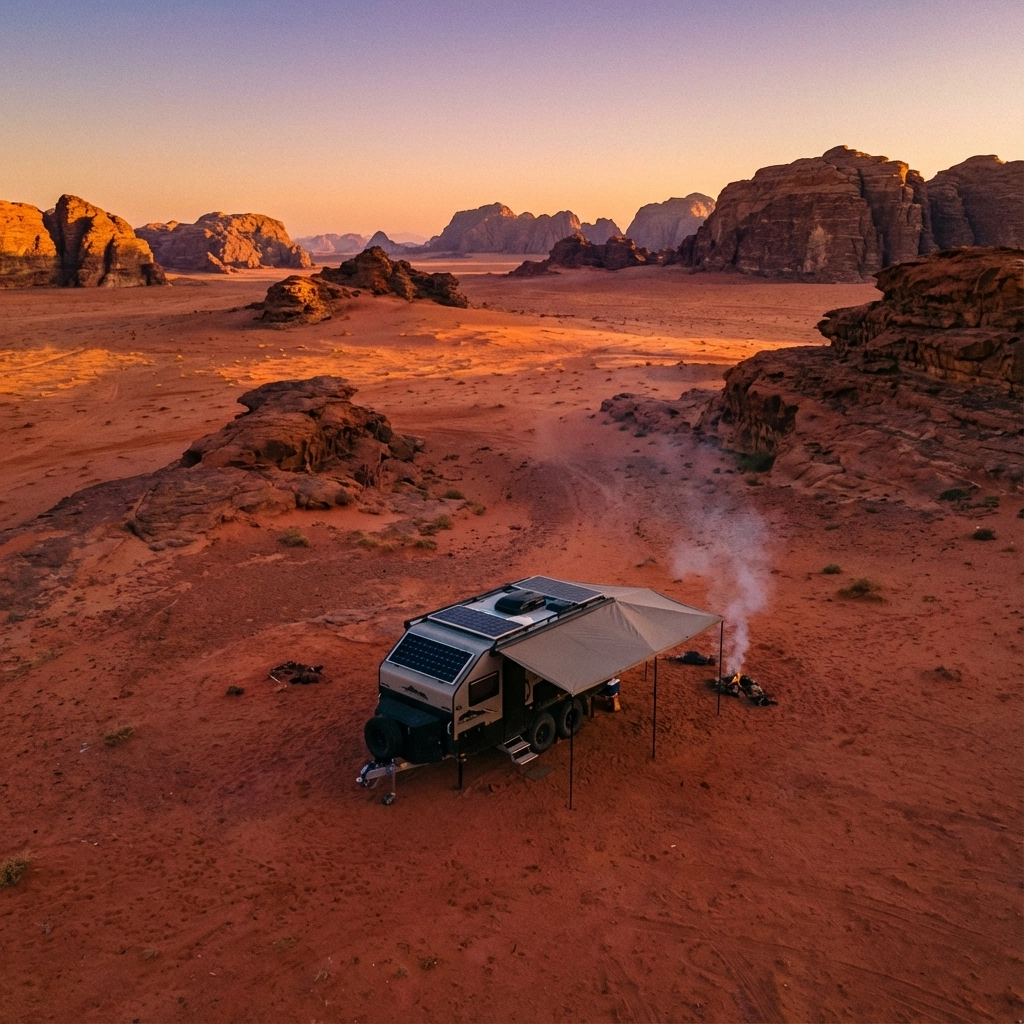
Beginner misconception: Many new RVers think boondocking means “roughing it” without comfort. Modern off-road RVs like those from BlackSeries are designed specifically for extended off-grid comfort, proving you can maintain luxury while staying self-sufficient.
Is Boondocking Safe for Beginners?
Boondocking is generally safe for prepared beginners, but preparation is everything. The real risks aren’t what most people imagine, it’s rarely about wildlife or isolation. Instead, focus on these genuine safety concerns:
Real Risks:
- Running out of power, water, or propane unexpectedly
- Getting stuck due to weather, terrain, or vehicle issues
- Medical emergencies in areas with poor cell coverage
- Extreme weather without adequate shelter or heating/cooling
Imagined Risks:
- Dangerous wildlife encounters (statistically very rare)
- Crime in remote areas (less common than urban camping)
- Getting “lost” (GPS and offline maps solve this)
The key insight: Your equipment determines your safety baseline. A well-equipped RV with robust power systems, ample water storage, and reliable heating can handle most situations beginners encounter. This is why vehicles purpose-built for off-grid use, like BlackSeries trailers with their reinforced chassis and extended battery systems, provide better safety margins than standard RVs modified for boondocking.
For beginners, the safest approach is starting small: choose easily accessible locations with cell service, go for 1-2 nights initially, and gradually build experience and confidence.
Beginner Boondocking Tips
Choose Your First Site Wisely
Start close to home with easily accessible locations. BLM lands near major highways or popular areas like Arizona’s Quartzsite or California’s Slab City offer beginner-friendly environments with nearby services and other campers.
Avoid these first-trip locations:
- Remote mountain areas requiring 4WD access
- Desert locations during extreme temperature seasons
- Areas with no cell service whatsoever
- Sites requiring river crossings or technical driving
When NOT to Boondock
Weather is your biggest decision factor. Don’t attempt boondocking during:
- Your first winter if you’re inexperienced with RV heating systems
- Severe weather warnings (high winds, thunderstorms, flash flood potential)
- Extreme temperatures your RV isn’t equipped to handle
Solo travelers should start with populated boondocking areas and inform others of their plans. Families with young children need extra water storage and entertainment options. Pet owners must research local wildlife risks and leash requirements.
Reading the Situation
Learn to recognize when it’s time to pack up:
- Weather forecast changes dramatically
- Equipment failures you can’t fix on-site
- Water/power running lower than planned
- Feeling unsafe or uncomfortable for any reason
Trust your instincts, experienced boondockers leave early rather than risk problems.

Boondocking Checklist for Beginners
This comprehensive checklist ensures you’re truly ready for off-grid camping:
Water & Power Systems
✔ Fresh water tank filled (plus extra containers if staying 3+ days)
✔ Gray/black tanks empty before departure
✔ Battery bank fully charged (test under load before leaving)
✔ Solar panels clean and angled for maximum efficiency
✔ Generator tested with adequate fuel supply
✔ Inverter functional for AC power needs
✔ LED lighting throughout to minimize power consumption
Food & Cold Storage
✔ Propane refrigerator or efficient 12V fridge
✔ Meal planning for entire stay plus one extra day
✔ Dry goods stocked (canned foods, pasta, rice)
✔ Frozen items pre-frozen in home freezer
✔ Ice backup plan for extended stays
✔ Paper plates/cups to conserve wash water
Safety & Communication
✔ Cell booster or satellite communicator for emergencies
✔ First aid kit appropriate for remote locations
✔ Tire repair kit and air compressor
✔ Tow straps and recovery gear
✔ Emergency cash ($200+ for fuel/services)
✔ Offline maps downloaded to phone/GPS
Weather & Terrain Gear
✔ Leveling blocks and wheel chocks
✔ Awning tie-downs for high wind conditions
✔ Extra blankets and heating fuel
✔ Portable weather radio
✔ Appropriate clothing for temperature swings
Off-Grid Living Basics
✔ Headlamps and flashlights (multiple per person)
✔ Camp chairs and outdoor table
✔ Firewood (if campfires permitted)
✔ Trash bags for pack-it-out areas
✔ Toiletries and toilet paper (biodegradable preferred)
BlackSeries RVs come pre-equipped with many of these systems, including robust electrical setups and winterization features that make boondocking more accessible for beginners.
Where Can Beginners Go Boondocking in the US?
BLM Land (Bureau of Land Management)
Best for beginners: BLM lands offer the most accessible boondocking in America. Most allow 14-day stays completely free, with wide-open spaces perfect for learning RV positioning and setup.
Popular beginner-friendly BLM areas:
- Quartzsite, Arizona: Winter RV mecca with services nearby
- Alabama Hills, California: Spectacular scenery, easy access
- Valley of the Gods, Utah: Iconic landscape, moderate difficulty
- Yuma East, Arizona: Flat terrain, excellent cell coverage
National Forest Service
USFS lands provide dispersed camping opportunities, typically free for up to 14 days. Sites tend to be more secluded than BLM areas but often require navigating forest roads.
Beginner tip: Start with USFS areas near developed campgrounds, they offer backup options if boondocking doesn’t work out.
Walmart and Cracker Barrel
Emergency backup option: Many Walmart and Cracker Barrel locations allow overnight parking. While not true boondocking, these stops help beginners practice self-sufficient camping. Always call ahead, policies vary by location and local ordinances.
Essential Apps and Tools
- Campendium: Real reviews from fellow boondockers
- FreeRoam: Offline maps with documented free sites
- GaiaGPS: Detailed topographic maps for remote areas
- iOverlander: Global database including US locations
Avoid over-relying on apps: Download offline maps and always have paper backups for remote locations.
First Time Boondocking: Step-by-Step Process
48 Hours Before Departure
Research your specific destination: Check recent reviews, weather forecasts, and road conditions. Confirm the site allows RVs your size and that access roads are suitable for your tow vehicle.
Prep your RV systems: Fill fresh water, empty waste tanks, charge batteries, and test all equipment under load. Pack food assuming no resupply options.
Final Pre-Departure Checks
Morning of departure:
- Verify weather forecast hasn’t changed
- Double-check fluid levels (coolant, oil, transmission)
- Test brake controller and trailer lights
- Confirm emergency contacts know your destination and return date
Arrival and Setup
Arrive with daylight to spare, setting up in darkness is challenging and potentially dangerous.
Site selection priorities:
- Level ground (reduces stress on RV systems)
- Wind protection (extends awning life, improves comfort)
- Solar exposure (maximizes charging potential)
- Drainage (avoid low spots that collect water)
- Exit strategy (don’t get boxed in)
Setup sequence:
- Position RV considering sun angle for solar panels
- Level using blocks and stabilizer jacks
- Connect propane and test appliances
- Deploy awning only if wind conditions permit
- Set up outdoor living space
Night Operations and Next Morning
Evening routine: Check weather forecast, secure loose items, and ensure you have easy access to flashlights and emergency equipment.
Morning assessment: Before breaking camp, walk around your site and check for any damage to the environment. Follow Leave No Trace principles: pack out all trash, extinguish fires completely, and leave the site cleaner than you found it.
Common Beginner Mistakes to Avoid
Power Miscalculations
Mistake: Assuming batteries will last longer than they actually do.
Solution: Monitor your battery voltage regularly and plan for 50% more power consumption than estimated. LED lighting and efficient appliances dramatically extend battery life.
Weather Underestimation
Mistake: Ignoring weather forecasts or underestimating temperature swings.
Solution: Desert locations can drop 40°F between day and night. Mountain weather changes rapidly. Always pack for conditions 20 degrees colder than forecast.
Over-Ambitious First Trips
Mistake: Choosing remote, difficult locations for initial boondocking experiences.
Solution: Start with 2-night trips to easily accessible locations with cell service. Build skills gradually before attempting week-long remote adventures.
Equipment Overconfidence
Mistake: Not testing equipment under real conditions before depending on it.
Solution: Practice using your generator, test your solar charging rates, and verify your water consumption patterns during backyard camping sessions.
FAQ – Boondocking for Beginners
Is boondocking legal in the US?
Yes, boondocking is legal on designated BLM lands, national forest areas, and some state lands. Most allow 14-day stays before requiring relocation. Always check local regulations and respect posted signage.
How long can beginners boondock?
Start with 2-3 night trips to learn your consumption patterns. With proper equipment, experienced boondockers can stay weeks, but beginners should focus on building skills before attempting extended stays.
Do I need a 4×4 vehicle for boondocking?
Not necessarily. Many excellent boondocking sites are accessible with standard 2WD vehicles and appropriate RVs. However, 4WD expands your options significantly, especially in mountainous or sandy terrain.
Is boondocking safe alone?
Solo boondocking can be safe with proper preparation. Start in populated areas, maintain communication schedules with family/friends, and trust your instincts. Consider satellite communicators for true remote areas.
How much water do I need for boondocking?
Plan for 6-10 gallons per person per day, including drinking, cooking, and basic washing. This varies based on weather, activities, and personal habits. Always bring 25% more than calculated.
Boondocking opens up incredible adventures while teaching valuable self-sufficiency skills. Start small, prepare thoroughly, and gradually build your confidence. With the right equipment and mindset, you’ll discover why so many RVers consider boondocking the ultimate form of camping freedom.

