RV life essentials are the core items, systems, and gear that keep your RV safe, functional, and comfortable, especially when living or traveling full-time. Unlike regular camping gear, these essentials must work reliably in a mobile home environment, handle frequent setup and breakdown, and support extended periods away from traditional infrastructure.
The difference between successful RV living and constant frustration often comes down to having the right essentials properly organized and maintained. Whether you’re planning weekend getaways or full-time life on the road, understanding what you truly need versus what’s merely convenient can save thousands of dollars and countless headaches.
What Are RV Life Essentials?
True RV life essentials fall into two categories: items that keep you safe and legal on the road, and gear that maintains basic comfort during extended stays. The key distinction is essential versus optional, essentials prevent emergencies, while optional items enhance comfort.
RV life differs from van life and traditional camping in crucial ways. RVs require specific maintenance items like sewer hoses and electrical adapters that tent campers never consider. Unlike van life, RV living involves managing multiple interconnected systems, water, electrical, propane, and waste, that must function reliably for extended periods.
The three most common non-essential items beginners buy include expensive gadget organizers (simple bins work better), high-end outdoor furniture (basic camping chairs suffice initially), and elaborate kitchen appliances that duplicate RV built-ins. Start with true essentials, then add comfort items based on actual experience, not imagined needs.
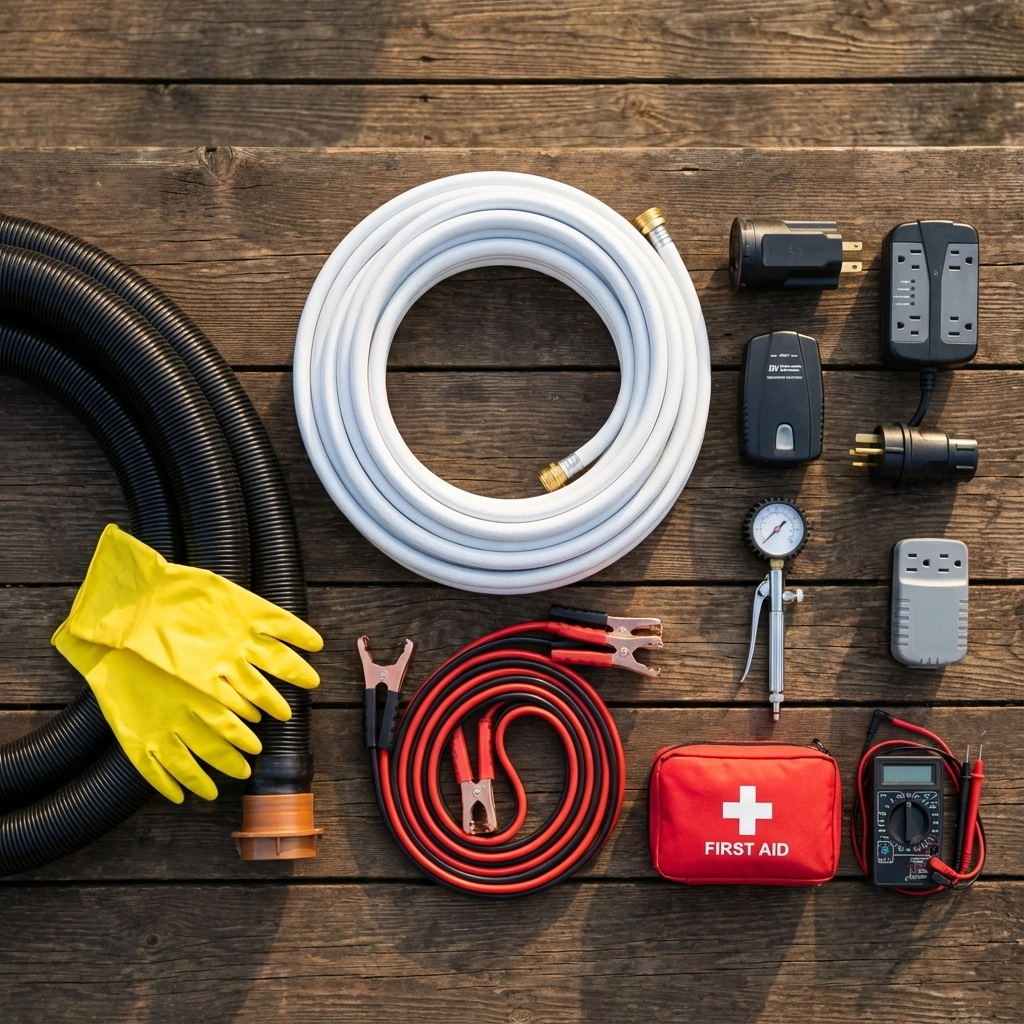
RV Essentials Checklist
Water & Plumbing Essentials
Your RV’s water system requires specific maintenance items: drinking water hose (white/blue food-grade only), sewer hose with gloves, RV-friendly toilet paper (dissolves completely), and toilet chemicals. Include a water pressure regulator to prevent damage from high-pressure campground hookups, and fresh water tank sanitizer for periodic cleaning.
For off-grid camping, carry extra water containers, a portable water filter, and collapsible water jugs for emergency backup. Never use garden hoses for drinking water, the materials aren’t food-safe.
Power & Electrical Essentials
Electrical essentials include 30-amp to 15-amp adapters, surge protectors (protect expensive RV electronics), extension cords rated for outdoor use, and a digital multimeter for troubleshooting. Pack extra fuses matching your RV’s electrical panel and a 12V tire inflator that plugs into your power outlet.
For boondocking, a quality power inverter converts 12V battery power to 120V AC for laptops and small appliances. Learn more about travel trailer inverter options for extended off-grid capability.
Kitchen & Food Storage
Essential kitchen items include nesting cookware (saves storage space), sharp knives with guards, cutting boards that fit your sink, and stackable food storage containers. Pack a can opener, bottle opener, lighter or matches, and dish towels designed for quick drying.
Food storage becomes critical in RVs, include airtight containers for pantry items, cooler packs for backup refrigeration, and bear-proof containers for areas with wildlife. Avoid glass containers that break during travel.
Safety & Emergency Gear
Safety essentials include fire extinguisher (know its location), smoke and carbon monoxide detectors with fresh batteries, first aid kit, and emergency flares or reflectors. Pack jumper cables, tire pressure gauge, tire repair kit, and basic tools including screwdrivers, pliers, and adjustable wrenches.
In bear country, carry bear spray and understand proper food storage protocols. Include emergency contact list, important documents in waterproof storage, and backup communication device for areas without cell service.
Comfort & Daily Living Items
Daily essentials include RV-appropriate bedding (fitted sheets for RV mattresses), personal hygiene items, towels designed for quick drying, and comfortable indoor/outdoor clothing. Pack sunscreen, insect repellent, and basic medications.
Climate control items like battery-powered fans, extra blankets, and blackout curtains help maintain comfort in various weather conditions without draining your battery.

Must Have RV Essentials for Every Trip
Regardless of trip length, certain items are absolutely critical. Your vehicle safety kit, jumper cables, tire gauge, basic tools, and emergency contacts, prevents roadside disasters. Water system essentials, hose, sewer equipment, and toilet paper, enable basic sanitation at any campground.
Forgotten essentials create immediate problems: no sewer hose means no bathroom use, forgotten water hose means no fresh water, missing electrical adapters mean no power. Experienced RVers keep these items permanently in their RV storage, while beginners often pack and unpack them, increasing the chance of forgetting something critical.
The consequence hierarchy puts safety items first (fire extinguisher, tire tools), legal requirements second (registration, insurance), and basic comfort third (bedding, cooking gear). Never compromise on the first two categories.
RV Living Essentials for Beginners
New RVers consistently underestimate three areas: the importance of electrical surge protection, the need for quality water pressure regulation, and the value of proper weight distribution. These aren’t obvious until they cause expensive problems.
Avoid the beginner trap of buying everything at once. Start with true essentials, then add items based on actual experience. Many beginners buy expensive organizational systems before understanding their actual storage needs, or purchase redundant cooking gear that duplicates RV built-ins.
Logical gear prioritization follows this order: safety and legal compliance first, basic life support (water, power, sanitation) second, comfort items third, and convenience upgrades last. This approach prevents overspending on gadgets while neglecting critical systems.
Beginner-specific essentials include extra fuses and bulbs (you’ll need them sooner than expected), basic electrical testing tools, RV-specific cleaning supplies, and emergency backup plans for critical system failures.
Full-Time RV Essentials
Full-time RV living demands different essentials than weekend camping. Durability becomes critical, items must withstand constant use and movement. Space efficiency matters more since storage is permanently limited. System redundancy prevents minor failures from becoming major disruptions.
Key differences for full-timers include upgraded tool kits for self-maintenance, backup systems for critical functions (water filtration, power generation, communication), and seasonal gear storage solutions since you can’t leave winter clothes at home.
Space, power, and weight management require strategic thinking. Every item must earn its place through frequent use or critical function. Multi-purpose items become valuable: a laptop that serves as TV, phone, and work computer; cookware that nests efficiently; clothing suitable for multiple seasons.
Long-term durability affects purchasing decisions. Cheap items that last six months become expensive when replaced frequently. Invest in quality essentials that withstand constant use: heavy-duty electrical components, reinforced hoses, professional-grade tools, and high-quality fabrics that resist fading and wear.
Common RV Life Mistakes (And How to Avoid Them)
Equipment overload is the most common mistake. New RVers buy everything they think they might need, exceeding weight limits and filling storage with rarely-used items. Start minimal and add based on actual experience, not imagined scenarios.
Power system miscalculations cause frequent problems. Beginners underestimate power consumption, overestimate battery capacity, and misunderstand the difference between AC and DC power needs. Learn your actual consumption patterns before investing in expensive solar or generator systems.
Environmental adaptation failures happen when RVers don’t prepare for weather extremes or altitude changes. High-wind camping requires specific tie-down strategies and safety protocols. Desert camping demands different water and cooling strategies than mountain camping.
Maintenance neglect creates cascading problems. RV systems require regular attention, water system sanitization, battery maintenance, tire pressure monitoring, and propane system inspection. Establish maintenance schedules before problems develop.
Why RV Setup Matters More Than Individual Items
System integration trumps individual gear quality. A well-designed RV setup where everything works together smoothly outperforms expensive individual items that don’t integrate well. This philosophy drives BlackSeries design decisions, every component must contribute to overall system reliability.
Off-grid capability determines true RV freedom. The ability to camp comfortably without hookups expands destination options exponentially. This requires coordinated systems, sufficient battery capacity, efficient appliances, adequate water storage, and proper waste management, rather than just adding solar panels to an otherwise hookup-dependent setup.
Professional off-road thinking influences modern RV design by prioritizing reliability over luxury, function over form, and maintenance access over aesthetics. This approach, refined through decades of Australian outback experience, creates RVs that perform consistently in challenging conditions rather than just looking impressive in campgrounds.
The unified setup approach means choosing components that complement each other rather than buying the “best” individual items. A moderately efficient solar panel perfectly sized for your battery bank outperforms an oversized, high-efficiency panel that can’t fully charge undersized batteries.
FAQ – RV Life Essentials
What are the most important RV life essentials?
The most critical essentials are safety equipment (fire extinguisher, first aid kit), vehicle maintenance tools (tire gauge, jumper cables), water system components (hose, sewer equipment, pressure regulator), electrical adapters and surge protection, and emergency backup supplies (extra water, communication device).
How much should beginners budget for RV essentials?
Budget $2,000-$4,000 for quality essentials beyond the RV purchase. This covers safety equipment ($300-500), electrical components ($400-600), water/sewer systems ($200-400), basic tools ($300-500), kitchen essentials ($200-400), and emergency supplies ($300-500). Buy quality items once rather than cheap replacements repeatedly.
What do full-time RVers need that part-time don’t?
Full-timers need backup systems for critical functions, more comprehensive tool kits for self-maintenance, seasonal gear storage solutions, upgraded electrical and water systems for extended off-grid capability, and higher-quality versions of everything due to constant use rather than occasional camping.
Are off-grid essentials different from campground RVing?
Yes, significantly. Off-grid essentials include extended battery capacity, solar charging systems, water conservation equipment, waste management for longer periods, backup power sources, enhanced communication devices for emergencies, and self-sufficient cooking and heating systems that don’t rely on electrical hookups.

