An Off Road RV is more than just a vehicle with 4×4 stickers; it’s a purpose-built exploration tool engineered for self-sufficiency and structural durability. As of 2026, the demand for true off-grid capability has outpaced standard campground camping, with adventurers pushing deeper into BLM and National Forest lands. This guide clarifies the definitions, technical requirements, and planning strategies needed for successful remote travel.
What Is an Off Road RV? (Definitions & Boundaries)
In the 2026 market, “Off Road RV” is an umbrella term, but it’s often confused with other rigs. Let’s clear up the definitions:
Vs. Travel Trailer: A standard travel trailer is a highway vehicle designed for paved roads and designated campgrounds. An off-road travel trailer is built with a reinforced chassis, independent suspension, and high ground clearance to handle washboard roads, river crossings, and rocky terrain.
Vs. Off Road Trailer Camper: While both terms overlap, “Off Road RV” typically refers to motorhomes or larger towable units. An off-road trailer camper is specifically a towable unit designed for backcountry access, think compact, agile, and engineered for technical trails.
Vs. Overland Vehicle: Overlanders often prioritize the “journey”, self-reliance, exploration, and minimalism. An Off Road RV prioritizes the “basecamp” comfort, full kitchens, climate control, and extended stays in remote locations.
Common Misconception: Having 4×4 or AWD doesn’t make an RV “off-road.” Without high ground clearance, articulating hitch, and reinforced frame, you risk structural failure on technical trails. We’ve seen standard RVs with “all-terrain” stickers end up on tow trucks after their first forest service road.
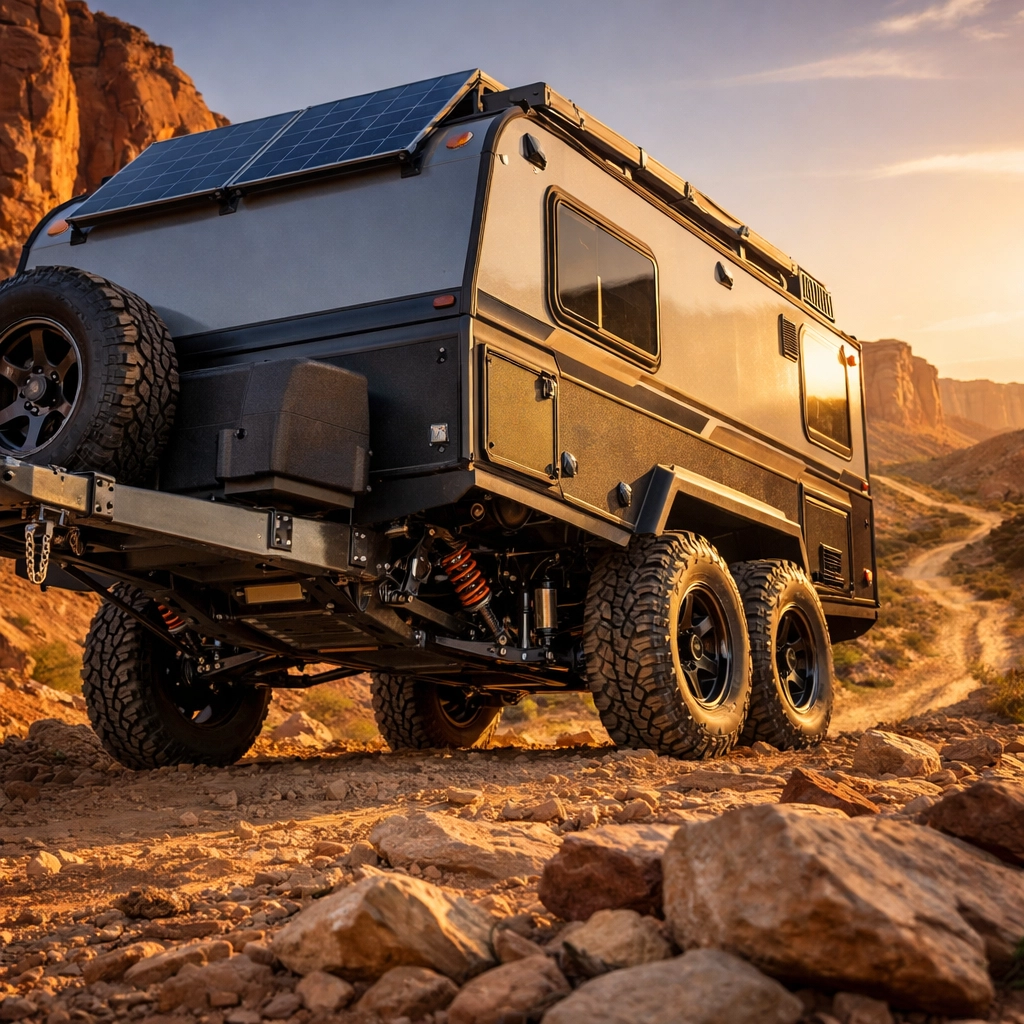
Where Can an Off Road RV Go? (Capability Breakdown)
The real question isn’t “where can you go?” but “where can your specific rig go safely?”
Forest Service Roads (USFS): These narrow, tree-lined tracks often require a shorter wheelbase. A rig around 16–18 feet can navigate tight switchbacks without bottoming out. If you’re towing something in the 30 foot rv weight class (or 30 ft camper weight), you’ll need to verify the trail’s turning radius and grade before committing.
BLM Land: Wide-open desert terrain where dust-sealing becomes your biggest priority. The Southwest’s vast expanses allow for dispersed camping, but sand and sharp rocks demand proper tire pressure management. Check out our guide on Arizona BLM camping for specific map resources.
Technical Constraints: Three factors determine your real-world capability:
- Approach/Departure Angles: Can you descend a wash without scraping? A 16 ft camper weight rig typically has better angles than a 24 ft camper weight model.
- Center of Gravity: Crucial for stability on side-slopes. Wider axles and lower floors reduce rollover risk.
- Sealing: Automotive-grade seals are vital for keeping dust, rain, and snow out. A true 4-season off-road camper prevents freezing pipes in Colorado winters and keeps desert heat at bay in Arizona summers.

How to Plan an Off Road RV Expedition
Step-by-Step Preparation
1. Route Legality: Not all public land is open to all vehicles. Check Arizona BLM Maps or use Gaia GPS to ensure the trail is legal for your vehicle class. Some wilderness areas prohibit trailers over certain lengths, ignorance isn’t a defense.
2. Vehicle & RV Match: Match your truck’s payload to the RV’s GVWR. This isn’t optional.
Weight Logic: While the average travel trailer weights hover around 5,000 lbs, off-road versions are heavier due to reinforced armor, dual batteries, and water capacity. Understanding the difference between dry weight and GVWR prevents dangerous overloading.
Sizing Strategy:
- A 16 ft camper weight is ideal for Jeep-trail access and tight forest roads.
- An 18 ft camper weight or 24 ft camper weight offers a balance of space and agility, perfect for families exploring moderate terrain.
- If you’re towing a 30 foot rv weight (or 30 ft rv weight), verify the trail’s turning radius and grade before committing. Most technical backcountry trails max out at 20 feet.
3. Systems Check: Inspect tires, brakes, and your articulating hitch. Check out our trailer maintenance guide for tire pressure setups specific to sand, rock, and mud.
Off Road RV Trip Checklist
Off Road RV Camping Setup (Configuration Logic)
Energy Redundancy: In 2026, most off-grid users require at least 600-800Ah of lithium to run Starlink, refrigeration, and climate control. Consider an RV Lithium Power Upgrade if you’re planning multi-day stays without generator noise.
Off-Grid Math: Calculate your daily water and power usage. A typical 2-person setup consumes:
- Water: 10-15 gallons/day (including showers, cooking, and cleaning)
- Power: 120Ah/day (refrigerator, lights, electronics)
Water is usually the limiting factor. Conservation is key, grey water recycling and navy showers extend your autonomy.
Sealing & Insulation: A true 4-season off-road camper prevents freezing pipes and keeps desert heat at bay. Check door seals, window gaskets, and roof vents annually.
Best Off Road RV: How to Compare Rationally
Don’t just look at the price tag; look at the architecture. Here’s what matters:
4×4 Motorhome vs. Trailer-based RV: Motorhomes integrate everything into one vehicle, but trailers offer more living space and allow you to “drop camp” and explore in your tow vehicle. For families, the trailer option wins, you can leave the RV at basecamp and take day trips without breaking down your entire setup.
Suspension Architecture: Independent Trailing Arm Suspension is superior to leaf springs for off-grid durability. It absorbs impacts independently, reducing frame stress and improving ride comfort on washboard roads.
Maintenance Reality: Off-road rigs require more frequent bearing and hitch lubrication. Budget for annual inspections and expect to replace tires every 30,000–40,000 miles (versus 50,000+ for highway-only rigs).
BlackSeries Perspective: We focus on trailer-based solutions because they offer the best balance of residential comfort and heavy-duty trail capability. Our rigs are designed for sustained backcountry use, not occasional dirt road detours.
Real-World Usage & Scenario Data
Energy Consumption: A typical 2026 off-grid setup consumes 120Ah/day. Without 600W+ solar, you’ll need a generator backup or plan for shorter stays. Boondocking success depends on understanding your power budget.
Regional Differences:
- The West (Utah/Nevada/Arizona): Wide trails, sharp rocks, and extreme temperature swings. A 16-foot camper weight rig offers agility, but you’ll sacrifice interior space.
- The East (Appalachia): Tight, muddy trails where maneuverability trumps size. Smaller rigs dominate here.
Trail Ethics: Always stay on designated paths to avoid damaging public lands. The off-road community’s access depends on responsible use. Pack out what you pack in, avoid pioneer trails, and respect seasonal closures.
FAQ
What qualifies as an off road RV?
A rig with high ground clearance (12+ inches), reinforced chassis, independent suspension, and sealed construction. Simply having 4×4 or all-terrain tires doesn’t qualify.
Can I camp on BLM land with an off-road RV?
Yes, it’s one of the primary benefits of an off-road RV. BLM land allows dispersed camping (usually 14-day limits), but verify local regulations. Some areas restrict trailer length or require specific permits.
Is a 4×4 RV better than a trailer?
Depends on your priorities. 4×4 motorhomes integrate everything but limit your mobility once parked. Trailers let you drop camp and explore: better for families and extended stays. Both have trade-offs in cost, maintenance, and maneuverability.
How big is too big for off-road camping?
For most US backcountry trails, anything over a 30-foot camper weight class becomes difficult to maneuver. The sweet spot is 16–20 feet for maximum trail access. If you prioritize space over technical capability, 24 feet is the practical limit.
Ready to upgrade your camping experience? Check out our 2025 Off-Road Travel Trailer Buying Guide and start your off-grid journey today. Or explore the benefits of living the RV lifestyle and see if off-grid travel aligns with your long-term goals.

