As we roll into 2026, the off-road RV movement has shifted from a niche hobby to a full-blown lifestyle revolution. More Americans than ever are choosing rugged, self-sufficient travel over traditional campground stays, and the demand for vehicles that can handle the backcountry is at an all-time high. If you’re ready to trade paved roads for dirt trails and hookups for total independence, this guide will walk you through everything you need to know about off-road RVs, from what makes them different to how to choose the right one for your adventures.
What is an Off Road RV?
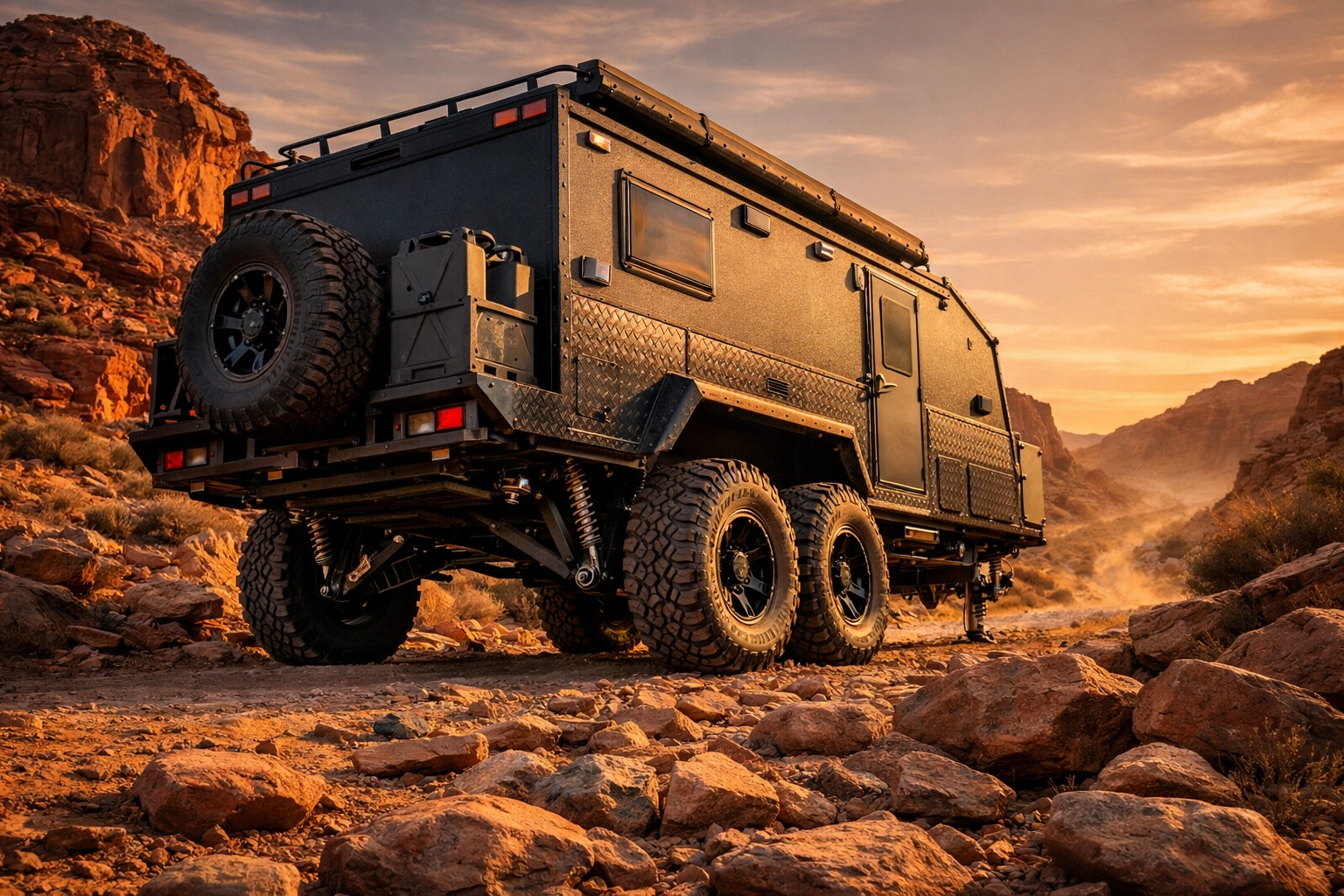
An off-road RV is a recreational vehicle specifically engineered to handle unpaved, technical terrain that would destroy a standard camper. Unlike traditional RVs designed for highway cruising and campground hookups, these beasts are built for the backcountry. Think of them as the difference between a sedan and a Jeep Wrangler, same basic purpose, completely different capability.
The core elements that define a true off-road RV include:
- Extreme ground clearance: Most off-road RVs sit 12–18 inches off the ground, compared to 6–8 inches for standard models. This clearance prevents you from high-centering on rocks or rutted trails.
- Heavy-duty independent suspension systems: Unlike the basic leaf-spring or torsion setups on traditional trailers, off-road RVs use advanced suspension technology that absorbs massive impacts while keeping your gear (and sanity) intact.
- Reinforced chassis and body: Steel-reinforced frames, aluminum or composite bodies, and heavy-duty coupling systems ensure the trailer doesn’t shake apart on washboard roads or rocky trails.
Here’s where the confusion sets in: many manufacturers slap “off-road” on anything with bigger tires and a black paint job. A real off-road RV has been tested and proven on trails, not just styled to look tough in a showroom.
How to Choose the Best Off Road RV
Choosing the right off-road RV is part science, part personal preference, and part trial-and-error. The wrong choice can leave you stuck on a trail or towing a monster your vehicle can’t handle. Here’s how to narrow it down.
Ground Clearance and Suspension
Start with the basics: how high does it sit, and what’s underneath? Look for adjustable suspension systems that let you raise or lower the trailer depending on the terrain. Independent suspension is the gold standard, it allows each wheel to move independently, which is critical when one side is on a boulder and the other is in a ditch.
Weight and Tow Vehicle Compatibility
Weight is the silent killer of off-road dreams. A 30 foot RV weight can easily exceed 8,000–10,000 pounds when fully loaded, which means you need a serious tow vehicle, think heavy-duty trucks with towing capacities above 12,000 pounds. On the flip side, an 18 ft camper weight might hover around 3,500–4,500 pounds, making it towable by mid-size trucks and far more nimble on tight trails.
Here’s the reality: the average travel trailer weights you see online rarely account for the reinforced chassis, upgraded suspension, and heavy-duty components of an off-road model. A 16 ft camper weight for an off-road model might be 500–800 pounds heavier than a standard camper of the same length. Similarly, a 30-foot camper weight designed for pavement will be significantly lighter than its off-road equivalent.
Before you buy, calculate your actual towing capacity, not just the manufacturer’s claim. Factor in the weight of water, gear, food, fuel, and passengers. And always stay within your vehicle’s GVWR (Gross Vehicle Weight Rating) to maintain control and safety on steep, uneven terrain.
Top Off-Road RV Brands
In 2026, the market is crowded with options, but only a few brands consistently deliver true off-road performance. BlackSeries has led the charge with innovative designs like independent suspension, reinforced aluminum bodies, and luxury features that don’t compromise capability. Our models are purpose-built for the trails, not retrofitted from existing campers.
When comparing brands, ask these questions:
- Is the suspension independently adjustable?
- What’s the real-world ground clearance when loaded?
- Are the axles, tires, and frame rated for sustained off-road use?
If a brand can’t answer these questions clearly, keep looking. Read more about why off-road trailers are the best choice for adventure RVs.
Budget and Long-Term Maintenance
Off-road RVs cost more upfront, typically $40,000 to $150,000+ depending on size and features. But here’s the trade-off: they hold value better, require less frequent repair, and open up camping locations that traditional RVs can’t reach. Budget for annual suspension checks, tire rotations, and seal inspections. These preventative steps save thousands down the line.

Off Road RV Travel Destinations in the USA
Once you’ve got the right rig, the question becomes: where do you take it? The U.S. offers some of the most diverse and challenging off-road terrain on the planet. Here are the top destinations for 2026.
Southwest Deserts (Arizona and Utah)
The red rock country of the Southwest is off-road heaven. Arizona’s backcountry roads wind through saguaro forests and canyon systems, while Utah’s Moab region offers iconic trails like Hell’s Revenge and Top of the World. The challenge here is extreme heat (summer temps regularly hit 110°F+) and limited water sources, so solar power and large freshwater tanks are non-negotiable.
Rocky Mountains (Colorado, Wyoming, Montana)
High-altitude trails in the Rockies test your RV’s capability and your driving skills. Expect steep grades, narrow switchbacks, and unpredictable weather. But the payoff is massive: alpine meadows, crystal-clear lakes, and near-total solitude. Plan your trips for late spring through early fall to avoid snowpack and road closures.
BLM Lands and National Forests
Bureau of Land Management (BLM) lands and National Forests are the ultimate off-grid playgrounds. Unlike national parks, which often restrict camping to designated sites, BLM lands allow dispersed camping, meaning you can set up almost anywhere. Popular regions include the Great Basin in Nevada, the Coconino National Forest in Arizona, and the vast stretches of Idaho’s backcountry.
When choosing a route, consider these factors:
- Skill level: Some trails require advanced driving skills and recovery gear.
- Regulations: Check fire restrictions, camping permits, and seasonal closures before heading out.
- Off-grid duration: The farther you go, the more self-sufficient you need to be.
For a deeper dive into the best models and routes, check out our guide on off-road travel trailers for 2026.
Preparing Your Off Road RV for Adventure
Preparation separates a great trip from a disaster. Before you hit the trail, run through this essential checklist.
Tires, Suspension, and Brakes
Inspect tire tread depth and sidewall condition. Off-road tires should have aggressive tread patterns and reinforced sidewalls to resist punctures. Check your suspension for leaks, worn bushings, or loose bolts. Test your brakes, both the trailer brakes and your tow vehicle’s system, under load to ensure they’re responsive.
Water Systems and Energy Redundancy
Water is life in the backcountry. Most off-road RVs carry 30–60 gallons of fresh water, but consumption depends on your group size and trip length. Install a filtration system if you plan to refill from natural sources.
For energy, redundancy is key. Lithium batteries paired with solar panels provide near-limitless power for lights, refrigerators, and electronics. Carry a backup generator for extended cloudy periods or high-demand situations. In 2026, the shift toward lithium-ion systems has become standard, they’re lighter, charge faster, and last longer than traditional lead-acid batteries.
Body Seals and Weatherproofing
Inspect all seals around windows, doors, and roof vents. Even small leaks can lead to mold or structural damage over time. Apply weatherproofing tape or sealant to any questionable areas before you leave.
Gear and Emergency Tools
Pack recovery gear: a high-lift jack, traction boards, tow straps, and a portable air compressor. Bring a comprehensive first-aid kit, fire extinguisher, and emergency communication device (satellite phone or GPS messenger). Don’t forget spare parts: fuses, hoses, and tire repair kits can save your trip.
Off Road RV Challenges and Solutions
Even the best-prepared adventurers face challenges. Here’s how to handle the most common ones.
Extreme Weather
High temperatures: Use reflective window covers, park in shade when possible, and install roof vents or fans to improve airflow. Keep your batteries cool, lithium systems perform poorly above 120°F.
Cold weather: Insulate water lines to prevent freezing, use skirting around the trailer base, and invest in a high-quality propane or diesel heater. Test your cold-weather setup before heading into sub-zero environments.
Long-Term Logistics
Water management: Ration water carefully and use biodegradable soap to minimize waste. Install a greywater filtration system if you plan to stay off-grid for weeks.
Food storage: Stock non-perishable items and use a high-efficiency refrigerator. Solar-powered fridges have become incredibly reliable in 2026, drawing minimal power while keeping food fresh.
Waste disposal: Use portable toilet systems with sealed waste tanks. Many BLM lands have no facilities, so plan your disposal strategy in advance.
Navigating Technical Terrain
Mud: Lower tire pressure to increase traction, but not so much that you risk de-beading. Carry traction boards and use them early, don’t wait until you’re axle-deep.
Sand: Air down to 15–20 PSI and maintain momentum. Avoid sudden stops or sharp turns.
Rocks: Go slow and spot your line carefully. Use a spotter if you’re navigating tight sections with large boulders.
FAQ
What makes an RV an off-road RV?
An off-road RV is defined by its ground clearance (typically 12+ inches), independent suspension, reinforced chassis, and off-road-rated tires. These features allow it to handle unpaved trails, rocks, mud, and sand without damage.
Can an off-road RV be used year-round?
Yes, but it requires preparation. In winter, you’ll need insulated water lines, a robust heating system, and cold-weather tires. In summer, solar power, ventilation, and heat-resistant materials are essential. Most modern off-road RVs are designed for four-season use.
How long can I use an off-road RV without hookups?
With proper setup, you can camp off-grid for 7–14 days or longer. Key factors include water capacity, solar power output, battery storage, and waste tank size. Experienced off-roaders often extend this by refilling water from natural sources and maximizing energy efficiency.
Are off-road RVs suitable for rugged terrain?
Absolutely. They’re specifically built for rugged terrain, including rocky trails, steep grades, and washboard roads. However, driver skill and preparation are just as important as the RV itself. Always match your route to your experience level and vehicle capability.
Whether you’re planning your first off-grid adventure or upgrading from a standard camper, choosing the right off-road RV is a game-changer. In 2026, the technology, designs, and support systems have never been better. Do your research, prep your rig, and get ready to explore parts of America most people will never see. The backcountry is waiting.

