Off-road trailer travel has exploded in popularity as more adventurers seek authentic wilderness experiences away from crowded RV parks. In 2026, advanced lithium battery systems, smarter solar arrays, and improved trailer engineering have made extended boondocking more accessible than ever. Whether you’re planning a weekend escape to BLM lands or a month-long journey through America’s backcountry, understanding off-road trailer travel is your first step toward adventure.
What is Off Road Trailer Travel?
Off-road trailer travel means taking your camping setup beyond paved roads to access remote public lands, hidden campsites, and breathtaking locations that standard RVs can’t reach. It’s not about extreme rock crawling: it’s about confidently navigating rough dirt roads, unmaintained forest trails, and washboard gravel paths that lead to places most people never see.
The Core Definition: Built for Rugged Terrain
An off-road trailer differs fundamentally from highway trailers through specific engineering features. These trailers typically offer 12-16 inches of ground clearance compared to the 6-8 inches found in conventional models. This extra clearance prevents high-centering on rocks, deep ruts, and uneven terrain that would stop a standard trailer dead in its tracks.
Independent suspension systems absorb trail impacts without transferring stress to your tow vehicle, while aggressive all-terrain tires handle dirt, sand, gravel, and mud with confidence. Reinforced steel frames manage the flex and torque that would damage standard trailers, and protective skid plates shield vulnerable components like water tanks and electrical systems from rock strikes.
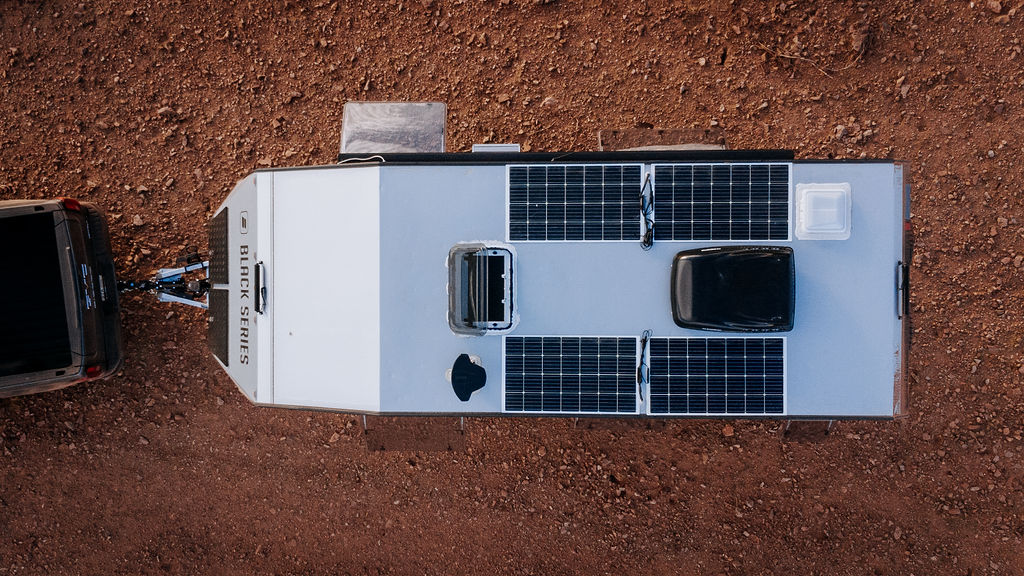
Comparing Travel Methods: RV vs Trailer vs Tent
Traditional RVs offer maximum comfort but limit where you can go. Their size, weight (a 30 foot RV weight typically ranges from 10,000-15,000 lbs), and low clearance restrict them to developed campgrounds and paved roads.
Off-Road Trailers strike the perfect balance: combining serious terrain capability with comfortable sleeping quarters, full kitchens, and extended off-grid systems. The average weight of a camper trailer suitable for off-road use ranges from 3,500-7,000 lbs for compact models, making them towable by properly equipped mid-size trucks.
Tent Camping maximizes access but sacrifices comfort, protection from weather, and conveniences like running water and refrigeration. For extended trips or family adventures, the limitations become significant.
How to Judge Long-Trip Suitability
A trailer is suitable for long-distance off-road travel when it meets these criteria:
- Water capacity: Minimum 40-60 gallons of fresh water storage
- Power independence: At least 400W solar paired with lithium batteries
- Weight consideration: An 18 ft camper weight should match your vehicle’s towing capacity with 20% buffer
- Storage capacity: Adequate compartments for extended provisions and recovery gear
- Four-season insulation: If you plan year-round travel
Check out our detailed breakdown of off-road travel trailers and their capabilities to understand which models excel at long-distance adventures.
Planning Your Off Road Trailer Travel
Successful off-road trailer adventures start with thorough planning. The freedom of backcountry camping requires more preparation than booking a campground spot, but the rewards far exceed the effort.
Choosing the Right Off-Road Trailer
Your trailer selection should match your vehicle’s capabilities, typical group size, and adventure style. For serious off-road travel, prioritize:
Ground Clearance and Approach Angles: Look for 14+ inches of clearance and approach angles that prevent dragging on steep inclines or deep ditches.
Suspension Quality: Independent coil-spring or torsion axle systems outperform standard leaf springs on rough terrain. They absorb impacts smoothly and reduce trail wear on your trailer’s structure.
Weight and Length Balance: A compact 15-17 ft model weighing 4,000-5,500 lbs offers maximum agility for tight trails and challenging terrain. Larger 19-21 ft trailers (typically 5,500-7,500 lbs) provide more living space but require three-quarter-ton trucks for safe off-road towing.

Essential Equipment Checklist
Water Systems: Install 60-100 gallon freshwater tanks for extended boondocking. Add a quality water filtration system for refilling from natural sources when necessary. Include gray and black water tanks sized appropriately for your trip duration.
Energy Systems: In 2026, lithium battery banks have become the standard for serious off-grid travel. A minimum 200Ah lithium setup paired with 400-600W solar panels supports extended stays without generator dependence. Learn more about RV lithium power upgrades and their benefits for your specific needs.
Temperature Control: Four-season insulation, dual-pane windows, and efficient heating/cooling systems enable comfortable camping from desert summers to mountain winters. Modern DC-powered air conditioners draw significantly less power than older AC units.
Safety and Navigation: Pack a comprehensive toolkit including tire repair supplies, recovery straps, a high-lift jack, and basic mechanical tools. Download offline maps using apps like Gaia GPS or OnX Offroad before losing cell signal.
Recovery Equipment: Quality recovery boards, a shovel, and traction aids can save you from getting stuck. These items weigh little but prove invaluable in soft sand or mud.
Planning Your Best Travel Routes
National Parks Access: While many national parks have paved access roads, nearby BLM lands and National Forests offer incredible off-road camping opportunities. Research entry points and dispersed camping regulations before arrival.
BLM Lands: The Bureau of Land Management oversees 245 million acres primarily in the western United States. Most BLM land allows free dispersed camping for up to 14 days per location, making it ideal for extended off-road adventures.
Forest Roads: National Forests contain thousands of miles of maintained and primitive forest roads. These roads range from easy gravel to challenging rocky tracks, offering options for all skill levels.
Geographic Considerations: Research seasonal weather patterns, elevation changes, and water availability. Spring runoff can make river crossings dangerous, while summer heat in desert areas requires careful water planning.
Best Off Road Trailer Destinations in the USA
America’s western states offer endless off-road trailer destinations, from red rock deserts to alpine forests. Here are proven favorites for 2026 adventure planning.
Extreme Southwest Desert Routes
Arizona and Utah Desert Corridors: The region between Moab, Utah and Sedona, Arizona contains some of America’s most spectacular off-road camping. Navigate the White Rim Road in Canyonlands, explore backcountry sites near Capitol Reef, or camp among the hoodoos in Grand Staircase-Escalante National Monument.
Difficulty Level: Moderate to challenging. Many routes require high clearance, aggressive tires, and careful route planning. Some sections include river crossings, steep climbs, and extended distances between services.
Camping Facilities: Primarily dispersed camping with no facilities. Bring everything you need for self-sufficiency.
Rocky Mountain Forest Roads
Colorado and Wyoming Highlands: The Rockies offer thousands of forest roads accessing remote mountain camping. Popular routes include the Alpine Loop near Silverton, Colorado, Ohio Pass between Crested Butte and Gunnison, and Medicine Bow National Forest in Wyoming.
Difficulty Level: Easy to moderate. Most forest roads accommodate high-clearance vehicles with careful driving. Seasonal closures due to snow typically run from November through May at higher elevations.
Camping Facilities: Mix of developed forest campgrounds and dispersed sites. Many dispersed areas offer fire rings and primitive facilities.
National Forest Adventures
Dispersed Camping Opportunities: National Forests across the West provide incredible off-road trailer camping. California’s Inyo National Forest near Mammoth Lakes, Oregon’s Deschutes National Forest, and Montana’s Lewis and Clark National Forest all offer excellent access for prepared travelers.
Comparison Table:
For comprehensive destination planning and route recommendations, check our off-road trailer travel guide with detailed maps and seasonal tips.
How to Make Your Off Road Trailer Ready for Travel
Pre-departure preparation prevents backcountry breakdowns and ensures safe, enjoyable adventures. Develop a systematic inspection routine before every trip.
Off-Road Equipment Preparation
Tire and Suspension Inspection: Check tire pressure using a quality gauge: proper pressure varies by terrain type. For highway travel, run manufacturer recommendations. For sand, air down to 15-20 PSI to increase traction and improve ride quality. For rocky terrain, maintain higher pressure to prevent sidewall damage. Inspect tread depth and look carefully for sidewall bulges or cracks that indicate replacement needs.
Examine suspension components for wear, loose bolts, or damage. Listen for unusual sounds when bouncing the trailer: grinding or clunking indicates bearing or shock issues requiring immediate attention. For specific maintenance guidance, see our article on off-road trailer maintenance and tire pressure setup.
Hitch and Coupler Systems: Verify your hitch ball matches your coupler size exactly. Apply appropriate grease to the ball, check that safety chains have adequate strength ratings, and ensure your brake controller is properly adjusted. Test your trailer brakes in an empty parking lot before heading out.
Long-Distance Travel Preparation
Electrical System Check: Lithium battery systems dominate 2026 off-road trailers due to their superior discharge characteristics, lighter weight, and longer lifespan. Verify your battery state of charge, test solar panel output, and confirm your inverter functions properly under load.
Propane and Appliances: Check propane levels and inspect all connections for leaks using soapy water. Test your refrigerator, water heater, and furnace to ensure proper operation before departing.
Weatherproofing: Inspect roof seams, window seals, and door weatherstripping. Apply fresh sealant to any questionable areas. Water damage from leaks can ruin extended trips and lead to expensive repairs.
Weight Distribution: Load heavy items low and centered in your trailer. Improper weight distribution causes dangerous sway and reduces control on rough terrain. Weigh your fully loaded trailer to confirm you’re within your vehicle’s towing capacity.
Off Road Trailer Travel Challenges & Solutions
Even well-prepared travelers face challenges on backcountry adventures. Understanding common issues and their solutions builds confidence for remote travel.
Risk Management and Prevention
Extreme Weather Response:
- Heat: In 2026’s increasingly hot summers, desert camping requires careful planning. Run air conditioning during the hottest hours, park in shade when possible, and maintain adequate water reserves for both drinking and cooling systems.
- Rain and Flooding: Monitor weather forecasts and avoid camping in dry washes or low areas during rainy periods. Flash floods can occur miles from actual rainfall.
- Cold and Snow: Four-season trailers handle winter camping well, but prepare for increased propane consumption and potential water system freezing. Keep tanks above freezing or winterize appropriately.
Repair and Recovery Equipment
Essential Repair Kit: Pack spare fuses, bulbs, hoses, tire plugs, and basic plumbing supplies. Carry appropriate wrenches, screwdrivers, and socket sets. Include duct tape, zip ties, and wire for emergency fixes.
Recovery Gear: Quality recovery straps rated for your combined vehicle and trailer weight, a shovel for digging out stuck vehicles, recovery boards for sand and mud, and a high-lift jack for challenging situations.
Extended Stay Logistics
Water Management: A family of four typically consumes 15-20 gallons of water daily for drinking, cooking, and washing. Plan accordingly and identify water refill locations along your route. Many forest service stations, RV dumps, and small-town gas stations offer water fill access.
Waste Management: Empty gray and black tanks before they reach capacity. Research dump station locations along your intended route. Many national forests and BLM field offices provide free or low-cost dump facilities.
Food Storage: Stock up at larger towns before heading into remote areas. Plan meals carefully to minimize food waste and refrigerator space. Consider the benefits of residential-style off-grid living comfort features in modern trailers.
Connectivity: Accept that cell service will be minimal or nonexistent. Download maps, trail guides, and entertainment before losing signal. Consider a satellite communicator for emergency communication in truly remote locations.
FAQ
What makes an off-road trailer suitable for long trips?
An off-road trailer becomes suitable for extended adventures when it combines adequate ground clearance (14+ inches), strong independent suspension, sufficient fresh water capacity (60+ gallons), reliable solar and lithium battery systems (400W+ solar, 200Ah+ lithium), and appropriate cargo capacity for extended provisions. The trailer’s weight should match your tow vehicle’s capabilities with a 20% safety margin.
How do I prepare an off-road trailer for extreme weather conditions?
For extreme weather preparation, verify your trailer includes four-season insulation, heated underbelly, and dual-pane windows for cold conditions. For heat, ensure adequate ventilation, properly sized air conditioning, and sufficient battery/solar capacity to run cooling systems. Always carry extra propane, monitor weather forecasts, and have contingency plans for severe conditions.
What are the best off-road trailer routes in the USA?
Top off-road routes include Utah’s canyon country (White Rim Road, Cathedral Valley), Arizona’s backcountry (Schnebly Hill Road, Backway to Crown King), Colorado’s alpine loops (Black Bear Pass, Engineer Pass for experienced drivers), and National Forest roads throughout Montana, Wyoming, and Idaho. Always research current conditions, closures, and difficulty ratings before attempting new routes.
Can I camp anywhere with an off-road trailer?
Not everywhere, but many places. BLM lands and National Forests generally allow dispersed camping for up to 14 days per location with certain restrictions (distance from water sources, developed areas, and roads). National Parks typically require designated campgrounds. State lands vary by state. Always verify current regulations for your intended destination and practice Leave No Trace principles.
Off-road trailer travel in 2026 offers unprecedented access to America’s wildest places while maintaining comfort and convenience. With proper preparation, the right equipment, and respect for the environment, your off-road trailer becomes a ticket to adventures beyond what traditional RVs can reach. Start planning your next backcountry escape today( the trails are waiting.)

