Your standard RV wasn’t built for the places you actually want to go. In 2026, more adventurers are ditching crowded campgrounds for remote trails, desert washes, and mountain overlooks that demand more from their rigs. The solution? Rugged upgrades that transform your camper from a pavement princess into a true off-road travel trailer capable of handling whatever the wilderness throws at it.
In this guide, you’ll learn exactly what rugged upgrades are, which improvements deliver the biggest impact, and whether upgrading your current rig or switching to a purpose-built BlackSeries camper makes more sense for your adventure goals.
What Are Rugged Upgrades?
Rugged upgrades are performance-focused modifications designed to make your RV tougher, more capable, and better suited for off-grid adventures. Unlike cosmetic upgrades: think new curtains or a fresh coat of paint: rugged upgrades address the mechanical, structural, and utility systems that determine whether your camper survives a washboard road or gets left behind at the trailhead.
These upgrades typically fall into three categories:
- Structural reinforcements – Stronger frames, skid plates, and protective armor
- Suspension and mobility – Heavy-duty shocks, independent suspension, and all-terrain tires
- Off-grid utility – Solar panels, lithium batteries, and expanded water capacity
The goal isn’t just durability: it’s freedom. With the right rugged upgrades, you can access camping spots that 90% of RV owners will never see because their rigs simply can’t get there.
Why Rugged Upgrades Matter for RV Owners
Let’s be honest: most travel trailers are built for paved roads and developed campgrounds. They’re designed to be lightweight and affordable, which often means cutting corners on suspension, frame strength, and off-grid capability. That works fine if your idea of camping involves full hookups and WiFi passwords.
But if you want to explore America’s backcountry: national forests, BLM land, remote beaches, or mountain trails: a stock trailer will limit you in three critical ways:
Wild Camping and Boondocking
In 2026, dispersed camping on public lands continues to grow in popularity. These sites offer free or low-cost camping but require self-sufficiency. Without rugged upgrades like solar power and increased water storage, you’ll be heading back to civilization far sooner than you’d like.
Rough Terrain Access
Many of the most spectacular camping spots sit at the end of unpaved roads filled with rocks, ruts, and washboard surfaces. Standard leaf-spring suspensions and highway tires simply can’t handle these conditions without damaging your trailer: or your tow vehicle.
Long-Distance Reliability
Extended overland trips put enormous stress on every component of your RV. When you’re 200 miles from the nearest service center, you need systems that won’t fail. Rugged upgrades provide that peace of mind.
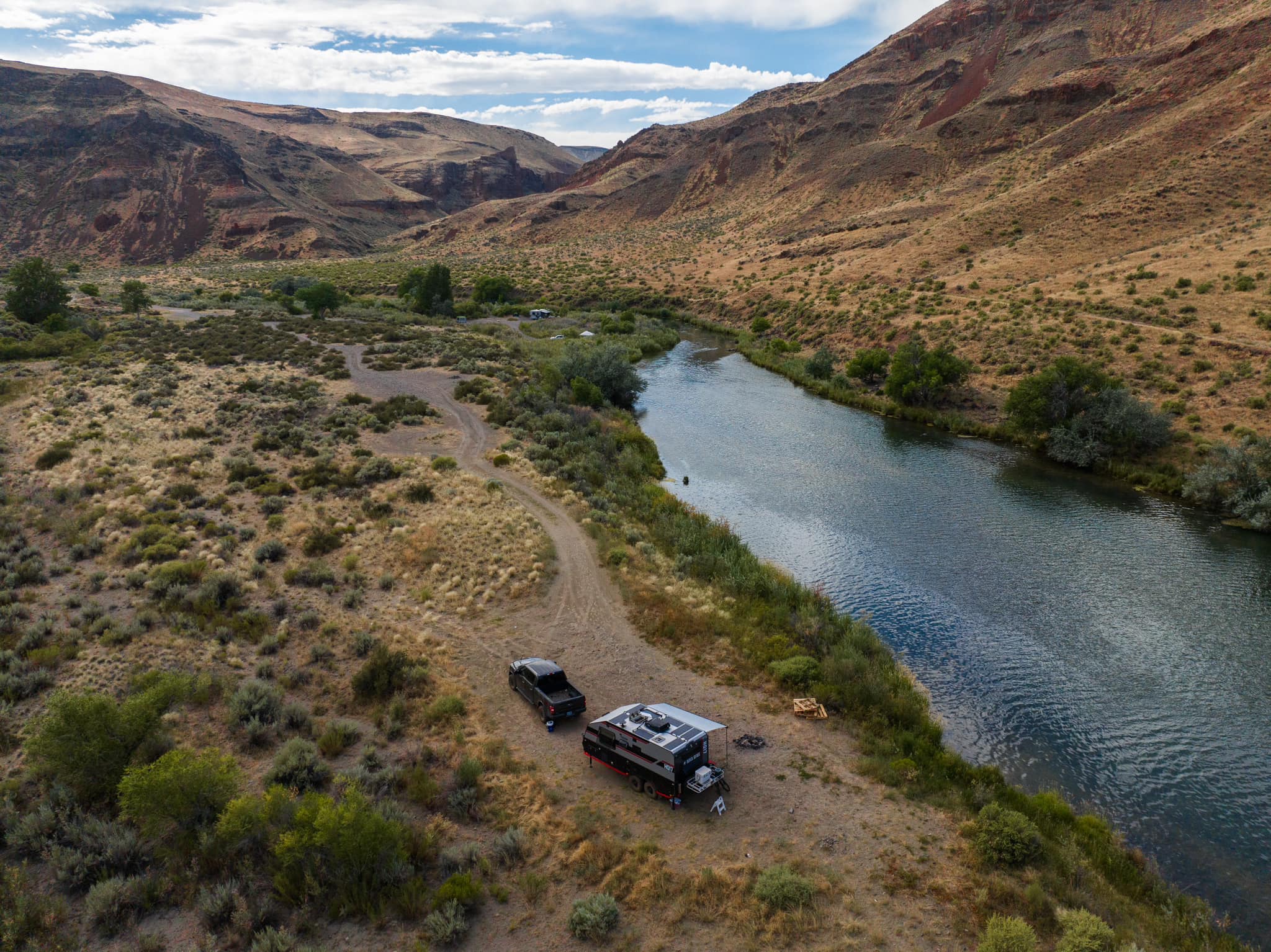
Rugged RV Upgrades – The Most Important Improvements
Not all upgrades are created equal. Here are the six improvements that deliver the biggest performance gains for off-road and off-grid travel.
Heavy-Duty Suspension
Your suspension system is the single most important factor in off-road capability. Stock trailers typically use basic leaf springs that transfer every bump directly to your frame, cabinets, and appliances. Over time, this leads to structural damage, broken fixtures, and a miserable towing experience.
A heavy-duty independent suspension system absorbs impacts before they reach your living space. Look for dual shock absorbers, trailing arm designs, and heavy-duty coil springs rated for your camper’s weight. When considering the average weight of camper models in the 16 ft camper weight range, independent suspension becomes essential for stability on uneven terrain.
All-Terrain Tires
Highway tires are optimized for smooth rolling and fuel efficiency: not gripping loose gravel or climbing rocky inclines. Upgrading to all-terrain (AT) or mud-terrain (MT) tires provides better traction, improved puncture resistance, and sidewall protection.
Match your tire size and load rating to your trailer’s specifications. An 18 ft camper weight typically requires at least a Load Range E tire to handle the stress of off-road travel safely.
Reinforced Chassis
The frame is your trailer’s skeleton. Standard travel trailers often use lightweight steel or aluminum frames designed to minimize the average travel trailer weights for easier towing. However, these frames flex and twist on rough roads, leading to cracked welds, misaligned doors, and water leaks.
A reinforced chassis with cross-member bracing distributes stress more evenly and prevents the structural fatigue that kills standard trailers prematurely. This is especially critical for larger rigs: a 30 foot rv weight puts tremendous strain on an underbuilt frame.
Off-Grid Power Systems
Freedom from hookups requires serious electrical capacity. In 2026, the standard for rugged campers includes:
- 400+ watts of roof-mounted solar panels
- Lithium-iron-phosphate (LiFePO4) battery banks (200Ah minimum)
- High-efficiency inverters for running AC appliances
- Smart battery management systems for monitoring and optimization
A properly designed off-grid power system lets you run your refrigerator, charge devices, power lights, and even operate your air conditioner for extended periods without plugging in.
Water & Storage Capacity
The limiting factor for most boondocking trips isn’t power: it’s water. Stock trailers often carry just 20-30 gallons, which disappears quickly with showers, cooking, and cleaning.
Rugged upgrades should include:
- Fresh water capacity of 40+ gallons
- Gray water tanks sized appropriately
- Water filtration systems for refilling from natural sources
- Exterior storage for recovery gear, tools, and extra supplies
Exterior Protection
When you’re navigating narrow trails or low-clearance obstacles, your trailer’s underside and sides take a beating. Skid plates protect vulnerable components like water tanks, holding tanks, and electrical connections. Diamond-plate armor on lower panels prevents rock damage.
High ground clearance design is equally important. Stock trailers often sit just 10-12 inches off the ground, making them prone to scraping on even moderate obstacles. Serious off-road travel trailers need 15+ inches of clearance.

Best Rugged Upgrades for Campers
If you’re prioritizing upgrades for an existing camper, focus on these high-impact modifications first:
- Independent Suspension Systems – The single biggest improvement for ride quality and durability
- Off-Road Hitch Upgrades – A DO35 or similar articulating hitch reduces stress on both trailer and tow vehicle
- Solar Power Kits – Start with 200W and scale up as your needs grow
- Heavy-Duty Skid Plates – Protect your investment from rock damage
- Reinforced A-Frame and Tongue – Common failure points on rough roads
- All-Weather Accessories – Quality awnings, weatherproof storage, and sealed electrical connections
The best rugged upgrades for campers address the specific weaknesses of your trailer. A 24 ft camper weight puts different stresses on the frame than a compact 16-footer, so prioritize accordingly.
Off-Road Trailer Upgrades You Should Consider
Beyond the essentials, these off-road trailer upgrades can significantly improve your experience:
- Upgraded wheel bearings – Standard bearings are often undersized for continuous off-road use
- Heavy-duty jack systems – Stabilizer jacks that won’t bend on uneven ground
- Roof reinforcement – For carrying kayaks, bikes, or additional gear
- LED lighting upgrades – Better visibility and lower power consumption
- Cell signal boosters – Stay connected in remote areas for safety and convenience
- Portable dehumidifiers – Prevent mold and moisture damage during extended trips
Each upgrade improves stability, durability, or comfort: the three pillars of successful overland travel.
How to Upgrade an RV for Off-Road Use
Wondering how to upgrade an RV for off-road adventures? Follow this strategic approach:
Step 1: Assess Your Current Setup
Document your trailer’s specifications: weight, frame construction, suspension type, electrical capacity, and water storage. Understanding your baseline helps you prioritize effectively.
Step 2: Identify Weak Points
Take your rig on a moderately challenging road and pay attention. Does the suspension bottom out? Does the frame flex? Do cabinets rattle excessively? These symptoms reveal your most pressing upgrade needs.
Step 3: Prioritize Safety Upgrades
Always address safety-critical systems first: suspension, tires, brakes, and structural integrity. Comfort upgrades can wait: but a failed bearing in the backcountry cannot.
Step 4: Add Comfort and Power Features
Once your foundation is solid, add the systems that extend your range: solar panels, battery banks, water capacity, and outdoor living amenities like awnings and exterior kitchens.
Step 5: Consider Trading Up to a BlackSeries
Here’s the truth many RV owners discover: after investing $15,000-$25,000 in upgrades, they still have a trailer that wasn’t designed for off-road use. At some point, the smarter investment is trading your current rig for a purpose-built off-road travel trailer like the BlackSeries HQ21.
Upgrade vs Buy New – Which Is Better?
This is the question every serious adventurer eventually faces. Here’s an honest comparison:
For mild off-road use and occasional boondocking, targeted upgrades to a quality base trailer can work well. But for serious overlanding, frequent off-grid travel, or accessing truly remote locations, a factory-built off-road trailer delivers superior results with fewer headaches.
Why BlackSeries Is the Ultimate Rugged Upgrade
At BlackSeries, we don’t build trailers that need upgrading: we build trailers that are the upgrade. Every model in our lineup comes standard with the features other manufacturers charge extra for:
- Cruisemaster XT Independent Suspension – Australian-engineered for the harshest conditions
- Hot-dipped galvanized chassis – Corrosion-proof for decades of use
- Integrated solar and lithium battery systems – True off-grid capability from day one
- Diamond-plate armor and skid plates – Protection where it matters most
- High ground clearance – Navigate obstacles other trailers can’t clear
Our Australian engineering heritage means every design decision prioritizes durability over cost-cutting. These trailers were born in the Outback and refined for American adventurers.
Popular Models:
- HQ17 – Compact and capable, perfect for tight trails
- HQ19 – The sweet spot of size and capability
- HQ21 – Full-featured family adventurer
- Alpha Series – Maximum luxury meets maximum capability
Real Upgrade Stories
Customer A – The DIY Path
Mark from Colorado spent two years and $22,000 upgrading his conventional travel trailer for off-road use. New suspension, solar panels, reinforced frame, all-terrain tires: the works. After one season of hard use, he traded it for a BlackSeries HQ19. “I realized I’d built a Frankenstein trailer that still couldn’t match what BlackSeries engineers in a factory,” he told us. “Should have started here.”
Customer B – The Direct Route
Sarah and James from Arizona researched average travel trailer weights and decided a 24 ft camper weight was their sweet spot. They purchased an HQ21 and immediately began accessing camping spots their friends with standard trailers couldn’t reach. “Our first trip to the Sonoran Desert sold us completely. We drove past stuck RVs on washboard roads and never thought twice about it.”
Rugged Upgrades – FAQs
Q1: What are rugged upgrades for an RV?
Rugged upgrades are performance modifications that improve an RV’s durability, off-road capability, and off-grid functionality. Unlike cosmetic changes, these upgrades address suspension, frame strength, power systems, and protective armor.
Q2: Which upgrades improve off-road performance the most?
Independent suspension systems deliver the biggest single improvement. Following that, all-terrain tires, reinforced chassis, and proper ground clearance make the greatest difference in off-road capability.
Q3: Is it better to upgrade an old camper or buy a new one?
It depends on your budget and goals. Mild off-road use may justify targeted upgrades, but for serious overlanding, a purpose-built trailer like BlackSeries typically delivers better value and performance than extensive modifications.
Q4: How much do rugged RV upgrades cost?
Individual upgrades range from a few hundred dollars (skid plates, lighting) to several thousand (suspension systems, solar setups). A comprehensive upgrade package can easily exceed $20,000.
Q5: Can BlackSeries campers be considered factory rugged upgrades?
Absolutely. BlackSeries trailers come equipped with every feature that other owners pay to add: independent suspension, off-grid power, reinforced construction, and protective armor. They’re the ultimate rugged upgrade: delivered ready to adventure.
Ready to stop upgrading and start adventuring? Explore the BlackSeries lineup and discover what true off-road capability looks like( straight from the factory.)

