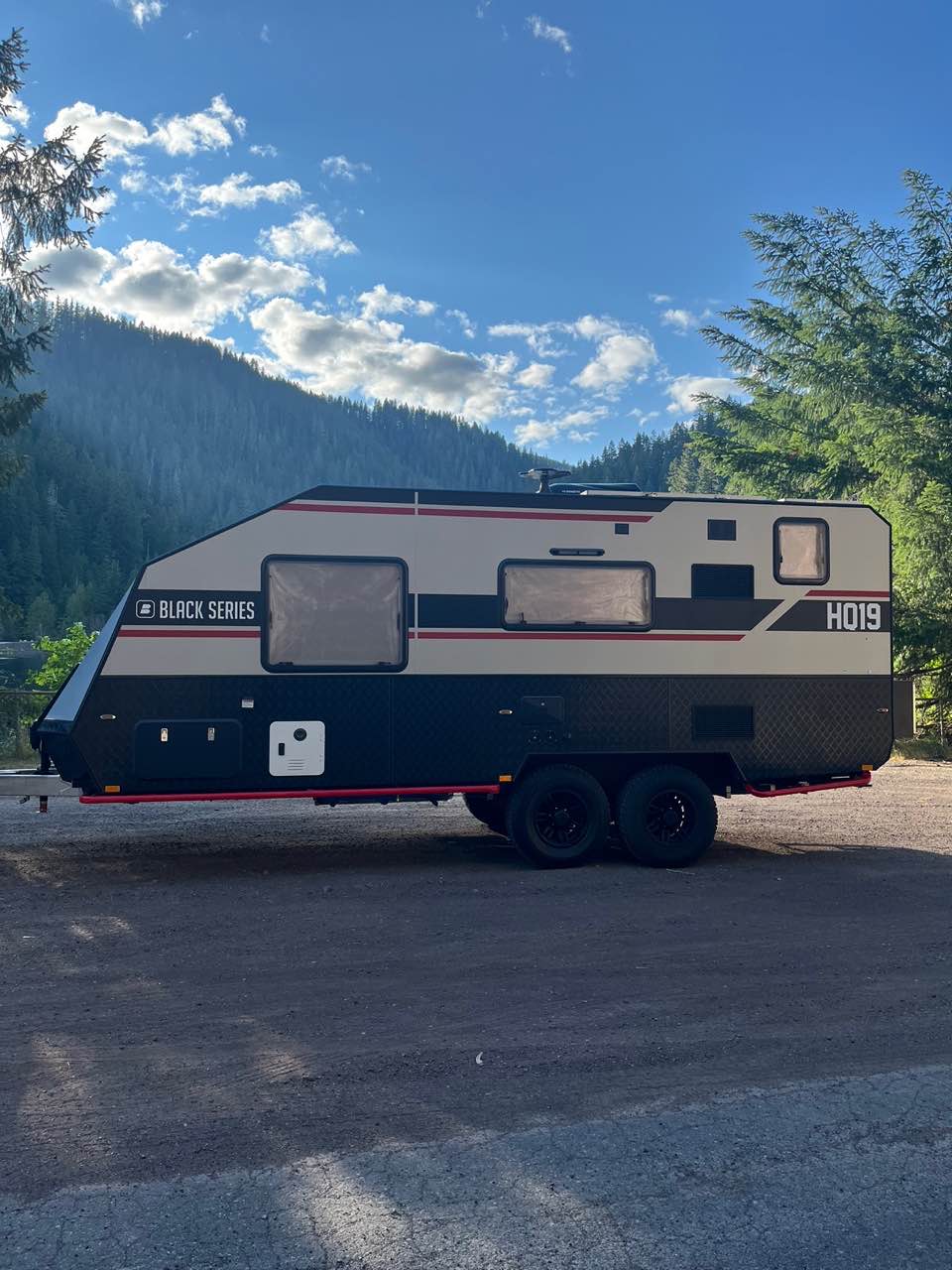
Above the Fold: Key Takeaways for RV Owners
Short Answer:
As towing speed increases, wind resistance rises exponentially, making high-speed towing inefficient, unsafe, and costly for RVs.
- Over 65 mph, wind drag becomes the #1 source of energy loss.
- Higher speeds bring outsized fuel waste, less stability, and much longer stopping distances.
- BlackSeries Recommendation: Smart speed control saves more than chasing more power. Keep highway speeds between 60-65 mph.
Table of Contents
- What Is Wind Resistance When Towing?
- How Towing Speed Affects Wind Resistance
- The Real Impact on Fuel Efficiency
- Safety Risks of High-Speed Towing
- Trailer Sway
- Crosswinds & Passing Trucks
- Extended Braking Distance
- Tire Heat Buildup
- What Is the Best Towing Speed for Travel Trailers?
- How BlackSeries Designs for Wind Resistance
- How to Reduce Wind Resistance While Towing
- FAQ
What Is Wind Resistance When Towing?
> Summary:
> Wind resistance (aerodynamic drag) is the force that fights against your tow vehicle and trailer as they move forward, dramatically increasing with speed. For RVs, large frontal areas mean wind resistance is a major (often dominant) source of energy loss at highway speeds.
Wind resistance, also called aerodynamic drag, is the push of air against your vehicle as it moves. The faster you go, the more air you “move out of the way.” For tow vehicles and especially travel trailers, wind resistance becomes a critical factor far sooner than most RVers imagine.
Why Is It Worse for Trailers?
- Large Frontal Area: RVs and trailers have a much bigger face heading into the wind than a solo car or SUV.
- Blunt Shapes: Squared designs (compared to streamlined cars) produce far more turbulence, multiplying drag.
- Multiple Vehicles: Towing means you’re moving two wind profiles, the truck and the attached trailer.
Related Reading:
- Slanted Front Travel Trailer: Aerodynamics & Stability
- Boundary Layer Separation RV: Aerodynamics & Stability Guide
Keyword Integration:
- RV wind resistance at highway speed
- aerodynamic drag travel trailer
How Towing Speed Affects Wind Resistance
> Summary:
> Wind resistance grows exponentially with speed. Doubling your speed results in roughly 4x the wind force. This means a small increase in speed causes a massive jump in fuel use and stability issues for RVs.
The Basic Physics:
Aerodynamic Drag = (1/2) × air density × frontal area × drag coefficient × speed²
- If you double your speed, wind resistance doesn’t just double, it quadruples.
- At 55 mph, wind drag is noticeable. At 65 mph, it can be your single largest resistance. At 75 mph, it overwhelms everything else.
Real-World Comparisons:
- 55 mph: Manageable wind load, engine stress is moderate
- 65 mph: Wind resistance is ~40% higher than at 55 mph
- 75 mph: Wind resistance is nearly double that at 55 mph, fuel consumption rises dramatically
Related Reading:
- Aerodynamic Nose Cone Trailer: Drag, Stability & Design
- Drag Coefficient Travel Trailer: What It Means for Towing
Keyword Integration:
- towing speed vs wind resistance
The Real Impact on Fuel Efficiency
> Summary:
> Driving faster with a trailer hurts your wallet. Fuel efficiency drops sharply once you pass 60-65 mph, regardless of your engine’s power.
Data & Realities
- Engine Power vs. Air Resistance:
Engine size helps move big loads, but at highway speeds, fighting wind resistance soaks up most of your fuel. - Why the Sudden Drop?:
At higher speeds, small increases multiply wind drag, causing gallon-per-mile numbers to plummet.
> Typical Highway Towing Data
> – 55 mph: 10-14 mpg (depending on trailer shape/size)
> – 65 mph: 8-11 mpg
> – 75 mph: 6-9 mpg (or worse with heavy/off-road trailers)
- Don’t get fooled: “Upgrading” your engine mostly helps you burn fuel faster at high speed, not save it.
Related Reading:
- Gas Mileage Towing Travel Trailer: What to Expect
- Frontal Area RV Aerodynamics: Why Size Matters When Towing
Keyword Integration:
- how speed affects towing fuel efficiency
Safety Risks of High-Speed Towing
> Summary:
> Every 5-10 mph above 65 mph increases the risk of accidents, instability, and tire blowouts, risking both your RV and everyone on the road.
1. Trailer Sway (The “Whip” Effect)
- High wind resistance increases pressure on the trailer sides.
- Sway worsens with speed, at 70 mph, a sudden movement or wind gust can push your trailer out of control.
Read: Prevent Trailer Sway While Towing: Complete Guide by BlackSeries
2. Crosswinds & Passing Trucks
- High speed makes you more vulnerable to sudden, powerful gusts, from nature or passing semis.
- Large, blunt-sided RVs have a higher chance of tipping or losing control, especially in open or exposed areas.
3. Extended Braking Distance
- Doubling speed quadruples your stopping distance.
- With a heavy trailer, this can mean the difference between a safe stop and an accident.
4. Tire Heat Buildup
- Higher speeds + drag = hotter tires.
- Hot tires are more likely to fail, risking blowouts and loss of control, particularly in summer.
Advanced Reading:
- High Wind Trailer Towing: How to Safely Tow in Strong Winds
- Travel Trailer Electric Brakes Not Working: Causes & Fixes
What Is the Best Towing Speed for Travel Trailers?
> Summary:
> BlackSeries recommends a sweet spot of 60–65 mph for most RVs: maximized safety, best possible fuel economy, and less fatigue, even on long hauls.
- Why Not “Speed Limit” or Faster?
Speed limits are set for cars, not for big, wind-sensitive trailers. - Faster ≠ Quicker Overall
At higher speeds you stop for fuel more often, offsetting any “time saved.” - Safer for Your Gear & Passengers
Lower speeds give you more reaction time, more margin for error, and save wear and tear on your investment.
Key Resource:
How BlackSeries Designs for Wind Resistance
> Summary:
> All BlackSeries travel trailers use advanced design cues drawn from global off-road standards: lower profiles, shaped front ends, and robust body construction, increasing real highway stability, not just “lab ratings.”
BlackSeries Solution: Built for the Real World
- Low-Profile Shapes: Minimize the “sail” effect from crosswinds or gusts
- Aerodynamically Considered Front Ends: Blunt but angled, splitting air while maximizing internal volume
- Chassis Height & Box Design: The right height for visibility and control, without raising center of gravity unnecessarily
- Reality, Not Just Theory: Our trailers are tested in wind tunnels and brutal real-road environments for true stability, year-round
Interested in the science?
Check: RV Wind Tunnel Testing: Aerodynamics, Stability & Design
How to Reduce Wind Resistance While Towing
> Summary:
> Small changes add up. Lowering your speed, keeping your trailer clean and lean, and maintaining your equipment offer real, practical fuel savings , all without risk.
To Do Before You Hit the Highway:
- Control Cruise Speed:
Stay at or below 65 mph, reduces drag and stress on your setup. - Remove Unnecessary Accessories:
Ditch roof racks, rear ladders, or extra bikes when you’re not using them. - Tire Pressure Checks:
Underinflated tires increase rolling resistance and heat.
See Check Trailer Tire Pressure: Complete Safety Guide - Distribute Weight Sensibly:
Good weight distribution keeps your ride stable in all conditions.
Read: Loading a Travel Trailer Correctly: Step-by-Step Guide - Choose an Aerodynamically Optimized RV:
Curved or slanted-front trailers do better in crosswinds and highway driving.
FAQ
Q1: Does driving faster always increase towing fuel consumption?
A: Yes. At highway speeds, every extra 5 mph increases wind resistance more than any other factor, rapidly sinking your mpg.
Q2: Why does towing feel unstable at higher speeds?
A: Wind loads and turbulent forces rise non-linearly, making trailers much more likely to sway, lose traction, or become uncontrollable in sharp turns or gusts.
Q3: Is 70 mph too fast for towing a travel trailer?
A: For most RV setups, yes. Above 65 mph, wind resistance, tire stress, and stopping distance create significant safety and mechanical risks. Many tire and trailer warranties are voided above these speeds.
Q4: How much fuel can I save by slowing down?
A: Dropping from 70 mph to 60 mph can save you 2+ mpg: potentially 100 gallons of fuel across a cross-country trip.
Final Thoughts & Further Reading
Wind resistance, not weight, dominates highway towing after 65 mph. Heed the numbers, trust your senses, and let BlackSeries design help you go further: safely and efficiently.
Explore more BlackSeries safety and efficiency tips:
- Vortex Generators for RV: Stability, Drag & Reality
- Air Vortex Behind Trailer: Drag, Stability & Solutions
- Use Trailer Mirrors Correctly: Towing Safety Guide | BlackSeries
Meta Description:
RV wind resistance at highway speed can make or break your towing trip. Discover how speed impacts fuel efficiency, safety risks, and best practices to get the most out of every mile with your BlackSeries travel trailer.